
Skip to main contentSkip to navigation
Lab Operational Since: 17 Years, 10 Months, 12 DaysFacility Status: Fully Operational & Accepting New Cases

Your Hard Drive Is Beeping.
Stop. Unplug It. Now.

Emergency Warning

Do not keep trying to power on a beeping drive. Do not tap it, shake it, or put it in the freezer. The freezer trick is a myth from the 1990s that causes condensation and corrosion on modern drives. Every power cycle drives the motor against whatever is holding the mechanism, and that is how a recoverable fault turns into permanent loss. Just unplug it and leave it alone.

Seagate documents insufficient power as the most common reason an external drive beeps, so one attempt on a known-good cable, port, and supply is worth making. If the beep repeats there, the fault is in the drive, and what it is gets established on the bench rather than from the sound. Every retry after that costs you data surface. Where the sliders are down on the magnetic surface, that is your data being destroyed. See our complete hard drive data recovery process for how clean-bench head unsticking, donor head matching, and PC-3000 imaging fit together.

Author01/01
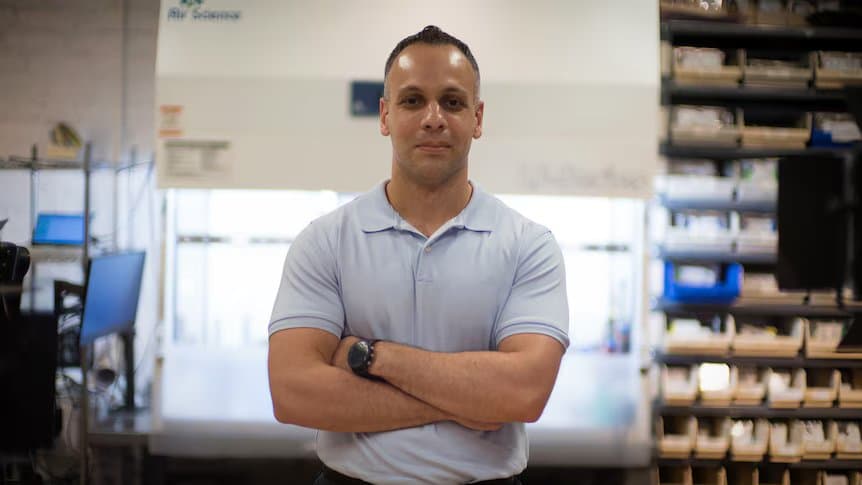
Louis Rossmann
Written by
Louis Rossmann
Founder & Chief Technician
Updated September 2026
17 min read

Verified on Google

What Customers Say

4.9 / 51,837 Google reviewsverify on Google Maps
Sent my hdd for data recovery, process was simple and I was able to pre-authorize an amount. They worked on my drive within 2 days of receiving it and the total cost was literally 1/10th of the amount of another service I got a quote from. Professional, quick, affordable. Nothing to complain about.

Andrew Hansen

View on Google
My satisfaction with Rossmann Repair Group goes beyond just 5 stars. I had a hard drive die some time ago, but I had no idea where I could send it knowing it would be safe, or there being a chance I'd be ripped off.

Kyle Hartley (crazybangles)

View on Google
Had a raid 0 array (windows storage pool) (failed 2tb Seagate, and a working 1tb wd blue) recovered last year, it was much cheaper than the $1500 to $3500 Canadian dollars i was quoted by a Canadian data recovery service. the price while expensive was a comparatively reasonable $900USD (about $1100 CAD at the time).

Christopolis

Seagate

View on Google
Walked in with my wife's dead hard drive, walked out 20 minutes later with it fixed. They were friendly, professional, did the work in a snap, and saved me the hefty repair prices for other (mail in) hard drive recovery services!

Patrick Dughi

View on Google

Seagate documents insufficient power as the most common cause of an external drive beeping, most of it on USB-powered drives with no separate adapter, so the cable, port, and supply each get one test. If the beep repeats on power you know is good, unplug the drive and leave it off. The sound does not name the fault: sliders resting on the platter surface, a seized fluid dynamic bearing, and a power fault on the drive board all present the same way from outside the enclosure. Software, CHKDSK, and recovery utilities fix none of them.

What Does a Beeping Hard Drive Mean?

Beeping is a symptom, not a diagnosis. Seagate puts insufficient power first on its own list: a single intermittent beep usually means the drive is not getting enough of it, and most beeping happens on USB-powered models with no separate adapter. Rule the power path out before anything else.

When the beep survives a known-good cable, port, and supply, the fault is in the drive, and several of them present the same way: read/write heads resting on the platter surface, a seized fluid dynamic bearing, or a power-rail fault on the drive's own board. No vendor publishes a mapping from a beep pattern to one of those. Which one it is comes from the bench.

Seagate and LaCie Rosewood-family drives (ST1000LM035, ST2000LM007), found inside Backup Plus and LaCie Mobile Drive enclosures, are the most common beeping drives we receive. A clicking hard drive is a different observable state: it reaches speed and then fails to acquire servo, so the actuator resets and retries. Neither sound settles what has to be repaired, and the two do not map to one fix each.

Beeping vs Clicking

  • Beeping or buzzingThis page. On an external, the cable, port, and power supply get checked first. If the beep repeats on known-good power, leave the drive off; the bench work behind a beeping drive is covered below.
  • Clicking or tickingThe platters reach speed, then the drive fails to acquire servo and resets the actuator in a loop. Power it off the same way. Clicking drive recovery →

What should I do right now with a beeping drive?

Power the drive off at the first beep. On a bus-powered external, one attempt each on a known-good cable, port, and supply is the check worth making, because that is the most common cause. Past that, do not retry it, tap it, shake it, or freeze it. Seal it in an anti-static bag inside a rigid padded box, label it as a non-working drive for data recovery, and ship it flat to our Austin lab.

The beep is not a glitch that clears on the next try. The reasons each of the following actions is destructive are covered in detail elsewhere on this page; the short version is that hearing the sound again tells you nothing the power test would not, and every attempt costs data surface where the heads are already down. Do these things in order, then send the drive to a lab that opens it on a clean bench.

Before you do anything else

  1. Pull power on the first beep. Unplug the external drive or shut the computer down. Where the sliders are down on the platter surface, each retry drags them across the magnetic coating, which is what turns a firmware-tier job into a head swap. The scoring this leaves is graded in our platter-damage assessment.
  2. Test the power path once, then stop. The cable, the port, and the power supply are what get ruled out first, because insufficient power is what Seagate documents as the most common cause. After those, listening again tells you nothing a current-draw trace would not, and a USB hub left connected re-enumerates the drive into dozens of stall cycles on its own.
  3. Do not tap, shake, or open it. Impact can shear sliders off the suspension arms, and opening the drive in room air settles dust onto the platters. Freeing heads that are down on the surface is a clean-bench step, detailed in our stiction repair walkthrough.
  4. Skip the freezer. The freezer trick is a myth that adds condensation and corrosion to a modern fluid-bearing drive. It makes the recovery harder, never easier.

How to package a beeping drive for mail-in

A drive that will not spin is fragile in transit, because its sliders may already be resting on the platters. The goal of packaging is to stop any further shock and to keep the drive flat so nothing shifts inside. Follow our mail-in instructions and pack it like this:

  1. Anti-static bag first. Slide the bare drive or the whole external enclosure into an anti-static bag. A clean zip bag works if you do not have an anti-static one.
  2. Immobilize it. Wrap the bagged drive in two inches of bubble wrap or foam on every side so it cannot move or rattle.
  3. Use a rigid box, not an envelope. A padded mailer flexes and lets the drive take impact. A small corrugated box inside a larger one is better.
  4. Keep it flat and level. Mark the box so it ships heads-flat, the same orientation the drive sits in a computer. Do not let it tumble loose.
  5. Label it a non-working drive for recovery. Note inside the box that the drive beeps and is being sent for data recovery, with your name and contact details, so it routes straight to the bench.

Restraint is the variable that sets your price. A single-event stiction case where the drive was unplugged on the first beep and the original heads survive the clean-bench unstick stays in the firmware tier at $600–$900. Once the sliders have been dragged enough to fail the read test, the job becomes a donor head swap at $1,200–$1,500, and if repeated power cycles scored the platters it escalates to the surface-damage tier at $2,000.

Donor drives are matching drives used for parts. Typical donor cost: $50–$150 for common drives, $200–$400 for rare or high-capacity models. We source the cheapest compatible donor available. We diagnose the drive for free and tell you which tier applies before any work starts; the full service is described on our hard drive data recovery page.


Which beeping drives do we see most often?

The majority of beeping drives we receive are Seagate Rosewood models: thin 2.5 inch drives inside Seagate Backup Plus, Backup Plus Slim, Expansion Portable, and LaCie Mobile Drive enclosures.

The good news is that if you stopped immediately, these drives are usually recoverable. The bad news is that the heads often need to be replaced after the unstick because the slider surfaces get damaged during the crash.

Watch: Why Seagate Rosewood drives fail so often.


Why does a hard drive beep after being dropped?

A drop is evidence in a way a sound is not. The impact can force the read/write heads into contact with the platter surface, where they bond to it, or it can damage the spindle bearing, and either one stops the platters from reaching speed on the next power-up. Which of the two the drive has is settled when it is opened, and the beep on its own does not establish either one, or even that the drop is what caused it.

The operational state at the moment of impact decides which mechanism takes hold. A drop while the drive is running applies severe shock that can overcome the aerodynamic lift of the air bearing, so the sliders impact the spinning platters. If the drop also disconnects power, the same shock can interrupt the emergency back-EMF retract cycle and stall the actuator partway. A drop while the drive is powered off is gentler, because the heads should be parked on the ramp already.

In both cases the result on power-up is the same. The smooth AlTiC sliders rest against the smooth magnetic coating, intermolecular adhesion locks them in place, and the motor stalls trying to spin. If the drop instead disturbed the fluid dynamic bearing, the spindle itself is what will not turn. The repair path depends on whether the original heads survive a clean-bench unstick, which keeps the job at the firmware tier ($600–$900), or whether dragged sliders force a donor head swap ($1,200–$1,500 plus donor cost). The decisive variable is how many times the drive was powered on after the drop, so unplug an external Seagate Backup Plus or LaCie portable drive on the first beep and leave it alone.


How do WD and Toshiba drives differ when they beep?

WD and Toshiba portable drives beep from the same mechanical and board-level faults as Seagate Rosewood models. WD native-USB drives (My Passport, Elements, Easystore) add a constraint Seagate models do not have: hardware AES-256 encryption. The wrapped key lives in the platter Service Area, so recovery requires transferring the patient's ROM onto a compatible board and extracting the key with PC-3000 Vendor-Specific Commands before the image decrypts.

WD My Passport (Spyglass)

WD My Passport, Elements, and Easystore portable drives use the Spyglass platform (WD40NMZW, WD50NMZW, WD30NMZW). These drives have a native USB interface with no SATA connector. You cannot plug them directly into a SATA port or standard PC-3000 adapter without a specialized USB bridge.

Spyglass drives also use hardware AES-256 encryption. The wrapped Data Encryption Key (DEK) is stored in the platter Service Area, not solely on the PCB, so a damaged or destroyed USB board does not make the data cryptographically unrecoverable. We extract the wrapped key with PC-3000 Vendor-Specific Commands using a compatible SATA donor board with the patient's ROM transferred, then decrypt the image.

Where a Spyglass drive turns out to be a stiction case, the repair procedure is the same. Recovery afterward depends on transferring the patient's adaptive ROM onto a compatible board and reading the key material from the Service Area; a bare donor board with no ROM transfer produces an encrypted, unreadable image.

LaCie External Drives

LaCie Mobile Drive, LaCie Porsche Design, and 1TB/2TB LaCie Rugged models use Seagate Rosewood internals. Open the enclosure and you find an ST1000LM035 or ST2000LM007. The larger 4TB/5TB Rugged models use 15mm Seagate mechanisms, not the 7mm Rosewood. LaCie is a Seagate subsidiary; the drives are identical to their Backup Plus counterparts.

Recovery procedure, donor matching, and pricing are identical. The LaCie enclosure PCB is not involved in data storage; only the internal Seagate drive matters.

Toshiba MQ01 and MQ04

Toshiba MQ01ABD100 and MQ01ABD050 are common 2.5 inch laptop drives. The MQ01ABD100 uses 4 heads; the MQ01ABD050 uses 2. A beeping Toshiba goes through the same bench sequence as a beeping Seagate, and the fault it turns out to have comes from that sequence rather than from the brand.

The MQ04 series (MQ04ABF100, found in newer laptops and external enclosures) is thinner at 7mm and uses a different head parking geometry. Donor parts from MQ01 drives are not compatible with MQ04 drives despite both being 2.5 inch Toshiba SATA models.


Can a weak USB port make a hard drive beep?

A bus-powered USB drive can beep on a port that cannot deliver the current its spindle needs to start turning. Spin-up demands more current than steady-state reading does. The tell is behavior that changes when the power source changes: a stiction-locked or seized drive stalls the same way on every supply.

A bus-powered portable pulls everything through the host port, so a port sitting near its current allowance can sag the moment the spindle asks for starting torque, drop the drive off the bus, and hand you a repeating start-and-collapse cycle that sounds mechanical from the outside. The noise still comes from the spindle motor either way; a starved rail stalls that motor the same way a bonded head stack does, which is why the sound alone settles nothing.

Stiction and a seized fluid dynamic bearing don't care where the electricity came from. Both stall identically on every power source that starts a healthy drive of the same family, so a symptom that shifts when you change the power path is pointing at the power path, and a symptom that repeats unchanged on every supply is pointing at the drive: either the head disk assembly or the drive's own board, where a shorted motor driver or power-rail fault stalls the spindle on any supply you give it. That split is why we check the power path before an external drive goes to the bench. On a drive that is already beeping, that check is worth one attempt on a known-good supply, not a series of them.

What changing the power source actually changes

  1. A self-powered hub. It carries its own AC adapter, so the drive's current comes from the wall instead of from the host port. The data path stays where it was; only the power path moves. An unpowered hub does the opposite: it has no supply of its own, and the USB specification caps what it may hand each downstream port well below what a spindle needs to start. Do not test through one.
  2. A rear motherboard port. Rear ports sit directly on the board. A front-panel connector reaches that same board through an internal header and a cable run, which is a longer and more shared path. Testing on a rear port removes those variables without buying anything.

If the drive still beeps on known-good power, stop testing. The fault is on the drive at that point, and every further power cycle buys you damage rather than information. Each retry pulses the motor against whatever is holding the mechanism, and where the sliders are down on the platter surface it drags them over the magnetic coating; that is the mechanism that turns a single-event case sitting in the firmware tier ($600–$900) into a donor head swap ($1,200–$1,500 plus donor cost), and then into the surface-damage tier ($2,000) once the coating is scored. From there the job belongs on a clean bench with donor head stacks on hand, not on your desk.

This test rules a cause in or out. It is not a repair. A drive that spins up once it has adequate power is not fixed: the port, cable, or enclosure board that starved it is still in the chain, and the next start can land on the marginal supply again. Copy the data to another drive first, then decide what to do about the enclosure itself.


Watch a Stiction Repair

Here is what recovering a beeping drive actually looks like. This is a Seagate with stuck heads being repaired on our clean bench.

Stiction repair steps shown in this video

  • Drive opened inside laminar flow bench with ULPA filtration
  • Heads carefully unstuck from platter surface
  • Spindle rotated manually to verify motor is free
  • Drive powered on to test if heads still function
  • If heads are damaged, donor swap performed
  • Drive imaged immediately before further degradation

The equipment is real. The process is real. We document our work so you can see exactly what you are paying for.


What does beeping hard drive recovery cost?

Beeping drive recovery cost depends on what the bench finds once the power path is ruled out. Most non-spinning drives land in the firmware ($600–$900), head swap ($1,200–$1,500), or surface damage ($2,000) tier. We diagnose for free and provide a firm quote before work starts.

  1. Low complexity

    Simple Copy

    Your drive works, you just need the data moved off it

    Functional drive; data transfer to new media

    Rush available: +$100

    $100

    3-5 business days

  2. Low complexity

    File System Recovery

    Your drive isn't recognized by your computer, but it's not making unusual sounds

    File system corruption. Accessible with professional recovery software but not by the OS

    Starting price; final depends on complexity

    From $250

    2-4 weeks

  3. Medium complexity

    Firmware Repair

    Your drive is completely inaccessible. It may be detected but shows the wrong size or won't respond

    Firmware corruption: ROM, modules, or translator tables corrupted; requires PC-3000 terminal access

    CMR drive: $600. SMR drive: $900.

    $600–$900

    3-6 weeks

  4. High complexity

    Most Common

    Head Swap

    Bench diagnosis found the read/write heads have to be replaced. Clicking can also come from firmware, the preamp, or the spindle

    Head stack assembly failure. Transplanting heads from a matching donor drive on a clean bench

    50% deposit required. CMR: $1,200-$1,500 + donor. SMR: $1,500 + donor.

    50% deposit required

    $1,200–$1,500

    4-8 weeks

  5. High complexity

    Surface / Platter Damage

    Your drive was dropped, has visible damage, or a head crash scraped the platters

    Platter scoring or contamination. Requires platter cleaning and head swap

    50% deposit required. Donor parts are consumed in the repair. Most difficult recovery type.

    50% deposit required

    $2,000

    4-8 weeks

Hardware Repair vs. Software Locks

Our "no data, no fee" policy applies to hardware recovery. We do not bill for unsuccessful physical repairs. If we replace a hard drive read/write head assembly or repair a liquid-damaged logic board to a bootable state, the hardware repair is complete and standard rates apply. If data remains inaccessible due to user-configured software locks, a forgotten passcode, or a remote wipe command, the physical repair is still billable. We cannot bypass user encryption or activation locks.

No data, no fee. Free evaluation and firm quote before any paid work. Full guarantee details. Head swap and surface damage require a 50% deposit because donor parts are consumed in the attempt.

Rush fee
+$100 rush fee to move to the front of the queue
Donor drives
Donor drives are matching drives used for parts. Typical donor cost: $50–$150 for common drives, $200–$400 for rare or high-capacity models. We source the cheapest compatible donor available.
Target drive
The destination drive we copy recovered data onto. You can supply your own or we provide one at cost plus a small markup. For larger capacities (8TB, 10TB, 16TB and above), target drives cost $400+ extra. All prices are plus applicable tax.

The prices above are for standard hard drives, which covers most jobs. Helium-sealed drives (for example WD or HGST Ultrastar He and Seagate Exos X) must be resealed and refilled with helium in-house after the chamber is opened, so they price higher, in the $200–$5,000+ range. See helium drive pricing.


How do you diagnose what is causing a hard drive to beep?

The first step is figuring out which fault is holding the drive: sliders resting on the platter surface, a seized spindle motor, or a fault on the board. The fix is different for each, and getting it wrong wastes a donor. Before any of this happens, we read SMART attribute 0x0A (Spin_Retry_Count) where the drive will still respond on the SATA bus. A raw count climbing each power cycle confirms the firmware itself has been logging failed motor starts and narrows the fault to the spindle subsystem rather than the host interface.

We connect the drive to PC-3000 and attempt to issue a motor start command through the drive's diagnostic terminal. The terminal-level workflow, register access, and adaptive-ROM handling are covered in detail in our reference on what PC-3000 actually does. On Seagate F3 drives, this is the U command (spin up). On WD drives, the equivalent command goes through the vendor-specific ATA interface. If the motor does not respond at all, we measure current draw at the motor pins using a bench multimeter.

This tells us which procedure to follow before we open the drive. Opening without a plan means unnecessary exposure time in the clean bench.


How can you tell whether the platters are spinning?

The visual check at the breather hole is the one most consumers reach for first, and it is also the most commonly misread. Standard air-filled drives carry a small breather hole labeled DO NOT COVER, backed by a dense desiccant micro-filter that equalizes internal pressure with the room. The filter is opaque; you will not actually see the platters through it. What you can sometimes feel is gyroscopic resistance when the chassis is gently rotated by hand with the drive powered. A healthy drive at nominal RPM resists yaw the way a small flywheel does. Stiction and seized FDB drives feel inert because nothing is spinning. Helium-filled drives are welded shut and have no breather hole at all, so this check does not apply; helium recovery work, including the helium refill and platter transplant where the FDB has seized, happens in-house at the same Austin bench.


How are preamp, VCM latch, and current-limited power-up faults diagnosed?

A drive that will not spin up gets a short-circuit screen on a current-limited bench supply, a FLIR scan of the board, and a visual check of where the heads are parked before the head disk assembly is reconnected.

Why does leaving a beeping drive plugged in make it worse?

A cheap unmanaged USB hub keeps +5V on the bus regardless of the host state, and Windows or macOS will aggressively re-enumerate a device that keeps disconnecting. Leaving a beeping portable drive plugged into a laptop over lunch is not passive; it is dozens of automated stall cycles.

A recovery that was a $600–$900 firmware-tier unstick becomes a $1,200–$1,500 head swap, and if the sliders dragged across the platters between attempts it escalates to the $2,000 surface damage tier. Donor drives are matching drives used for parts. Typical donor cost: $50–$150 for common drives, $200–$400 for rare or high-capacity models. We source the cheapest compatible donor available.

Preamp voltage rails

The preamp amplifies microvolt-level signals from the TMR read sensors up to millivolts for the read channel, and multiplexes which head is active. The logic rail is typically +3.3V or +5V with a separately regulated bias rail for the MR head current. A 3.5 inch drive pulls the spindle and VCM from +12V and logic from +5V; a 2.5 inch drive runs everything off +5V.

If a buck converter or LDO on the PCB fails open-loop and passes unregulated +5V or +12V onto the +3.3V preamp rail, the preamp die burns. Swapping the PCB without addressing the short repeats the damage on the donor.

FLIR thermal inspection before reconnecting the HDA

When bench diagnostics show a dead short on a power rail, reapplying full voltage will burn PCB traces and can propagate damage into the HDA. We clamp a bench supply to roughly 1.0V at a low current limit, apply it to the shorted rail, and scan the PCB with a FLIR thermal camera. The shorted component lights up against the cold board. The TVS diodes on the +5V and +12V rails are designed to fail short to protect the rest of the board.

Shorted TVS diodes are a protection feature that sacrificed itself; the original overvoltage event is what matters. We replace the shorted component, re-inspect thermally under power-limited voltage, and only then consider reconnecting the HDA.

VCM magnetic latch failures that mimic stiction

When the drive is powered down, back-EMF from the decelerating spindle sweeps the actuator arm onto a plastic parking ramp, and a latch holds the base of the arm so it cannot drift back onto the platters during shipping. Debris, corrosion, or a drop that deforms the crash stop can jam this latch closed. On the next power-on, the spindle may spin up briefly, but the VCM driver cannot overcome the mechanical jam.

From the host side this looks identical to a stiction-locked drive. Disambiguation requires opening the HDA on the 0.02µm ULPA clean bench and visually confirming where the heads are. Sliders bonded to the platter surface means stiction. Heads still on the parking ramp but arm jammed against the latch means VCM latch failure. The fix for the latch is mechanical release and inspection of the magnet assembly and crash stop; no head comb, no donor HSA.

Current-limited bench supply workflow

Before any HDA connection, suspect drives are powered from a regulated DC bench supply set to the rail voltage with current hard-limited to a healthy drive's peak rating. By form factor:

  • 2.5 inch mobile drives: +5V only. We clamp the limit above the healthy peak and watch for an instant pull to the limit with rail collapse, which indicates a PCB short and triggers immediate disconnect.
  • 3.5 inch desktop drives: +5V for logic and preamp bias, +12V for spindle and VCM. We current-limit both rails independently.

Once the drive passes the short-circuit screen, it connects to PC-3000 Portable III or Express through the vendor-specific UART terminal. We disable Service Area background initialization so the heads do not thrash the platters during diagnosis, then issue spin commands manually (on Seagate F3, the Z spin-down and U spin-up commands) while watching exact current draw. If the motor current spikes to the stall limit with no rotational feedback, we abort the spin attempt in the same second it starts. That single detail is the difference between preserving a firmware tier recovery and forcing the customer into a head swap.

Bench findings on a drive that will not spin up

  • Head stictionPlatters do not spin. On the bench, sliders are visibly bonded to the platter surface.
  • Seized spindle bearingPlatters do not spin. Platters must transplant into a donor chassis.
  • Power-rail fault on the boardThe motor never receives clean drive current. A current-limited bench supply shows the fault on the board rather than in the mechanism.

How is stiction released on a seized drive?

Once stiction is confirmed, the drive goes into the laminar flow bench with 0.02µm ULPA filtration, where the heads are manually freed from the platter surface.

After the heads are free, we verify the motor spins, test the heads with PC-3000, and image immediately. If the heads fail the read test after the unstick (slider surfaces are often damaged from the initial crash), we proceed to a full head transplant using a matched donor.

Full stiction physics, diagnosis, and step-by-step repair procedure →

Decision Points

  1. Heads free, motor spins, heads read: Image immediately. Best outcome. No donor needed.
  2. Heads free, motor spins, heads fail: Head transplant from matched donor. Most common outcome.
  3. Heads free, motor does not spin: Seized bearing. Platters must come out.
  4. Heads will not release: Severe stiction or platter surface damage. Risk of head shearing. Partial recovery with remaining heads if possible.

How are donor drives matched for a beeping drive?

When stiction damages the read/write heads, a random drive of the same nominal model is almost never a usable donor. Modern HDDs ship across many internal revisions, and a mismatched donor fails to read. We match on parameters including model family, firmware micro-revision, head map, site code, and date code before opening the patient drive.

When stiction has damaged the read/write heads, the recovery becomes a head transplant. A random drive of the same nominal model is almost never a usable donor. Modern HDDs ship across many internal revisions even when the label is identical, and a mismatched donor will fail to read. Sourcing the right donor is the most expensive single decision in hard drive data recovery, which is why the donor is matched on those parameters before we open the patient drive.

Donor match criteria checked before opening the HDA

  1. Model family: not the marketing name on the carton, but the internal platform (Seagate F3 Pharaoh vs Makara vs Rosewood, WD Marvell-based Spyglass vs Toshiba MQ04 vs Toshiba L200). Two drives sold as "Seagate 2TB" can belong to entirely different head architectures.
  2. Firmware micro-revision: the firmware string printed on the label is read off the patient drive via the PC-3000 Portable III terminal in safe mode and matched on the donor.
  3. Head map: physical head count and the logical-to-physical head mapping.
  4. Site code: the manufacturing site code on the drive label.
  5. Date code: the manufacturing date code on the label, matched as closely as donor stock allows.

Once the donor passes that match, the donor PCB is also evaluated. If the patient PCB shows TVS-diode damage or burned preamp rails under FLIR but the HDA is intact, we transplant the donor PCB and re-flash the patient's adaptive ROM region onto the donor board using PC-3000.


When is beeping fixable without a head swap?

A beeping drive can be recovered without a donor head transplant in three narrow scenarios. All three depend on what the customer did between the first failure and shipping the drive to our Austin, TX lab.

Single-event stiction with intact sliders
After manual head-stack release on the laminar flow bench, the original heads pass the read test on PC-3000 Portable III and the surfaces inspect clean. No scoring rings, no metallic debris on the platters. Imaging proceeds with the original HSA. This is the firmware-tier path at $600–$900 and is the best outcome for any beeping drive. It requires the customer to have unplugged the drive on the first beep and shipped it without further power-on attempts.
Jammed VCM latch with heads still parked on the ramp
Visual inspection on the bench shows the head sliders are still on the parking ramp; the actuator arm is wedged against the magnetic latch from corrosion, debris, or a deformed crash stop. Mechanical release of the latch and inspection of the magnet assembly returns the drive to a normal park-unpark cycle. No head comb, no donor HSA, no surface contact. Falls in the firmware tier when nothing else has degraded.
PCB-side power-rail short caught before HSA damage
Bench diagnostics with a current-limited supply identify a shorted TVS diode or motor controller IC before the preamp on the HSA flex has burned. The PCB is repaired at the microsoldering bench (or a donor PCB is swapped with adaptive ROM transferred via PC-3000), the rails verify clean under FLIR thermal scan, and the HDA is reconnected with the original heads.

The recoveries that do require a head swap are the ones where the original sliders were dragged across the platters during repeated retry attempts at the user's desk. The slider air bearing surface picks up magnetic debris and develops contact wear that prevents reliable read signal. At that point the donor head transplant described in our head-swap procedure walkthrough is the only path forward. The single most important variable in deciding which tier a beeping drive lands in is how many times the customer powered it on after the first beep.


What happens when the spindle motor itself has failed?

A seized spindle motor is less common than stiction but harder to fix. The spindle rides on a fluid dynamic bearing that can seize from impact, oil degradation, or a manufacturing defect. No amount of motor current frees a seized FDB; the platters must be transplanted into a donor chassis with a working motor.

Platter transplants are the highest-risk recovery we perform. They fall into the Surface Damage tier at $2,000 because of the time, donor cost, and precision required.

Full motor failure diagnosis and platter transplant procedure →

How is platter damage assessed after a beeping drive?

Where a beeping drive has its sliders down on the platter surface, powering it on drags them across the coating and leaves visible scoring rings: concentric scratches in the magnetic layer. We inspect platters under magnification; scoring patterns show which heads were down and how much data surface is destroyed.

After opening the drive, we inspect the platters under magnification. Scoring patterns tell us two things: which heads were down on the surface, and how much data surface is destroyed.

Debris is the second problem. Scraped magnetic coating produces fine particles that settle on other areas of the platter. When new heads fly over these particles, they crash. Before imaging, we clean the platter surfaces using lint-free wipes with isopropyl alcohol to remove loose debris.

The drive controller reads sectors in order by default. We read the undamaged areas first, then work inward toward the scoring rings with slower read speeds and higher retry counts. This maximizes the amount of data recovered from the intact platter surface before risking the new heads on the damaged zones.

Minor scoring

Thin scoring ring. Most of the data surface is intact. Head swap imaging starts with the readable surfaces first.

Moderate scoring

Multiple scoring rings, some debris contamination. Data recovery is partial; files in the scored zones are lost. Files on unscored surfaces are recoverable.

Severe scoring

Wide polished rings, heavy debris across all platters. Metallic dust visible under magnification. Donor heads crash within seconds. Recovery is limited to fragments from the outer platter edges if anything at all.


Frequently Asked Questions

Why is my hard drive beeping?
Seagate's own support documentation says a single intermittent beep usually means the drive is not getting enough power, and that most beeping happens on USB-powered drives with no separate adapter. Try a different cable, a different port, and a different supply first. If the beep repeats on power you know is good, the fault is in the drive, and the sound does not name which part: heads resting on the platter surface, a seized motor bearing, and a power fault on the drive's own board all present this way. The bench separates them, and no software fixes any of them.
Can I fix a beeping hard drive myself?
No. The drive must be opened in a particle-free environment to manually unstick the heads. Opening it in normal air allows dust to contaminate the platters. Attempting to force it to spin can shear off the heads and destroy your data permanently.
Will the freezer trick work?
No. The freezer trick is a myth from the 1990s. Modern drives use fluid dynamic bearings and high-density platters. Freezing causes condensation to form on the platters when you power it on, which causes immediate corrosion and head crashes. You will make things worse.
Can software or CHKDSK fix a beeping hard drive?

No. A beeping drive has a hardware failure, and software cannot fix physics. Running CHKDSK, Disk Utility, or consumer recovery software requires the drive to be powered on. Every power-on pulses the motor against whatever is holding the mechanism, and where the sliders are resting on the platter surface that shears them off the suspension arms and gouges the magnetic coating. The fix is physical intervention inside a laminar flow clean bench.

Why is my LaCie external hard drive beeping?

LaCie Mobile Drive, Porsche Design, and 1TB/2TB Rugged enclosures use Seagate Rosewood mechanisms internally (ST1000LM035, ST2000LM007). These are bus-powered, and Seagate documents insufficient power as the most common cause of an external drive beeping, so a known-good cable, port, and supply come first. If the beep survives that, the internal Seagate mechanism goes to the bench.

On Rosewood drives, if the original heads come back undamaged after clean-bench inspection, they can be reused without a donor drive. This puts the recovery at firmware-tier pricing ($600–$900). If the heads are damaged, a full donor head swap is required ($1,200–$1,500 plus donor cost).

Why does my Seagate external hard drive beep after being dropped?
A drop can drive the read/write heads onto the platter surface, where they bond to it, or it can damage the spindle bearing, and either one stops the platters from reaching speed. The beep alone does not establish which, or that the drop is what caused it: an external that beeps is most often short of power. Unplug it on the first beep. Every further power cycle is another chance to score the magnetic surface, and what the bench finds when it opens the drive decides what the recovery costs.
Do I pay if you cannot recover my data?
No. No Data, No Charge means exactly that. If the platters are too damaged and we cannot get your files, you pay nothing for the attempt. You only pay return shipping if you want the original drive back.
What affects recovery on a beeping drive?
The biggest factor is how many times the drive was powered on after the first beep. One brief power attempt usually leaves less platter scoring than repeated USB reconnects. If the heads scraped rings into the magnetic coating, those sectors are gone. Stop powering it on before the damage spreads.
Is it just a bad USB cable or weak port?
Test that before assuming the worst. Seagate documents insufficient power as the most common cause of a beeping external, and most beeping happens on USB-powered drives with no separate adapter, so the cable, port, and power supply each get ruled out before any mechanical diagnosis. Make one attempt on each, not a series of them. If the sound repeats unchanged on known-good power, the fault is inside the drive and belongs on the bench.
When is a beeping hard drive fixable without a head swap?

Three scenarios stay in the firmware tier ($600–$900) rather than escalating to a head swap. A single-event stiction case where the customer unplugged on the first beep and the original sliders pass the read test after manual unstick. A jammed VCM magnetic latch with the heads still on the parking ramp, released mechanically with no surface contact. A PCB-side power-rail short caught with a current-limited bench supply before the preamp on the head stack flex has burned. All three depend on no further power-cycle attempts between the first beep and arrival at our Austin lab.

Can I see the platters rotating through the breather hole?
No. The breather hole on a standard air-filled hard drive is backed by a dense desiccant micro-filter that equalizes internal pressure with the room. The filter is opaque, so you cannot see the platters through it. Helium-filled drives are welded shut and have no breather hole at all. Confirming whether the platters are spinning requires acoustic analysis, current-draw measurement on a bench supply, or visual inspection after the head disk assembly is opened on a laminar flow clean bench.
Why do some labs quote more for beeping hard drive recovery?

Some labs quote after a sales call instead of publishing a clear tier. We publish HDD pricing from $100–$2,000, diagnose the drive for free, and tell you which tier applies before work starts. Beeping drives usually land in the $1,200–$1,500 head-swap tier unless the original heads survive clean-bench unsticking or platter scoring pushes the job into the $2,000 surface-damage tier.

How should I package a beeping hard drive to mail in?
Seal the drive or its external enclosure in an anti-static bag, wrap it in two inches of bubble wrap or foam on every side, and place it in a rigid box rather than a padded envelope. Keep it flat and level so nothing shifts inside, and note on the box that it is a non-working drive being sent for data recovery. A drive that will not spin can have its sliders resting on the platter surface, so the packaging is there to prevent any further shock in transit.

Data Recovery Standards & Verification

Our Austin lab operates on a transparency-first model. We use industry-standard recovery tools, including PC-3000 and DeepSpar, combined with strict environmental controls to maintain drive integrity. This approach allows us to serve clients nationwide with consistent technical standards.

Transparent History

Serving clients nationwide via mail-in service since 2008. Our lead engineer holds PC-3000 and HEX Akademia certifications for hard drive firmware repair and mechanical recovery.

Media Coverage

Our repair work has been covered by The Wall Street Journal and Business Insider, with CBC News reporting on our pricing transparency. Louis Rossmann has testified in Right to Repair hearings in multiple states and founded the Repair Preservation Group.

Aligned Incentives

Our "No Data, No Charge" policy means we assume the risk of the recovery attempt, not the client.

We believe in showing the bench rather than just describing it. Open-drive work runs on a 0.02 micron ULPA-filtered laminar clean bench, and we filmed it.

See the particle counter test at the bench

The beeping will not fix itself.

Every power cycle risks more damage. Free evaluation. No data, no charge.

(512) 212-9111Mon-Fri 10am-6pm CT
No diagnostic fee
No data, no fee
4.9 stars, 1,837+ reviews