
What's Required to Open a Hard Drive Safely
When a hard drive requires internal mechanical repair to function again, protecting the platters from airborne particulates is important. While company websites often feature room-scale "clean rooms" and full-body suits, the technical requirement for safe recovery is a contaminant-free zone immediately surrounding the drive. We use a localized laminar-flow workbench. This approach allows us to maintain environmental control where it matters, at the drive level, without the overhead of maintaining a room-scale facility.
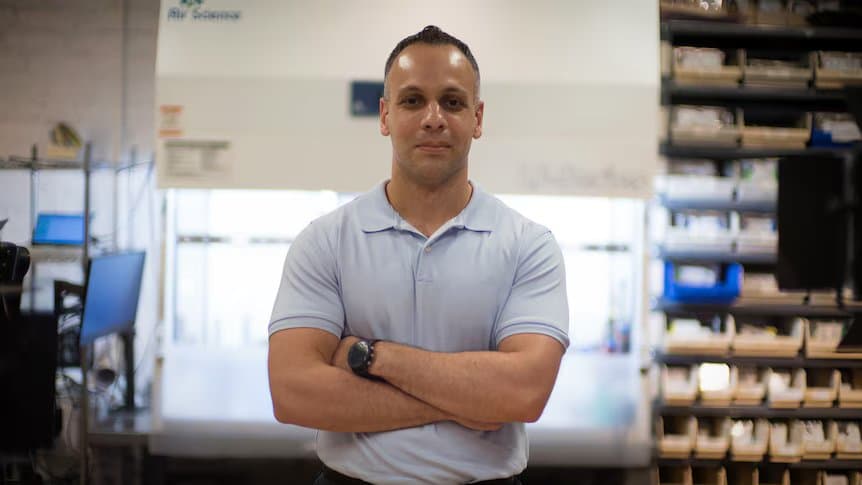
No. A full ISO 14644-1 Class 5 clean room is not required for hard drive data recovery. The technical requirement is a particle-free zone at the work surface where the drive is opened, not a room-scale sterile facility. We use a 0.02 µm ULPA-filtered laminar-flow clean bench. The bench creates a continuous vertical curtain of filtered air that pushes contaminants down and away from the work surface. That curtain gives a hard drive the contamination control it needs during the open-drive window without tying the quote to room-scale facility overhead.
A Common Claim:
You need a $2,000,000 clean room for data recovery
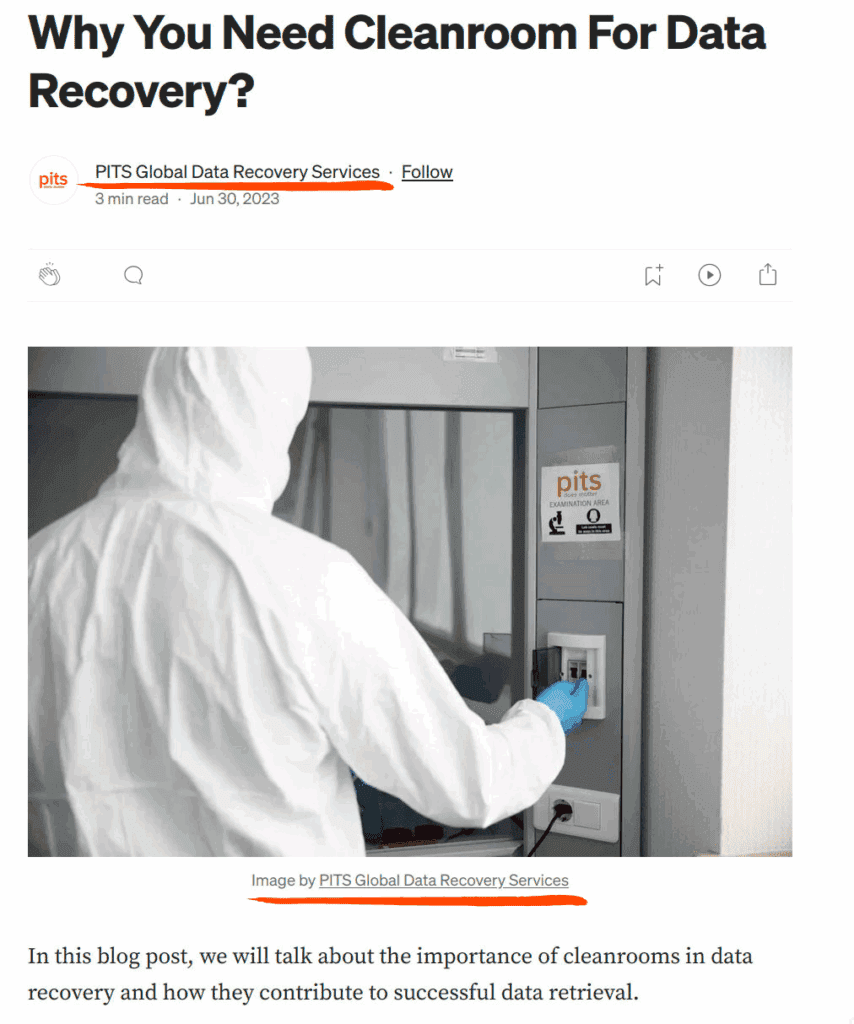
Some companies showcase room-scale clean rooms and full body suits in their marketing. While impressive-looking, the functional requirement for data recovery is a particulate-free work zone, not necessarily a room-scale sterile facility.
What Actually Matters:
A properly filtered workspace
Opening a hard drive in your living room is a bad idea; we won't dispute that. A well-maintained ISO clean room provides the contamination control a hard drive needs. But a room-scale facility isn't the only path to safe recovery. Here's what's actually needed:
- Filtered air that removes ultrafine particles
- Consistent laminar airflow that flushes contaminants
- Gloves and proper handling to protect platters from contact contamination
- Engineers who know what they're doing
At Rossmann Repair Group, we do all four.
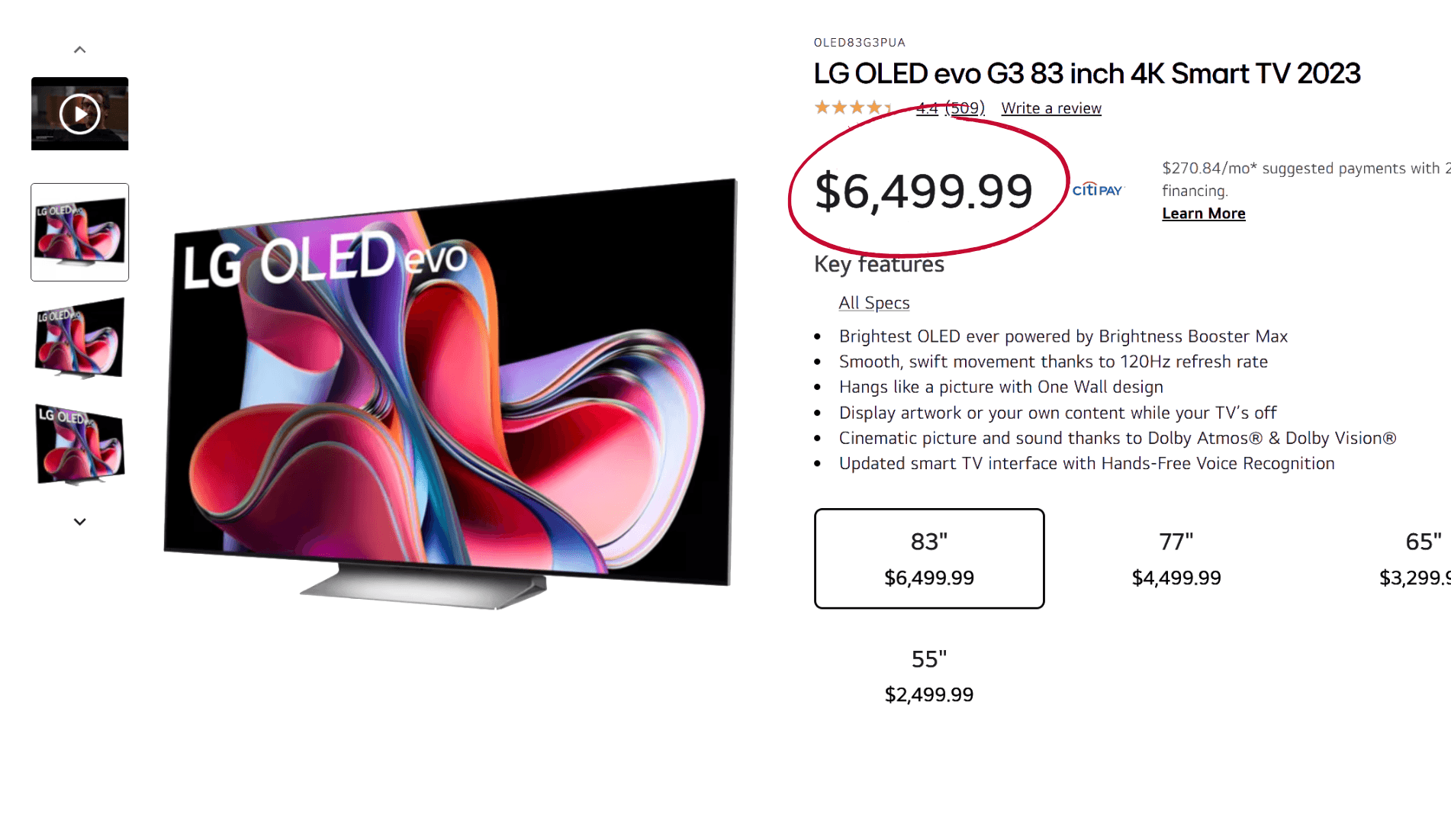
Clean bench and consumer electronics cost comparison
While full clean-room facility costs can run into the millions, the professional equipment required to secure a hard drive data recovery work zone is far more accessible.
This is a 0.02 µm ULPA-filtered laminar-flow clean bench. Let's put it to work and see how it performs.
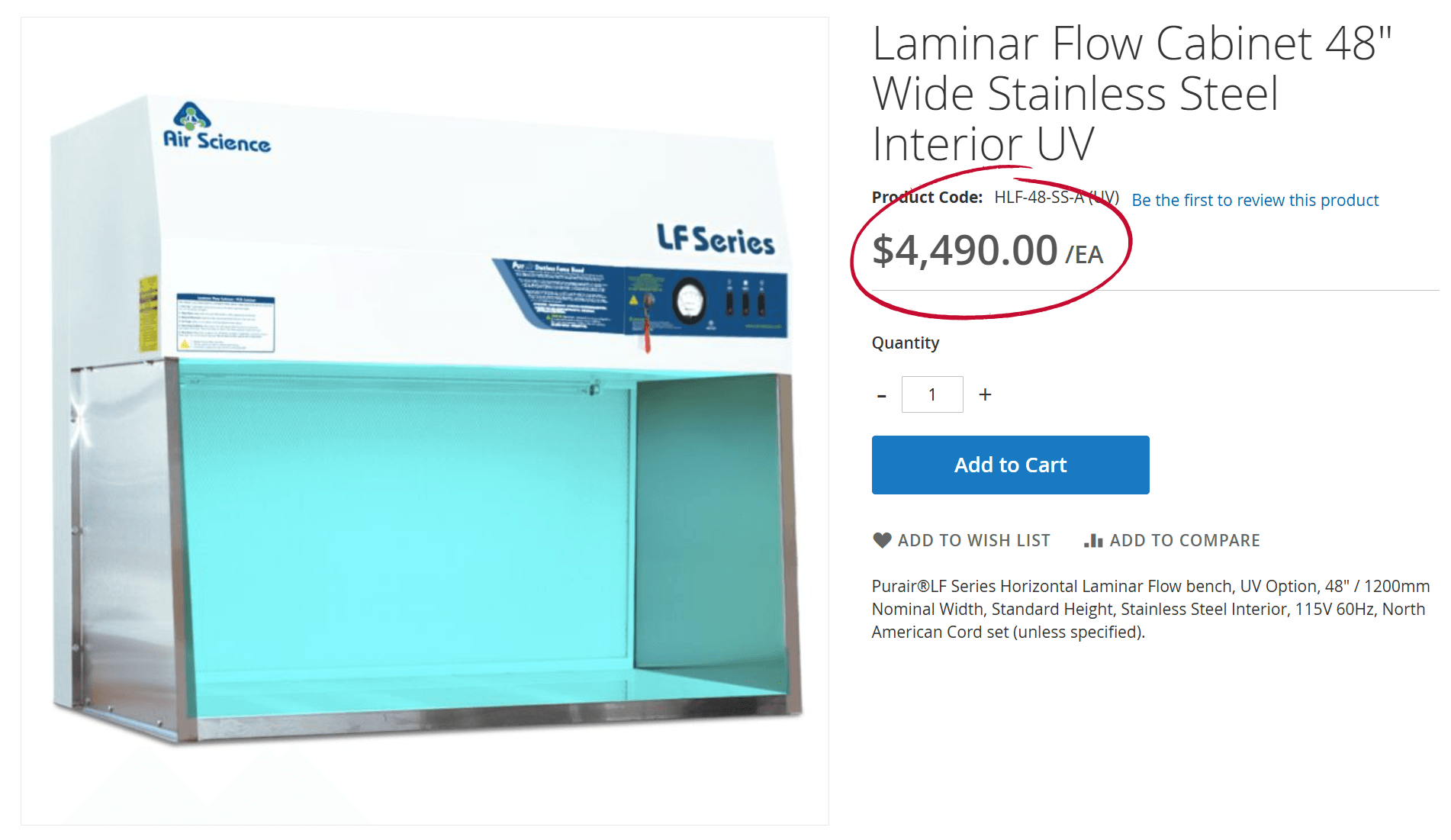
The 0.02 µm ULPA-filtered laminar-flow clean bench protects drives from airborne particulates while open. It creates a vertical curtain of filtered air that continually flushes contaminants away from the work area. In other words, we achieve contamination control at the work surface without the overhead of a room-scale facility.
Particle counter test inside the bench
Working inside the bench
A laminar-flow bench isn't a sealed box that you contaminate the moment you reach into it. The bench continuously pushes ULPA-filtered air downward through the work area. Contaminants from the technician's arms and body are carried down and away from the work surface, not onto the platters.
This is the same principle used in pharmaceutical compounding, semiconductor fabrication, and biological safety cabinets. The airflow is what keeps the work zone clean, and it does so continuously while the technician is actively working.
Our technicians wear nitrile gloves for all open-drive procedures. Gloves prevent fingerprints, skin oils, and contact contamination on platters. Between the vertical airflow handling airborne particulates and gloves handling contact contamination, the drive surface is protected on both fronts.
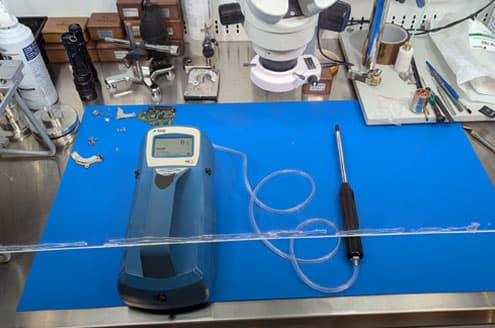
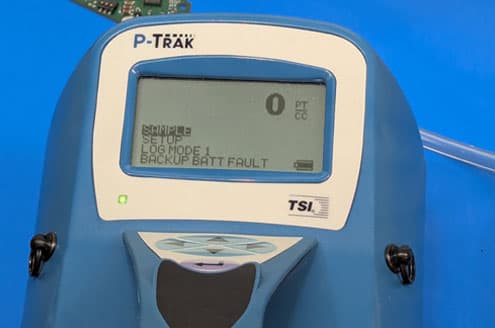
What are the ISO 14644-1 particle limits for data recovery: Class 4 vs. Class 5?
ISO 14644-1 Class 5 permits up to 3,520 particles at 0.5 µm per cubic meter. Class 4 is 10x stricter at 352 particles.
ISO 14644-1 defines cleanroom classifications by measuring the maximum permitted concentration of airborne particles per cubic meter of air. The scale is logarithmic. Here are the two classes relevant to data recovery:
- ISO Class 5 (formerly "Class 100" under Federal Standard 209E)
- Maximum 3,520 particles at 0.5 µm or larger per cubic meter. Maximum 100,000 particles at 0.1 µm or larger per cubic meter.
- ISO Class 4
- Maximum 352 particles at 0.5 µm or larger per cubic meter. Maximum 10,000 particles at 0.1 µm or larger per cubic meter. This is 10x stricter than ISO Class 5.
ISO 14644-1 does not mandate that an entire room must achieve these conditions. Its own scope statement covers cleanrooms, clean zones, and separative devices as defined in ISO 14644-7, so the standard classifies air cleanliness at a zone, not only at a room.
Cleanroom garments and bench filtration
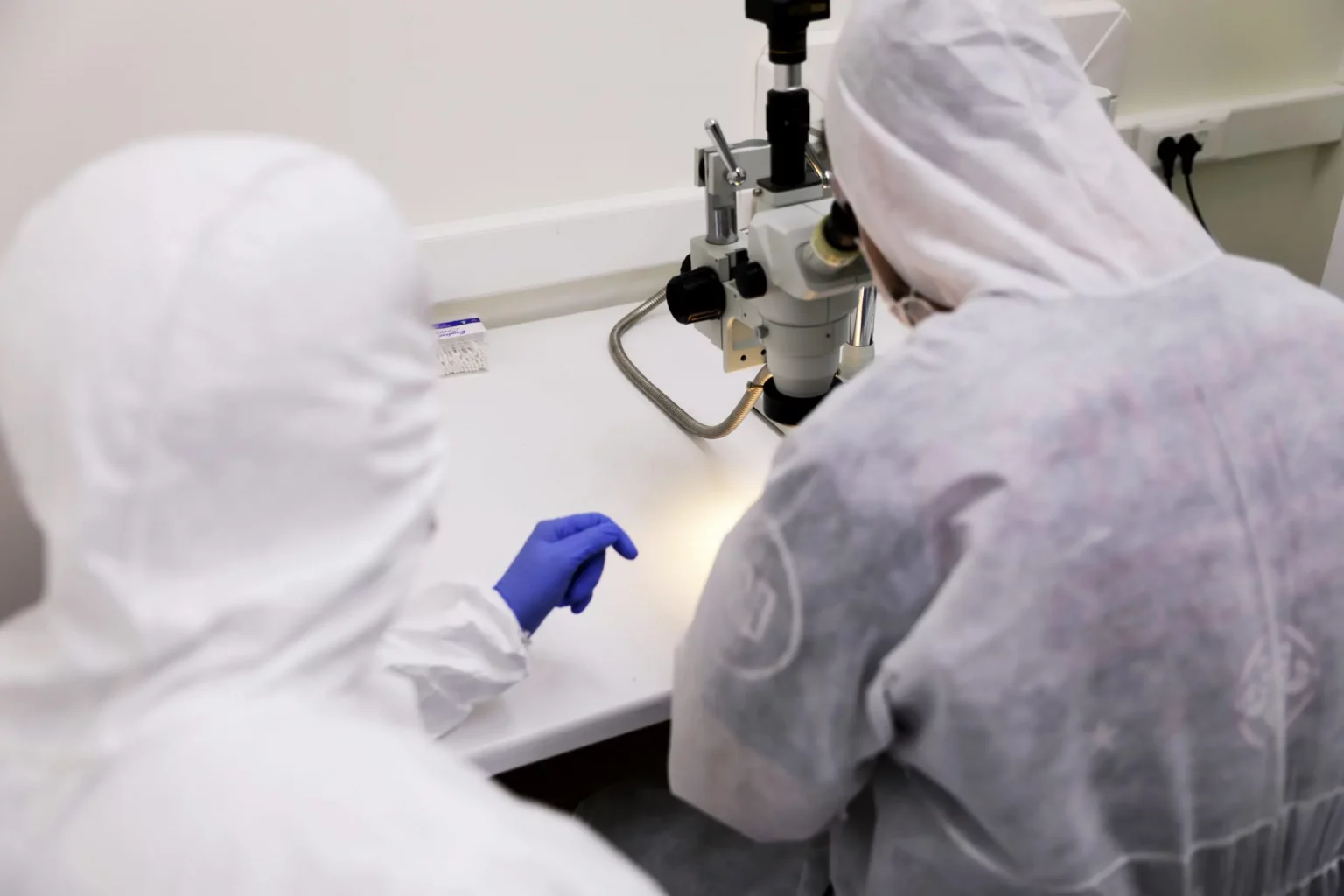
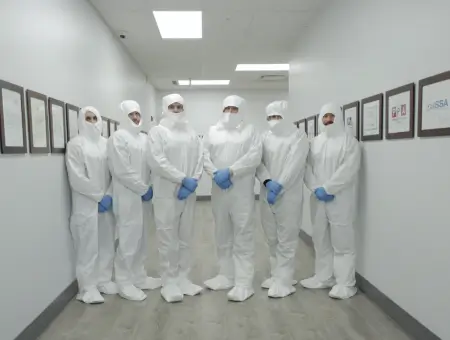
Some facilities use full clean-room suits. For work inside a laminar-flow bench, you don't need them; the bench handles the filtering, not the outfit. What matters is the particle count where the drive actually is. Companies like DriveSavers feature these suits prominently in their marketing, but the suits protect the room from the technician, not the drive from particles. That's the bench's job.
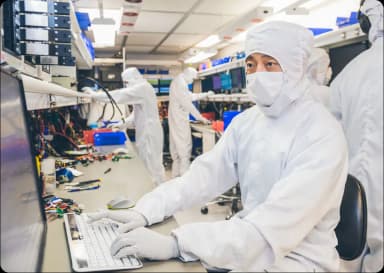
What we do under the bench
The laminar-flow environment is used for internal mechanical hard drive work: head stack replacements, platter transfers, motor and bearing failures, helium-sealed drives, and drives with platter damage. All mechanical procedures run under the 0.02 µm ULPA-filtered clean bench with PC-3000 hardware managing the firmware-level recovery once the mechanical work is done.
This isn't a setup for simple PCB swaps or logical recoveries that don't require opening the drive. When a drive needs internal mechanical work, these are the procedures we perform inside our laminar-flow environment:
- •Head stack replacements: sourcing compatible donor heads and swapping the failed assembly
- •Platter transfers: moving platters to a donor chassis when the motor or bearings have failed
- •Drives with platter damage: surface contamination, scoring, and debris that hasn't destroyed the data tracks
- •Helium drives: hermetically sealed units that we open under the bench, swap heads in, and refill with helium before the platters are ever spun
- •SMR (shingled) drives: these have their own recovery complications on top of mechanical issues
- •Motor and bearing failures: seized spindles requiring platter removal
All of this is done with PC-3000 hardware and firmware-level tools to manage the recovery process once the mechanical work is done.
When recovery is not worth quoting
There are cases where the odds of recovery are very low; catastrophic platter damage, multi-platter drives with severe scoring across all surfaces, or situations that would leave too little magnetic coating to image. In those cases, we tell you upfront rather than take your money on a long shot. We'd rather be honest about the limits of what we can do than string you along.
How long platters are exposed during a head swap
The physical swap, where platters are open and the head stack assembly is being exchanged, takes roughly 15 to 45 minutes. For that entire window, the drive sits directly beneath the 0.02 µm ULPA-filtered clean bench, which pushes filtered air downward and actively deflects ambient particles away from the platter surfaces.
A head swap involves removing a failed head stack assembly using precision head combs and installing a matched donor assembly. The overall recovery process, including diagnostics, donor matching, ROM transfer, the swap itself, and imaging with PC-3000, can take hours. The physical swap where the platters are open and the heads are being exchanged takes roughly 15 to 45 minutes.
During that 15-to-45-minute window, the drive sits directly beneath the ULPA-filtered clean bench. The ULPA filter generates a continuous, unidirectional curtain of filtered air flowing downward. Ambient particles from the technician, the room, and the surrounding workspace are physically deflected away from the platter surfaces by positive pressure at the work zone. The bench does not merely trap particles in a filter; it actively pushes clean air over the platters for the entire duration of the procedure.
Read/write head fly height and particle contact
Modern read/write heads float on an air bearing surface created by the platters spinning at 5,400 to 10,000 RPM.
If a particle larger than the fly height lands on the platter surface, the head collides with it at speeds of 80 to 120 km/h and gouges the magnetic coating. This is why any work that opens the drive must happen under continuous ULPA-filtered airflow, not just behind a closed door labeled "clean room."
How we control ESD at the open-drive bench
A grounded clean bench controls ESD at the point of contact. Our bench uses a grounded anti-static mat and a wrist strap connecting the technician to chassis ground.
When is open-drive cleanroom work actually required?
Open-bench laminar-flow work is required only when the drive has to be physically opened, which means a mechanical or media failure: clicking heads, a seized motor, a head crash, or platter damage. Firmware and electronics faults stay sealed, and pure file-system problems never touch the bench at all.
The deciding question isn't how impressive a lab's facility looks. It's whether your specific failure forces the head-disk assembly open. Match your symptom to its recovery class below, and you'll know whether a physical recovery under the curtain of filtered air is even on the table.
| Failure class | What you see | Open-drive bench needed? |
|---|---|---|
| Physical / mechanical | Clicking or beeping heads, stuck or scored heads, seized spindle motor, dropped-drive head crash, platter surface damage or scoring, and bad sectors or reallocated/pending sectors from media degradation. Bad sectors are always a physical media or head problem, never a file-system one. | Yes for head crashes, stuck heads, and motor failures, where the HDA must be opened under the bench. Drives with only bad sectors are imaged sealed unless the heads have failed. |
| Firmware / electronics | ROM, service-area, translator, or module corruption; a drive detected at the wrong size or hung in busy; a burnt PCB. | No. We access the damaged firmware area with the PC-3000 and work the PCB on a grounded bench. |
| Logical / file-system | Accidental deletion, corrupted or deleted partitions, formatted volumes, lost directory structure. The platters and heads are healthy; only the map to the data is wrong. | No. These are software-recoverable; the drive never gets opened. |
Why running software on a failing drive costs you the recovery
The reason failure class matters so much is that the wrong DIY move on a physical failure isn't reversible. Recovery software and commands like chkdsk are built for the logical class: deleted files, a formatted partition, a missing directory tree. Point that same software at a drive with degrading media or failing heads and it forces the heads to keep seeking and re-reading the damaged surface. Heads that should never have touched the platter scrape across it, and each pass grinds more of the magnetic coating into debris.
That's how a tractable job turns into the most expensive one we quote. A clean head swap sits in our $1,200–$1,500 tier. Once the coating is gouged off, the case moves to the $2,000 surface and platter-damage tier, where donor parts are consumed and the odds drop. A firmware fault that never needed the bench is only $600–$900, and a pure file-system recovery starts at From $250. The published range runs $100–$2,000; a failing drive run through consumer software walks itself toward the top of it.
So before you reach for DIY software, classify the failure first. If the drive is clicking, buzzing, or showing reallocated sectors, it belongs under the bench, and every minute it spins under a scanning tool is a minute of permanent surface loss you can't buy back at any tier.
Why data recovery prices vary so much
Paid search for data recovery is expensive before a drive reaches the bench. If a lab buys most of its leads, that ad spend has to be recovered through successful jobs.
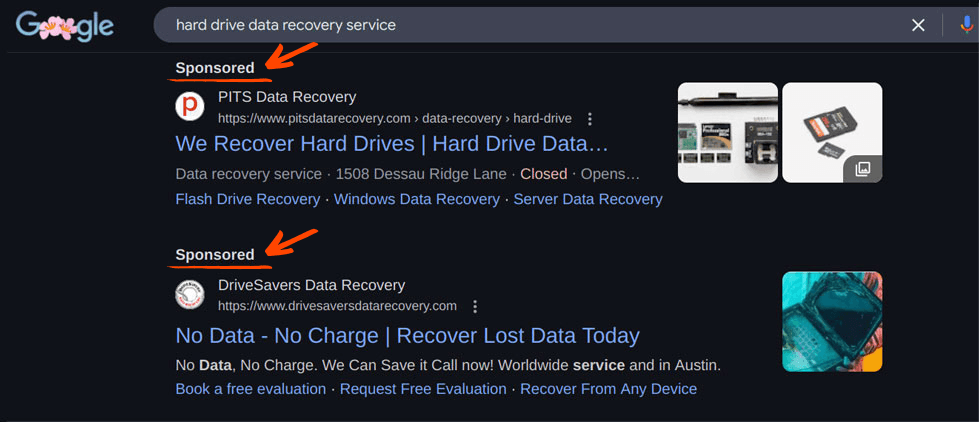
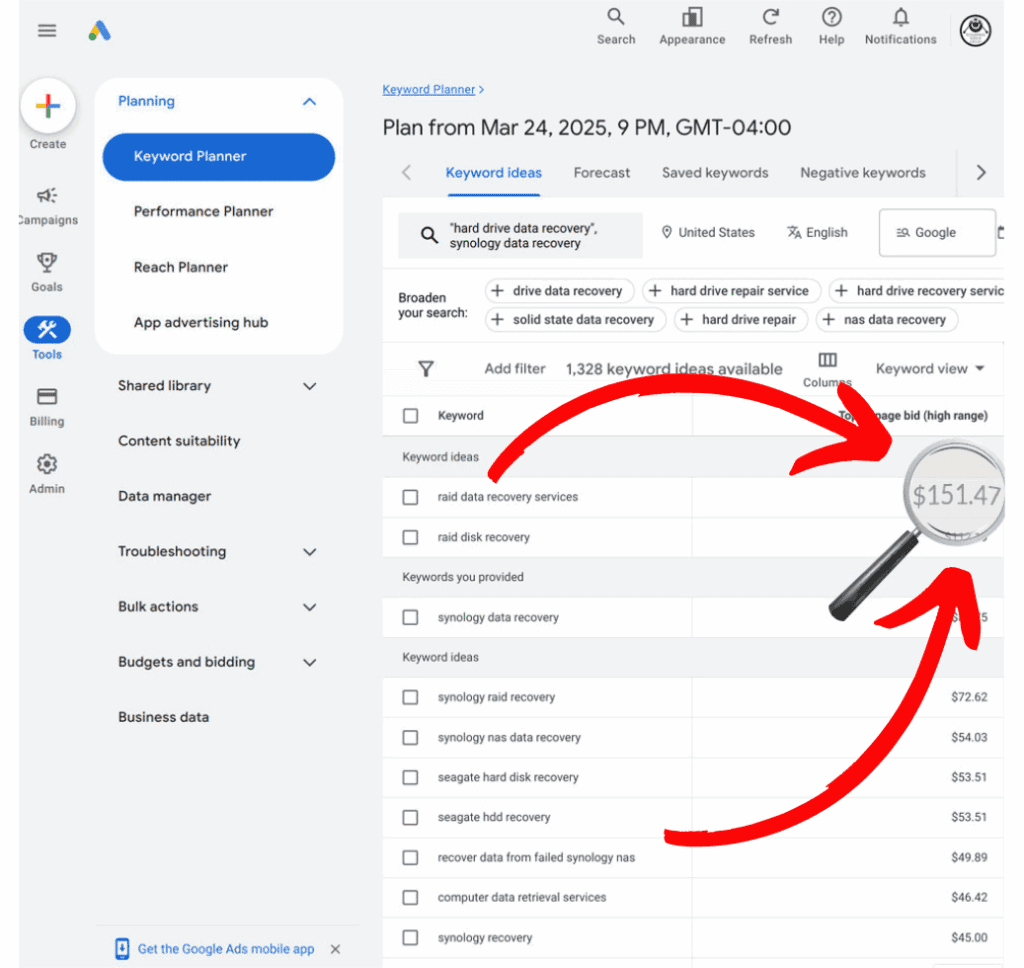
If your issue only needs a cheap part or a quick fix, a shop paying these ad costs can't offer you a reasonable price; they'd lose money before they start. We don't spend money on paid ads, which is part of why our quotes are what they are.
Add the cost of maintaining a room-scale ISO clean room on top of that ad budget. For a head swap that we quote at $1,200–$1,500, a room-scale cleanroom adds facility overhead before the drive reaches the bench. The work performed on the drive is the same. Extra facility overhead and advertising do not create better outcomes for your data. See how our pricing compares to DriveSavers.
Cleanroom facility overhead and what it adds to your quote
A room-scale ISO Class 5 cleanroom requires dedicated HVAC, recertification audits, and disposable garments. A 0.02 µm ULPA-filtered clean bench runs only during active recovery.
Building an ISO Class 5 cleanroom requires capital construction, specialized HVAC operation to maintain the required air change rates, regular third-party ISO recertification audits, HEPA/ULPA filter replacements, and a stock of disposable cleanroom garments.
A vertical laminar flow clean bench runs only when a drive is being worked on. Filter replacement is the primary maintenance cost.
When a room-scale cleanroom is built into the quote for a head swap, part of that price covers the facility's electric bill, its recertification schedule, and its garment procurement.
Our $1,200–$1,500 head swap tier reflects the cost of engineering labor, PC-3000 equipment, and donor parts. It carries no room-scale facility to fund.
DIY recovery risk versus lab recovery cost
Bad sectors are a physical media symptom, failing read/write heads or a degrading magnetic surface, not a logical or file-system one. Running consumer recovery software or repeatedly power-cycling a clicking drive keeps a physically failing drive spinning, which can score the platters or finish off marginal heads and convert a head-swap-tier job into a platter-damage-tier job.
The hazard isn't the software itself; it's pointing the software at the wrong failure class. A logical fault leaves the platters and heads healthy, so a scan is safe. A physical fault means every read attempt drags failing heads across degrading media, and those passes don't come back. A recovery-software scan, repeated power-cycling to "get one more read", or opening the drive at home all do the same thing to a physically failing drive: they grind more magnetic coating into debris and spread contamination across surfaces that were still intact.
The cost math follows the same logic. A firmware fault that never opens the drive sits in the $600–$900 firmware tier, and a pure file-system recovery starts at From $250. A clean head swap is the $1,200–$1,500 tier. Once a DIY scan or repeated power-cycling has gouged the coating, the same case moves to the $2,000 surface and platter-damage tier, where donor parts are consumed and the odds drop. The published range runs $100–$2,000; software run against a physically failing drive walks the quote toward the top of it.
We charge no diagnostic fee, and our no data, no recovery fee policy means a failed attempt costs you nothing. The only thing a DIY attempt can do on a physical failure is raise the floor of what a successful recovery later costs. The cost guide lists every tier, and the DIY hard drive recovery page covers which steps are safe on a healthy drive and which aren't.
When open-drive cleanroom work is required, and when it is not
A laminar-flow clean bench is mandatory only when the drive must be opened for a mechanical or media failure: a head crash or failed head stack, scored or contaminated platters, a seized spindle motor or stuck heads, voice coil actuator damage, and helium-sealed drives. Firmware, electronics, and file-system faults are recovered with the drive sealed shut.
Most labs explain when you need a clean room. Far fewer say which failures never need the drive opened, and that gap is where customers overpay or assume a recovery is harder than it is. A sealed recovery never exposes the platters, so it carries none of the contamination risk and none of the open-drive labor. Helium drives are the exception we handle in-house: when a helium-sealed unit needs mechanical work, we open it under the bench, swap the head stack, and refill it with helium before imaging.
| Symptom | Recovery class | Bench opened? | Pricing tier |
|---|---|---|---|
| Clicking or stuck heads, head crash, seized spindle motor, voice coil actuator damage | Physical / mechanical | Open | $1,200–$1,500 head swap |
| Scored or contaminated platters; surface damage | Physical / media | Open | $2,000 surface / platter damage |
| Bad sectors, reallocated or pending sectors from media wear | Physical / media | Open if heads are failing | $1,200–$1,500 head swap if heads are involved |
| Helium-sealed drive needing mechanical work (head swap) | Physical / mechanical | Open, then refilled with helium | $1,200–$1,500 head swap, in-house |
| ROM, Service Area, or translator/MCMT corruption; wrong reported size; hung in busy | Firmware | Sealed | $600–$900 firmware |
| Burnt PCB, shorted motor driver, blown TVS diode | Electronics | Sealed | $600–$900 firmware / board work |
| Deleted files, corrupted or deleted partitions, formatted volumes | Logical / file-system | Sealed | From From $250 file-system |
The sealed cases share one trait: the platters and heads are intact, so the work happens on the firmware, the board, or the file system, never inside the head and disk assembly. Service Area and translator corruption is read and repaired through the PC-3000 Portable III without breaking the seal; this accesses the damaged firmware area to rebuild the translator and service-area modules. Board faults are worked on a grounded bench. For a drive-managed SMR unit with a corrupted translator, the firmware-level write lock goes on first to halt internal garbage collection and media-cache flushes, and only then does imaging start on the DeepSpar Disk Imager; a SATA write-blocker alone does not stop the drive's own background rewrites.
If your symptom lands in a sealed row, no amount of clean-room marketing changes the work, and the platters never see open air. If it lands in an open row, the deciding factor is a particle-free zone at the drive surface, not a room-scale facility. The hard drive data recovery overview walks through each failure class, the cost guide ties each one to a published tier, and helium drive recovery covers the in-house refill procedure. All of it runs in-house at our Austin, TX lab, with no diagnostic fee and no data, no recovery fee.
We film the bench work and publish it
We document our work on YouTube so you can see exactly how we operate.
Watch us do data recovery using our tools
Curious how we work? Here's a full walkthrough video from our bench.
Ready to start?
Free estimate. Mail-in from anywhere in the U.S. No data, no recovery fee.
Clean room data recovery: common questions
Do you need a clean room to recover a hard drive?
You need a particle-free environment at the work surface, not a room-scale sterile facility. A ULPA-filtered laminar flow bench provides the contamination control required for open-drive procedures. ISO 14644-1 does not require that the entire room meet a classification level; its scope covers cleanrooms, clean zones, and separative devices as defined in ISO 14644-7.
How much does clean room data recovery cost?
At Rossmann Repair Group, a head swap requiring open-drive work under our ULPA clean bench costs $1,200–$1,500. A room-scale ISO Class 5 cleanroom adds facility overhead before the drive reaches the bench. We do not carry that overhead, and our head-swap tier is published before you ship.
How does a clean bench protect the platters during recovery?
It keeps particles from landing on the platter surface during the open-drive procedure. A particle on the platter causes the head to collide with it at speeds exceeding 80 km/h, stripping the magnetic coating. ULPA filtration combined with continuous vertical laminar airflow keeps particles off the platter surface during head stack assembly replacement.
What is the difference between ISO Class 4 and Class 5 for data recovery?
ISO 14644-1 Class 5 permits up to 3,520 particles at 0.5 µm or larger per cubic meter. Class 4 permits up to 352 particles at the same threshold; a 10x reduction. Both levels provide adequate particle control for open-drive HDD procedures. The classification refers to particle concentration, not the physical size of the controlled environment.
Data Recovery Standards & Verification
Our Austin lab operates on a transparency-first model. We use industry-standard recovery tools, including PC-3000 and DeepSpar, combined with strict environmental controls to maintain drive integrity. This approach allows us to serve clients nationwide with consistent technical standards.
Open-drive work is performed in a 0.02 micron ULPA-filtered laminar clean bench.
Transparent History
Serving clients nationwide via mail-in service since 2008. Our lead engineer holds PC-3000 and HEX Akademia certifications for hard drive firmware repair and mechanical recovery.
Media Coverage
Our repair work has been covered by The Wall Street Journal and Business Insider, with CBC News reporting on our pricing transparency. Louis Rossmann has testified in Right to Repair hearings in multiple states and founded the Repair Preservation Group.
Aligned Incentives
Our "No Data, No Charge" policy means we assume the risk of the recovery attempt, not the client.
Technical Oversight
Louis Rossmann
Our engineers review all lab protocols to maintain technical accuracy and honest service. Since 2008, his focus has been on clear technical communication and accurate diagnostics rather than sales-driven explanations.
We believe in showing the bench rather than just describing it. Open-drive work runs on a 0.02 micron ULPA-filtered laminar clean bench, and we filmed it.
See the particle counter test at the benchNeed data recovered from a failed hard drive?
Free estimate. No diagnostic fees. No data, no recovery fee. Mail-in from all 50 states.
Related services
Related Pages
The advertising tax explained
Labs we recommend by name
Full HDD recovery overview
Five published pricing tiers
Fact check with sourced evidence
How we handle your drive
Head swap procedures explained
Published pricing tiers, no diagnostic fee
Mail-in recovery from any location
How to evaluate data recovery labs