A cleanroom is an entire room built to maintain a specific particle count per cubic meter. What hard drive recovery actually requires is particle control at the point where the drive is open and platters are exposed. A ULPA-filtered laminar flow bench achieves this at 2-5% of the cost. The difference is overhead, not technical performance.
“Data recovery must be performed in an ISO Class 5 certified cleanroom to prevent contamination.” This is the centerpiece of marketing for large data recovery operations. Their websites feature photos of technicians in bunny suits, airlocks, and white-walled cleanroom chambers.
An ISO Class 5 (formerly Class 100) cleanroom allows no more than 3,520 particles of 0.5 microns or larger per cubic meter. A ULPA-filtered laminar flow bench captures particles down to 0.02 microns (20 nanometers) at the work surface where the drive is open.
| Factor | ISO Class 5 Cleanroom | ULPA Clean Bench |
|---|---|---|
| Build cost | Dedicated room construction, HVAC, and certification | Single bench-top unit |
| Annual maintenance | HVAC, gowning supplies, recertification | Filter replacement |
| Filtration threshold | 0.5 microns (ISO standard) | 0.02 microns (ULPA filter) |
| Area filtered | Entire room (floor, ceiling, walls) | Work surface where drive is open |
| Head swap pricing impact | Facility overhead built into every quote | $1,200–$1,500 |
Filtration thresholds per ISO 14644-1 and ULPA filter specifications.
Firmware repairs, logical recovery, PCB diagnosis, and many electronics-level fixes are performed with the drive sealed. A cleanroom adds zero value to these cases, but cleanroom-equipped labs apply the same overhead to all invoices.
A cleanroom photographs well. It signals institutional seriousness. For a panicking customer comparing labs, “ISO Class 5 Certified Cleanroom” sounds more trustworthy than “laminar flow bench in a normal room,” even though the bench provides equal or better filtration where it matters.
Hard drive head swaps require particle control because the head keeps a baseline aerodynamic clearance of a few nanometers above the platter surface. A particle larger than the flight height causes a head crash. This is a real engineering constraint that demands filtration.
A ULPA-filtered laminar flow bench creates a curtain of filtered air flowing across the work surface. Any particle generated during the procedure (from tools, gloves, or the drive itself) gets swept away from the platter surface and out the front of the bench.
The cleanroom approach filters the entire room, including the floor, ceiling, walls, and the empty space above the technician's head. This is necessary in semiconductor manufacturing, where wafers are exposed for hours across an entire production line. In data recovery, the drive is open for 15-30 minutes on a 2-foot by 3-foot work surface. Filtering the entire room to protect a 3-inch platter is engineering overkill that serves the marketing budget, not the recovery outcome.
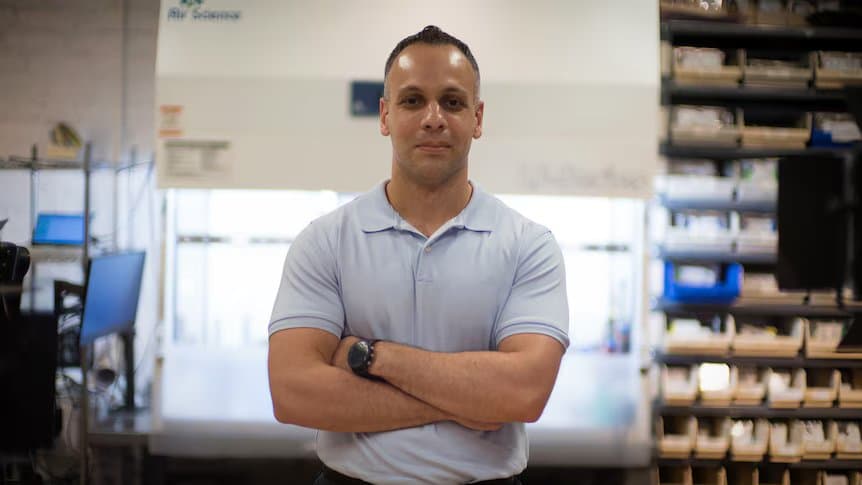
We use a 0.02 micron ULPA-filtered clean bench. The bench costs a fraction of a cleanroom, and that savings goes directly to lower pricing.
Head swaps: $1,200–$1,500, published before you ship
SSD recoveries: from $200 with zero cleanroom surcharge, because SSDs do not need particle control. SSD recovery details.
No diagnostic fee. No data, no recovery fee. See our HDD pricing.
Donor drives are matching drives used for parts. Typical donor cost: $50–$150 for common drives, $200–$400 for rare or high-capacity models. We source the cheapest compatible donor available. +$100 rush fee to move to the front of the queue.
Since 2008
Established
As Featured In
Related services
HDD recovery from $100. Head swaps on ULPA bench.
Detailed comparison of cleanroom and clean bench approaches.
The other end of the wrong-solution spectrum.
All data recovery myths debunked with technical evidence.
Call (512) 212-9111 or ship your drive to our Austin lab. No diagnostic fee. No data, no recovery fee.