Consumer Education
Honest Data Recovery Companies
I would rather you use one of these companies than overpay a marketing machine. These are independent labs and benches run by technicians who do the work themselves, and they charge based on the repair, not the perceived value of your data.
If you are reading this and thinking, "why would a business recommend its competitors?" it is because the data recovery industry has a problem. The biggest names publish no rate card and no equipment list, so a person in a panic has nothing to compare and picks whoever ranks first. I would rather lose a customer to an honest competitor than see them get overcharged.
Yes, I recommend specific independent labs over my own work when they fit you better: iPad Rehab, iBoard Repair, VCC Board Repairs, Gadget Genie, Desert Data Recovery, $300 Data Recovery, MordeLabs in Portugal, and the owner-operated members of datarecoveryprofessionals.org. They do the work in-house and charge for the repair, not the perceived value of your data.
Companies I Recommend by Name
iPad Rehab
Jessa Jones, PhD · Honeoye Falls, NY
Jessa Jones holds a PhD in Human Genetics and Molecular Biology from Johns Hopkins School of Medicine. She runs iPad Rehab out of Honeoye Falls, New York, doing iPhone and iPad data recovery through board-level microsoldering, and she trains other independent technicians through her Practical Board Repair course.
Apple banned her from their support forums for telling customers that water-damaged iPhone data is recoverable. CBC News investigated the ban in 2019 and confirmed Apple's support channels were telling customers recovery was impossible when it was not. She has recovered data from devices that DriveSavers declared unrecoverable.
iPad Rehab is iOS board work. For a server array or a mechanical hard drive, one of the drive labs below is the fit.
iBoard Repair
Aaron Harrington · San Jacinto, CA
Aaron Harrington founded iBoard Repair and works as its lead technician, out of San Jacinto, California. They work on dead, water damaged, and severely broken iPhones, and name NAND transfers and advanced RAM rework as services.
They have flat rates on their website rather than quotes that are made up after they have your device.
We have sent iBoard Repair work when our own bench was swamped, and it has done good work for the customers we sent. For a hard drive, an SSD, or a RAID array, the drive labs below are the fit.
VCC Board Repairs
Jesse Cruz · Star, ID
Jesse Cruz owns VCC Board Repairs and does the bench work himself. His site states "we have been microsoldering since 2017," and the shop takes logic board repair and data recovery on iPhones, iPads, and Samsung and other Android phones, including water-damaged devices and phones that no longer power on. He is on this list because I know the quality of his work.
Cruz publishes the full repair on YouTube and Facebook, so his diagnostic reasoning is on the record where other technicians can check it. He also teaches a microsoldering course for other shop owners.
This is nationwide mail-in with local drop-off by appointment, and the site lists turnaround at roughly four to eight weeks, possibly longer, following a relocation. For a mechanical hard drive, an SSD, or a RAID array, this is the wrong bench.
Gadget Genie
Joe Ham · Federal Way, WA
Joe Ham runs Gadget Genie in Federal Way, Washington, and his own site lists him as owner and master technician. The shop repairs phones, tablets, computers, game consoles, and drones, and the part relevant to this page is the microsoldering: recovering data off devices that no longer turn on.
He is well known in the repair community as not just an exceptionally talented technician who can perform highly advanced repairs with surgical precision, but also as a consummate gentleman and great person.
Desert Data Recovery
Founded by Tim Homer · Peoria, AZ
Tim Homer opened Desert Data Recovery because Phoenix customers were having to ship drives out of state. Recovery work is still done in the company's own Arizona lab.
Tim founded datarecoveryprofessionals.org, the group of independent, owner-operated data recovery labs.
$300 Data Recovery
Brian Cometa · Los Angeles, CA
Brian Cometa founded $300 Data Recovery in 2007. No diagnostic fee. No data, no charge.
The lab is equipped with PC-3000 and an in-house cleanroom for head and platter work. Brian's brother Tim Bryson handles cleanroom operations, and senior engineer Nathan Irvine was the company's first employee.
The name is the starting tier, not a single universal price. The published flat fees are $300, $500, and $700 depending on the failure, and the exceptions in the section on non-refundable fees below apply.
MordeLabs
Miguel Oliveira · Maia, Portugal
Miguel Oliveira runs M.O.R.D.E, which trades as MordeLabs, out of Maia in northern Portugal. Fifteen years in IT, more than ten of them running this lab, and he is a member of datarecoveryprofessionals.org, whose profile for him lists NATO security clearances and a postgraduate qualification in cybercrime and digital forensics. His own site puts it at 100 percent of cases handled in-house.
MordeLabs built its own tooling for physically damaged helium-filled drives, which is the first reason I send people there. Most labs treat a damaged helium drive as somebody else's problem, because you can't open a sealed drive on an ordinary bench and expect it to run afterward. Their site describes developing "proprietary tools for the new generation of helium-filled drives," and the member profile lists the lab as best known for an in-lab solution for exactly that.
The second reason is unsupported flash. When a controller is not on the supported list for PC-3000 or MRT, most labs stop, because no vendor has shipped a module for that chip and there is nothing left to click. MordeLabs works out the access method itself, and publishes the Marvell 88SS1074 as one example, calling its work there the "development of proprietary solutions for access and recovery in failure scenarios." The same applies to their NVMe work.
This is Portugal, so a US reader is looking at international shipping, customs, and a longer turnaround.
Why We Recommend Competitors
There is enough data recovery work for every honest lab in this industry. Sending a customer to iPad Rehab or Desert Data Recovery does not cost us anything we can't earn back by doing good work for the next person who calls.
What costs independent labs work is that people do not trust the data recovery industry. When someone loses data and their first reaction is that they are about to be taken advantage of, the entire market contracts. Every honest lab loses customers who never pick up the phone. We would rather grow the number of people who feel safe sending a drive to an independent lab than fight over a smaller pool of customers who distrust everyone.
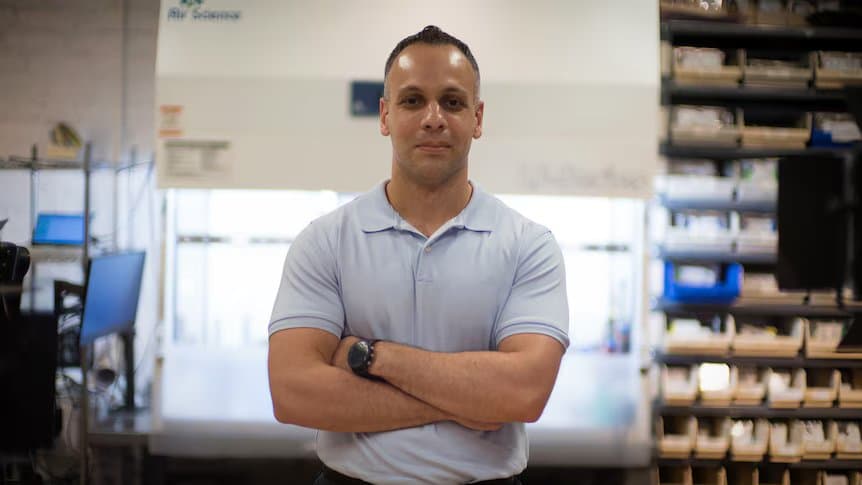
I've spent 14+ years filming recoveries, publishing pricing, and teaching people how to enter the repair industry. When more customers understand what data recovery involves, what it should cost, and how to identify a real lab, the market grows for every honest shop.
We compete with the companies listed on this page, and we refer work we can't handle in-house to labs that can. Independent labs also organize among themselves, through groups like datarecoveryprofessionals.org, whose members share techniques and beta test recovery hardware for the manufacturers that supply the trade. We are not a member of that group and claim no standing in it. When one honest lab earns a customer's trust, it raises the credibility of every other honest lab in the field.
How I Chose These Labs
We are a data recovery company. Every lab named on this page competes with us for the same customers. We take no commission, referral fee, or payment of any kind from anyone recommended here, and nobody paid to be listed.
What we take
Nothing. No commission, no referral fee, no affiliate link, no payment for placement. If you use one of these labs instead of us, we lose the job and gain nothing.
Relationships we have
Jessa Jones of iPad Rehab is a long-time collaborator of mine and a fellow Right to Repair advocate.
We know Aaron Harrington of iBoard Repair as well. When our own bench has been swamped we have referred iPhone work there, and iBoard Repair has done good work for the customers we sent. Read that entry knowing there is a working relationship behind it.
How a lab gets on this list
Four things: the recovery work happens on the company's own bench rather than being forwarded to someone else, pricing is published or the model is on the site before you ship, there is no diagnostic fee to look at your drive, and the technical claims survive checking against the equipment and procedures the lab actually runs. Peer standing in the trade matters too, which is why membership of a vetted group carries weight here. Two of the board-repair benches are here on my own knowledge of the technician rather than on a published rate card.
If we got something wrong
Any company named on this page, including the ones criticized, can write to help@rossmanngroup.com and dispute a claim. If a statement here is wrong we will correct or remove it and say that we did. Claims sourced to public posts are linked to archived copies so you can check what the source said rather than taking our word for it. The full standard is in our editorial standards and corrections policy.
This list is short and it is not a survey of the industry. It reflects labs whose work I have reason to know about, which skews toward people active in the same professional circles I am. A good lab can be absent from this page simply because I've never had cause to see their work.
Data Recovery Professionals Group
If none of the companies above are near you, check datarecoveryprofessionals.org. It is a group of independent, owner-operated labs.
Tim Homer founded the group because he saw the same problem I see: customers searching Google for data recovery and landing on whichever company bid the most on ads, not whichever company does the best work. The group gives independent labs a way to collaborate, share techniques, and refer customers to each other when a case falls outside their specialty.
Members are based in the US, Canada, UK, Germany, Switzerland, Portugal, Italy, Netherlands, Denmark, South Africa, Japan, Australia, Brazil, and more. Miguel Oliveira of MordeLabs is one of two Portugal entries. Cross-referral is how a helium drive or an unsupported controller reaches the one member who has already solved that specific problem. The associated subreddit, r/AskADataRecoveryPro, is a good starting point if you want free initial guidance from vetted professionals before committing to a lab.
US members
This reflects the group's published member listing. We have not audited each lab ourselves, and a listing there is not a certification. Check any lab against the four questions in the verification section below before you ship to them.
Full member directory: datarecoveryprofessionals.org/member-listing
What These Companies Have in Common
Owner-Operators
The person answering the phone is either the person doing the recovery or works directly alongside them.
Published Pricing
The five drive and iOS labs publish price ranges or flat rates on their own sites, or put the model in the company name. VCC Board Repairs and Gadget Genie quote per job, and give you the number before you ship.
No Data, No Charge
iPad Rehab, Desert Data Recovery, $300 Data Recovery, and MordeLabs publish both a no-data-no-fee policy and no diagnostic fee. iBoard Repair publishes the no-data-no-fee half and does not address a diagnostic fee. Gadget Genie publishes a no-fix-no-fee repair policy, which is a different promise. VCC Board Repairs publishes neither.
Real Labs, Real Equipment
PC-3000, cleanrooms or validated clean benches, donor drive inventories, and microsoldering stations. The drive labs above publish their equipment lists; the board-repair benches do not. What a lab runs is the first thing to check on any lab you are weighing.
Why These Alternatives Exist
When you search Google for "data recovery," the top results are paid placements. Whoever sits there bought the spot; nothing about that position tells you what is on their bench or what they will charge you. What DriveSavers does publish is on the record, and you should read it before you call anyone.
DriveSavers has real technicians and real cleanrooms. The problem is the business model. DriveSavers maintains over 25,000 partners according to their own website. Gillware's partner page states that partners "earn 15% commission on successful paid cases you refer to Gillware or resell." Both programs are published by the companies running them, and both mean the shop recommending a lab to you may be paid when you say yes. Ask.
Some companies take it further. SecureData lists over 200 "locations" that turn out to be drop-off counters at unrelated retail stores. Your drive gets shipped to a centralized lab in another state. You could have shipped it yourself for less.
The independent labs on this page do not play that game. They operate single labs, do all work in-house, and let their reputation drive business instead of paid ads and referral commissions.
What Data Recovery Professionals Have Documented
The independent data recovery professionals I recommend above are the people who fix what the big-name companies send back, and this is what they have documented publicly.
What a Practitioner Reported About Drives Returned Missing Components
A data recovery practitioner posting as Zorb750 on r/datarecovery described a Western Digital drive that SecureData quoted at almost $3,000. In that account the customer declined and asked for the drive back, and it was returned missing the EEPROM from the board. It took a letter from an attorney, plus photos of the drive, before the claim that the part was already missing on arrival was dropped. The practitioner reported that the drive had not been opened.
Linked to the Wayback Machine capture rather than the live thread, so the record survives if the comment is edited or deleted.
Reported Firmware States on Drives Returned After Declined Quotes
The same account described a Toshiba drive returned by SecureData with all heads disabled in firmware after the customer refused a $2,000 to $3,000 quote, and reported recovering half a dozen smartphones where SecureData had quoted four-figure recoveries, but the actual problems were dead batteries or other superficial issues.
In April 2022, the Desert Data Recovery account on r/datarecovery described a case where a news crew sent a working drive to a data recovery company, received a $2,000+ quote for "head failure," and got it back opened with the heads mangled. The same comment explained why firmware-level changes are hard to catch: "A simple change of a few bits in a critical module and the data is no longer recoverable and you cannot find out why."
Volume of Drives Arriving from the Same Source
In April 2022, the $300 Data Recovery account on r/datarecovery said it received about a dozen drives a week that had gone to one unnamed company first, and had seen signs of sabotage from that company over the years. The same comment added that the practice appeared to have stopped, and that it had seen no obvious signs in the prior one to two years.
Devices That Worked Fine After Being Returned
Multiple customers on r/datarecovery have reported receiving high quotes from SecureData for devices with minor or nonexistent problems:
- A student was quoted $1,760 for a water-damaged iPhone. SecureData offered to drop the price to $900 if the student removed a negative review about the Brooklyn drop-off location. The phone worked when plugged in after being returned.
- A customer was quoted $2,080 for phone recovery with a success guarantee. They declined, took the phone to a local shop, and a $160 screen and battery replacement restored all data.
- A poster described SecureData offering to come down to about $1,000 plus fees on the condition that favorable BBB and Google reviews, including a video testimonial, were submitted before the recovered data was shipped back.
Review Manipulation in the Industry
In 2023, NBC Bay Area and Fake Review Watch investigated review patterns at DriveSavers. The investigation found five-star Yelp reviews of DriveSavers whose text had been copied word for word from genuine Google reviews of unrelated businesses. Yelp removed those plus roughly 100 more and placed a "Suspicious Review Activity Alert" on the listing.
Yelp later removed the alert, and said it lifts alerts when the behavior has stopped for 90 days. DriveSavers denied any involvement. Its senior marketing manager told NBC she suspects a competitor posted the duplicates to get DriveSavers in trouble with the review platforms, and told the station the company had begun verifying the authenticity of all its reviews. Yelp said it had no evidence a competitor posted them. I've no way to settle that question.
Kay Dean, a former federal investigator and the founder of Fake Review Watch, has since published video investigations of two other data recovery brands. On July 30, 2026 she published "Fake Review Trades for WeRecoverData", presenting 2019 captures from Facebook review-exchange groups in which a five-star review of a WeRecoverData listing appeared the same day as a five-star review posted in the opposite direction. On August 26, 2026 she published "Fake Reviews for SALVAGEDATA", covering five-star reviews of SalvageData listings from accounts whose other reviews sit thousands of miles away. Those are her investigations and her conclusions, and we publish her records with her permission rather than restating them as our own findings.
The captures, her conclusions in her own words, and a plain statement of what the records do and do not show are on her WeRecoverData findings and her SalvageData findings. Our own coverage of each company sits alongside them, on WeRecoverData and SalvageData, and the wider pattern across the industry is documented on our fake reviews page.
None of that touches the labs I recommend on this page. I know these people and I know how their listings were built: iPad Rehab, iBoard Repair, VCC Board Repairs, Gadget Genie, Desert Data Recovery, $300 Data Recovery, and MordeLabs do not trade reviews, do not buy them, and do not condition a discount on posting one. I've never seen a manipulated review from any of them. If you ever find evidence otherwise, send it to help@rossmanngroup.com and I will act on it.
The labs I recommend have review counts built over years of ordinary customer work rather than campaigns. Counts move constantly, so check the current numbers yourself.
What Non-Refundable Fees Actually Look Like
Some data recovery companies charge non-refundable fees that the customer pays whether or not any data comes back. BBB complaints against PITS Global Data Recovery describe a pattern of non-refundable engagement fees, including one October 2024 complaint over a $918 payment. In its response, PITS stated the payment "was not a down payment" but a non-refundable engagement fee. An April 2024 complaint shows $569 under the same terms. For balance: PITS is BBB-accredited with an A+ rating.
iPad Rehab, Desert Data Recovery, $300 Data Recovery, and MordeLabs each work on a no-data, no-fee basis for the ordinary case, and none of them charges a diagnostic fee to look at your drive. iBoard Repair publishes the same no-data, no-fee guarantee, and its site does not address a diagnostic fee either way. Gadget Genie publishes a no-fix-no-fee repair policy, and VCC Board Repairs publishes no fee policy at all. Three of the labs publish narrow, disclosed exceptions, and you should know what they are before you ship:
- $300 Data Recovery lists four exceptions in its own FAQ, including a $100 up-front non-refundable fee if the drive cover has already been opened, a $100 fee for priority service, and non-refundable payment for a donor drive ordered on your behalf.
- MordeLabs works no data, no fee, and states that this changes if another shop worked on the device first.
Those are disclosed, bounded, and tied to real costs the lab incurs before it knows the outcome. That is a different thing from a four-figure fee collected up front and kept when the recovery fails.
How to Verify a Data Recovery Lab Yourself
You can vet any recovery lab before shipping a drive by checking four things: the imaging hardware it runs, the filtered environment where it opens drives, whether pricing and the no-data-no-fee policy are in writing, and whether it pressures you with non-refundable fees or review-for-discount deals.
Ask what hardware images the drive
A real lab images a failing drive on dedicated hardware like the PC-3000 or a DeepSpar Disk Imager, not by cloning it with consumer software such as R-Studio, DMDE, ddrescue, or chkdsk run straight on the patient drive.
A hardware imager can disable the drive's internal retry loops and limit how many times it re-reads a bad sector, so a weak head is not driven to keep scraping the same track and scoring the platter. It also interfaces with vendor-specific firmware commands and can rebuild firmware modules that consumer tools never touch.
Consumer software run against the patient drive can turn a recoverable drive into a dead one. Ask directly: do you image failing drives on a dedicated hardware imager, and do you keep a donor-drive inventory for head and PCB matching?
Ask about the environment where the drive is opened
A full walk-in cleanroom is not required for single-drive head work. The working standard is a validated laminar-flow clean bench that pushes filtered air across the exposed platter; ours is a 0.02 micron ULPA-filtered clean bench. Ask what ISO class or particle rating the drive is opened under, and whether platter work happens under filtered laminar airflow rather than on an open desk. Our write-up on whether you really need a cleanroom explains what that airflow actually does.
Check that pricing is in writing first
Look for published price ranges or a flat fee, a written no-data-no-fee policy, and a firm quote before anyone opens the drive. There should be no non-refundable engagement, diagnostic, or attempt deposit standing between you and a straight number. Compare a lab's terms against our own published pricing to see what transparent should read like before you commit.
Watch for these red-flag patterns
- A lab that will not give firm pricing tiers before it has your drive in hand.
- Non-refundable evaluation, diagnostic, or attempt fees charged even when recovery fails.
- A demand for payment on a recovery that did not return your files.
- A discount tied to posting a positive review or a video testimonial.
- Advertised "200+ locations" that turn out to be drop-off counters forwarding drives to one central lab in another state.
Clear all four and you can ship the drive wherever the lab sits.
Frequently Asked Questions
Why does Rossmann Group recommend competitors?
There is enough data recovery work for every honest lab in this industry. Sending a customer to a fair-priced competitor does not hurt our business. What shrinks the market for all of us is the distrust created when marketing-driven companies overcharge.
We would rather grow the number of people who trust data recovery companies than fight over a shrinking pool of skeptical customers. I've spent 14+ years publishing pricing, filming recoveries, and teaching people how to enter the field, and the industry gets better when honest labs support each other, share techniques, and send customers to whoever can serve them best.
What is datarecoveryprofessionals.org?
A group of independent, owner-operated data recovery labs worldwide. Founded by Tim Homer of Desert Data Recovery. Members share techniques, beta test equipment for DR hardware manufacturers, and refer cases to each other when a job falls outside their specialty.
How much do honest data recovery companies charge?
Independent labs publish price ranges or flat rates, or state the pricing model on the site, and they charge based on the work performed. Contact each company directly for current rates. Without a published rate card there is nothing to compare until your drive is already at the lab. See our pricing breakdown for the full explanation.
Are these companies better than DriveSavers?
DriveSavers is a legitimate lab with real capabilities. The problem is what they charge. iPad Rehab has recovered devices DriveSavers declared unrecoverable. Desert Data Recovery and $300 Data Recovery both publish what is on their benches and what they charge, and both are listed above with those details. DriveSavers publishes neither, so the comparison you would want to make can't be made before you ship.
Does Rossmann Group get paid to recommend these companies?
No. We receive no commission, referral fee, affiliate payment, or compensation of any kind from any company recommended here, and none of them paid to be listed. We are ourselves a data recovery company, which makes every lab named on this page a direct commercial competitor. Jessa Jones of iPad Rehab is a long-time collaborator and fellow Right to Repair advocate, so weigh her entry knowing that. We also know Aaron Harrington of iBoard Repair and have referred work there when our own bench was swamped. The full disclosure is in the disclosure section.
Which data recovery lab should I use in Europe?
MordeLabs in Maia, Portugal is the one I point people to first, particularly for helium-filled drives and for SSD and NVMe controllers that commercial recovery hardware does not support. Miguel Oliveira runs it, keeps every case in-house, and is a member of datarecoveryprofessionals.org. The member listing also covers the UK, Germany, Switzerland, Italy, the Netherlands, and Denmark, so there is usually a vetted lab within shipping distance of you.
What if I am not near any of these companies?
Most of these labs accept mail-in drives from anywhere in the US. Check the Data Recovery Professionals member directory for a vetted lab closer to you. Or send it to us. We accept mail-in drives from all 50 states.
Related services
Related Pages
Five published pricing tiers, no data no charge
Fact check with sourced evidence
Side-by-side comparison
How drop-off counters are advertised as labs
The advertising tax explained
Laminar flow bench vs cleanroom
Investigation with sourced evidence
Investigation with sourced evidence
Kay Dean's findings and the platform record
Need Data Recovery?
Use us, iPad Rehab, iBoard Repair, VCC Board Repairs, Gadget Genie, Desert Data Recovery, $300 Data Recovery, MordeLabs, or any datarecoveryprofessionals.org member. The important thing is that you go to an honest lab. If you choose us: free evaluation, published pricing, no data no charge.