
Data Recovery in Austin, TX
In-House Forensic Data Extraction.
Physical Lab | No Middlemen | No Data, No Charge
Rossmann Repair Group operates one physical data recovery lab, at 2410 San Antonio St in Austin, TX. No satellite offices, no franchise locations, no drop-off partners. We extract files from clicking hard drives, dead solid-state drives, boot-looping iPhones, and degraded RAID arrays. All mechanical head swaps and logic board repairs occur in this Austin building. Stop powering a failing drive. Every retry on damaged read heads wears them further and can score the platters.
Rossmann Repair Group Inc.
2410 San Antonio Street
Austin, TX 78705
West Campus, near UT Austin
Phone: (512) 212-9111
Hours: Monday - Friday 10:00 AM - 6:00 PM
Walk-ins accepted. Free evaluation on all jobs.
Walk in without an appointment Monday - Friday, 10:00 AM - 6:00 PM. Every drive receives a free evaluation; there is no diagnostic fee on hard drive, SSD, or RAID intakes. If we can't recover your data, there's no recovery fee.

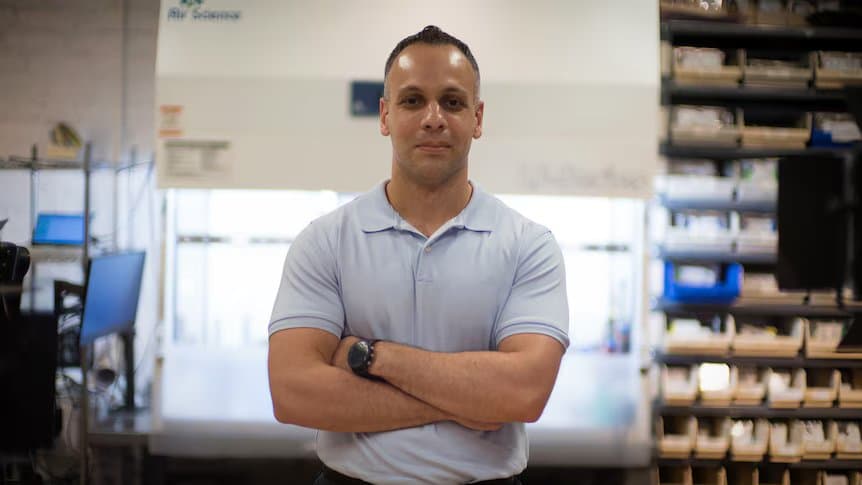
Data Recovery Lab in Austin, TX
Rossmann Repair Group operates a physical data recovery lab in Austin, TX 78705, at 2410 San Antonio St. The facility houses PC-3000 Portable III imaging systems, DeepSpar Disk Imagers, and a 0.02 µm clean bench for mechanical head swaps. Walk-ins are accepted without an appointment.
Standard hard drive data recovery starts at $100 and goes up to $2,000, across 5 published pricing tiers.
Sealed helium drives are on their own price list, $200–$5,000+. When a head swap or platter repair opens one, we refill it with helium. That adds $400–$800, and the donor has to be an exact match. Helium drive prices
The lab is in the West Campus neighborhood, one block from the University of Texas at Austin campus. Walk-ins are accepted Monday - Friday, 10:00 AM - 6:00 PM. SSD, iPhone, MacBook, RAID, and NAS recovery are also performed in-house.
We do all the diagnostic imaging, firmware repair, and mechanical extraction here, in our single Austin location. We stick to a strict no data, no charge policy. If we can't recover your files, there's no recovery fee.
Austin data recovery lab
Every drive intake, imaging pass, translator rebuild, and platter-level recovery happens in-house at 2410 San Antonio Street. The bench inventory includes a PC-3000 Express card for SATA and PATA imaging, a DeepSpar Disk Imager for unstable drives with weak heads, and a 0.02 micron ULPA-filtered clean bench for head-stack swaps and platter work.
Hard drive recovery and SSD recovery both happen at this address. Nothing ships out to a third-party lab.
How Do You Tell a Real Austin Data Recovery Lab from a Drop-Off Point?
A genuine data recovery lab houses PC-3000 imaging systems, a clean bench, and donor drive inventory on-site. A drop-off point is a storefront or shared office that packages your device and ships it to a lab in another city. Two companies listed in Austin search results operate drop-off points while advertising local service.
Rossmann Repair Group operates a physical storefront at 2410 San Antonio St. All diagnostic, imaging, and mechanical work happens in this building. We do not ship your drive to a secondary location. You speak directly to the technician handling your storage device.
Our facility houses PC-3000 Portable III systems from ACE Lab, DeepSpar Disk Imagers, a 0.02 micron ULPA-filtered clean bench, donor drive inventory, and micro-soldering stations. We execute the entire recovery process in Austin. A lab walkthrough video shows these tools on real cases.
Google's own Business Profile guidelines prohibit this practice. The policy requires that any listed location be staffed by the business's own employees during stated hours; a virtual office address is not eligible for a listing. A receptionist at a shared office suite or a clerk at an unrelated computer shop does not qualify.
Questions to Ask Any Provider
- 1.
Can I watch my drive being diagnosed?
A genuine lab evaluates the hardware locally. A drop-off point cannot.
- 2.
What equipment is physically in your Austin location?
- 3.
Will my drive leave your building at any point?
A physical lab performs all mechanical and logical extractions under one roof.
- 4.
Can I speak directly with the technician, not a call center?
You discuss your specific hardware fault directly with the engineer executing the repair.
- 5.
Check the address on Google Street View before you visit.
If the building shows a UPS Store, a shared office lobby, or a shop with a different name on the sign, the listing does not match the location.
Two Austin listings had no lab at their listed address.
A Google Local Guide visited two data recovery companies listed on Google Maps in Austin. At the first address on N Lamar Blvd, they found a computer repair shop called MAV Computers. They called the listed company directly and were told drives are shipped to a lab in another city.
At the second address, listed at the University of Texas at Austin, they found the Campus Computer Store. The reviewer left a one-star review warning other customers that drives brought to this location are shipped elsewhere.
Click either screenshot below to read the original reviews on Google.


At 2410 San Antonio St, your drive stays in the building. We own the PC-3000, the clean bench, and the donor inventory. Nothing leaves & nothing ships.
What This Costs You
Diagnostic Delay
A local lab begins evaluation when you walk in. A drop-off counter adds packaging, shipping, intake processing, and queue time at the remote lab. Your recovery starts days later.
Retrieval Friction
If you decline the quoted price, your drive is in another city. You wait for return shipping.
No Technician Access
You speak with a call center representative, not the engineer performing the recovery.
Leasing a virtual address or partnering with an unrelated local store creates a Business Profile that surfaces in Austin searches, and the company captures leads from people who believe they are visiting a local lab. The full pattern with external industry citations repeats across the data recovery industry.
What Data Recovery Services Does the Austin Lab Offer?
The Austin lab performs hard drive, SSD, iPhone, MacBook, RAID, NAS, SD card, and flash recovery in-house. All work happens at 2410 San Antonio St; no device is shipped to a secondary facility. Each service has its own failure mechanisms, tools, and published pricing tiers.
Hard Drive Recovery
Clean bench head swaps and firmware repair for clicking, beeping, and undetected hard disk drives. Standard hard drive pricing ranges from $100–$2,000.
Hard Drive DetailsSSD Data Recovery
Recovery for dead NVMe, M.2, and SATA solid-state drives. Pricing ranges from $200–$1,500.
SSD DetailsiPhone Recovery
Board-level micro-soldering for dead, water-damaged, and boot-looping iPhones. We repair the logic board to extract files. Pricing ranges from $500–$750.
iPhone DetailsMacBook Recovery
Extraction for T2, M1, M2, and M3 MacBooks with soldered storage. We revive the logic board to copy target files. Pricing ranges from $325-$600.
MacBook DetailsRAID Recovery
We image each member drive and do an offline reconstruction of RAID 0, 1, 5, 6, and 10 arrays. We price it per drive on the published HDD tiers ($100–$2,000), plus an array reconstruction fee.
RAID DetailsNAS Recovery
Multi-drive array recovery for Synology, QNAP, TrueNAS, and Unraid enclosures. We address file system corruption. We price it per drive on the published HDD tiers ($100–$2,000), plus an array reconstruction fee.
NAS DetailsLogic Board Repair
We do board-level repair on dead or liquid-damaged MacBooks to get the data back. Pricing ranges from $325-$600.
Logic Board DetailsWhat Does Hard Drive Recovery at the Austin Lab Involve?
Hard drive recovery in Austin splits across three failure layers: the PCB & its power rails, the firmware service area written on the platters, & the head stack itself. Each layer has a different diagnosis & different tooling.
Walk the drive in at 2410 San Antonio Street, Monday - Friday, 10:00 AM - 6:00 PM. If it's an external USB drive, bring the enclosure & the power adapter with it: a failed bridge board presents the same way a dead drive does, & ruling it out takes minutes. Anywhere else in Central Texas, the drive reaches this bench through our mail-in intake.
Call (512) 212-9111 before you drive over if the drive is clicking. We'll tell you to leave it powered off rather than attempt one more copy, because sustained read retries exhaust weak heads & score the platters.
Electrical Triage Before the Clean Bench
Nobody opens the drive first. A drive that won't detect gets its board measured before the seal is cut, because a TVS diode that shorted itself to protect the motor driver mimics a mechanical failure at the host. Opening the head & disk assembly for a board fault exposes clean platters to particulate for nothing.
Firmware faults sit one layer up. The drive spins, the board reads clean, & the host either reports the wrong capacity or hangs before it finishes identifying the drive.
Those cases go onto a PC-3000 Portable III. On Seagate F3 drives we repair the System Files, and on Western Digital drives we rebuild the ROYL modules.
Donor Matching for a Head Stack Swap
A head swap needs a donor matched on head map & firmware revision, not on the model number printed on the label. The swap runs on a 0.02 micron ULPA-filtered clean bench rather than a cleanroom.
Ramp-parked drives need ramp tooling. Modern heads rest on a load/unload ramp at the outer diameter instead of a landing zone on the media. Imaging starts once the donor heads are in & runs head by head.
Those paths are priced from the published table before work starts, not quoted once your drive is already on the bench. Hard drive data recovery pricing spans $100–$2,000 across 5 tiers, & there are no diagnostic fees on either side of that. Moving a job to the front of the queue costs $100 on top of the tier.
Donor drives are matching drives used for parts. Typical donor cost: $50–$150 for common drives, $200–$400 for rare or high-capacity models. We source the cheapest compatible donor available.
A search for hard drive recovery near you returns storefronts & working labs in the same list, so check whether the address has a clean bench or just a shipping label. We have one address, and the bench is at that address.
How Does the Austin Lab Recover Data from Dead SSDs?
Solid-state drive failures differ from hard drive failures at the hardware level. A Phison PS3111-S11 controller that loses its Flash Translation Layer (FTL) mapping reports as "SATAFIRM S11". Consumer recovery software cannot access the drive because the controller refuses to enumerate logical blocks.
SSD data recovery pricing ranges from $200–$1,500.
At our Austin lab, we connect these drives to a PC-3000 SSD and put the controller into its diagnostic safe mode. Then we load a volatile microprogram into the drive's RAM and rebuild the FTL mapping.
UT Austin Student Data Recovery
Our lab at 2410 San Antonio St is in West Campus, one block from the University of Texas at Austin campus. Student cases we see include accidentally formatted drives, corrupted partitions, and deleted thesis files. These logical failures fall into the two lowest pricing tiers.
Walk in without an appointment Monday - Friday, 10:00 AM - 6:00 PM.
A simple data copy from a functioning drive costs $100. File system recovery starts at $250. Both include a free evaluation before any work begins.
If the drive has a mechanical fault (clicking, not spinning), the cost is higher because the repair uses up donor parts. We publish all five tiers so you know the range before you walk in. Every job is covered by our no data, no charge policy.
Common Student Recovery Scenarios
- 1.
Formatted External Drive
Accidentally wiped a USB hard drive containing coursework or research data. File system recovery from $250.
- 2.
Laptop SSD Not Recognized
A Windows laptop SSD shows up as uninitialized or RAW. Partition table repair or file carving required.
- 3.
Deleted Thesis or Research Files
Files removed from Recycle Bin or Trash. On a hard drive, recovery depends on whether the sectors have been overwritten by new data.
- 4.
Dropped External Drive
Physical impact while the drive was spinning. We find out which part failed on the bench.
- 5.
Liquid-Damaged Apple Silicon MacBook
M1, M2, and M3 MacBooks encrypt all storage with hardware keys tied to the Secure Enclave in the SoC. Desoldering the NAND chips produces only ciphertext; traditional chip-off recovery is not viable. The only path to the data is repairing the logic board so the original SoC boots and decrypts the storage natively.
Driving Directions to the Lab
The lab is at 2410 San Antonio Street, Austin, TX 78705.
Central Texas Service Area
Outside the Austin metro, you can send your storage device to this location via our national mail-in program. We mail your data back, and we bill you for return shipping. Read about our company history and our founder Louis Rossmann.
Work We Don't Do
This is a data recovery lab. The bench here runs drive imaging, head stack and platter work under a clean bench, firmware and service area repair, NAND and controller work on SSDs, and board-level microsoldering on MacBook logic boards and iPhone boards. That is the whole scope.
We do not do general PC service. Virus and malware cleanup, Windows reinstalls and upgrades, tune-ups, printer and home network setup, new desktop builds, monitor repair, and on-site or in-home support are all outside what this bench is set up for. Taking that work would mean doing it worse than a shop that does it every day, so we do not take it.
If that is what you need in Austin, go to CompuPLUS on North Lamar. They handle Windows and Apple service, screen replacement, liquid damage, network installation, and general electronics repair, and they publicly list us as the lab they work with on the Austin repair side. We send general repair customers to them, and we keep the recovery and board-level work here.
CompuPLUS
5555 N Lamar Blvd, Ste C-122, Austin, TX 78751
(512) 240-2606
compuplus.shop
Call them for hours before you drive over. If they open your machine and find a failed drive with data on it that matters, that part comes back to us.
Why People Search "Data Recovery Near Me" and End Up Mailing to Austin
The work is performed at one address: 2410 San Antonio Street, Austin, TX 78705. Mail-in customers get the same engineers, the same PC-3000 systems, the same ULPA-filtered clean bench, and the same no data, no charge policy as walk-in customers.
There is no separate "mail-in lab."
I searched "data recovery near me" but I'm not in Austin. Can you still help?
Yes. We accept mail-in data recovery from all 50 states. Your drive arrives at the same Austin storefront walk-in customers use.
There is no second lab, no shipping handoff to a partner, and no third-party processing.
If I mail my drive in, do I get the same engineers and equipment as walk-in customers?
Yes. The same PC-3000 Portable III, PC-3000 Express, PC-3000 SSD, DeepSpar Disk Imager, and 0.02 micron ULPA-filtered clean bench handle every job at this address. There is no separate workflow for mail-in jobs versus walk-ins. Your hard drive or SSD lands in the same intake queue.
Why don't you have a location near me?
Rossmann Repair Group operates one physical location: 2410 San Antonio Street, Austin, TX 78705. We have not opened satellite offices, drop-off points, or franchise locations.
Every drive that comes through this company is processed in this single building by the engineers on staff. Companies that show a local pin near you in Google Maps but ship drives to a remote facility are documented on our fake local listings page.
How do I ship my drive to the Austin lab?
Pack the drive in anti-static wrap inside a padded box with at least two inches of foam or bubble around all six sides. Ship via FedEx or UPS with tracking and declared value coverage to 2410 San Antonio Street, Austin, TX 78705. Evaluation begins on arrival. Detailed packing instructions are on the mail-in data recovery page.
Is my drive safer at a local shop than mailed to Austin?
A drive shipped directly to Austin in proper packaging makes one trip to a facility that performs the recovery on-site. A drive dropped off at a shop with no PC-3000 makes the same trip with extra handling steps and an unknown intermediate carrier.
What happens to my drive after it arrives at the Austin lab?
- Intake logs the serial number and reported symptoms.
- The drive moves to a PC-3000 imaging station for SMART, identity, and head-map evaluation.
- Drives with mechanical faults are routed to the clean bench for head-stack inspection.
- When an SSD has a controller fault, we put it on the PC-3000 SSD and access it in technological mode.
- You receive a quote based on the failure mechanism and approve or decline before any donor parts are consumed.
- If the recovery is unsuccessful, there's no recovery fee under our no data, no charge policy.
Austin Data Recovery FAQ
What are the Austin data recovery lab hours, and do I need an appointment?
Is there a diagnostic fee at the Austin data recovery lab?
Where exactly is the Austin lab and where do I park?
Where is Rossmann Repair Group located in Austin?
Where in Austin can I get hard drive data recovery?
Is there an Austin data recovery lab that handles clean bench head swaps in-house?
Do I need an appointment for data recovery in Austin?
How long does data recovery take?
What does data recovery cost in Austin?
Why does a Seagate 7200.11 with the BSY bug cost less than a clicking drive?
Do you recover data from iPhones and Macs, not just hard drives?
What if my drive was already opened by another shop?
Do you recover data from SSDs and NVMe drives in Austin?
Do SSDs and iPhones require a cleanroom for data recovery?
How much does data recovery cost in Austin?
Can I walk in for data recovery, or do I need an appointment?
Is my data safe during recovery?
How long does data recovery take in Austin?
I am not in Austin. Can I mail my hard drive for data recovery?
Can I drop off my drive in person?
More on the topics covered above: hard drive data recovery, SSD recovery, mail-in data recovery, no data, no charge policy, and customer reviews. Call (512) 212-9111 for the lab.
Since 2008
Established
As Featured In
Data Recovery Standards & Verification
Our Austin lab operates on a transparency-first model. We use industry-standard recovery tools, including PC-3000 and DeepSpar, combined with strict environmental controls to maintain drive integrity. This approach allows us to serve clients nationwide with consistent technical standards.
Localized Clean Zone
Open-drive work is performed in a 0.02 micron ULPA-filtered laminar clean bench.
Transparent History
Serving clients nationwide via mail-in service since 2008. Our lead engineer holds PC-3000 and HEX Akademia certifications for hard drive firmware repair and mechanical recovery.
Media Coverage
Our repair work has been covered by The Wall Street Journal and Business Insider, with CBC News reporting on our pricing transparency. Louis Rossmann has testified in Right to Repair hearings in multiple states and founded the Repair Preservation Group.
Aligned Incentives
Our "No Data, No Charge" policy means we assume the risk of the recovery attempt, not the client.
Technical Oversight
Louis Rossmann
Our engineers review all lab protocols to maintain technical accuracy and honest service. Since 2008, his focus has been on clear technical communication and accurate diagnostics rather than sales-driven explanations.
We believe in showing the bench rather than just describing it. Open-drive work runs on a 0.02 micron ULPA-filtered laminar clean bench, and we filmed it.
See the particle counter test at the benchStop Powering Your Drive.
Walk in or call for a free evaluation. No diagnostic fees, and no charge if we cannot recover your data.