Skip to main contentSkip to navigation
Rossmann Repair Group logo - data recovery and MacBook repair

QNAP QuTS Hero ZFS Data Recovery

QuTS hero runs ZFS instead of the EXT4 filesystem used by standard QTS. ZFS copy-on-write architecture, inline deduplication tables, and transaction group metadata require recovery techniques that do not apply to traditional QNAP NAS recovery. We image every member drive through a write-blocker, parse vdev labels and the uberblock ring offline, and reconstruct the pool from cloned images. Free evaluation. No data = no charge.

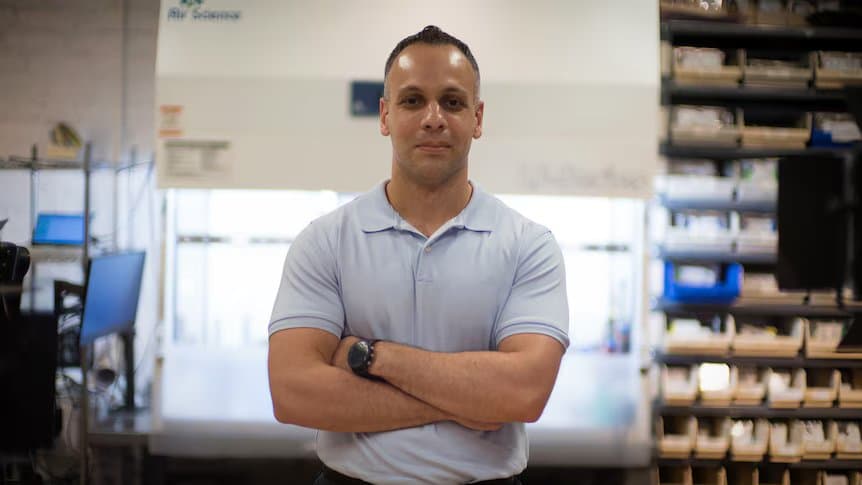
Louis Rossmann
Written by
Louis Rossmann
Founder & Chief Technician
Updated March 2026
12 min read

Before You Do Anything Else

  1. Do not accept the "Initialize Storage Pool" prompt. QuTS hero will offer to create a new ZFS pool. Accepting overwrites uberblocks, vdev labels, and the entire metadata tree.
  2. Do not force-import the pool (zpool import -f). A forced import writes new transaction groups that can overwrite the metadata ZFS needs for recovery.
  3. Do not resilver a degraded pool without verifying drive health. The scrub operation reads every block on every surviving drive. If surviving drives have marginal sectors, the resilver can push them into failure and collapse the pool.
  4. Power down the NAS. Remove drives and label each slot position. Slot order maps directly to ZFS vdev member order.

Why QuTS Hero ZFS Recovery Differs from Standard QTS

Standard QTS uses EXT4 on a Linux mdadm RAID layer. QuTS hero replaces both the filesystem and the volume manager with ZFS, which fundamentally changes how data is written, checksummed, and recovered.

Copy-on-Write (CoW)

ZFS never overwrites data in place. Every write creates a new block and updates the parent pointer. This means a crash mid-write leaves the previous state intact, but it also means metadata corruption can orphan entire branches of the block tree.

Transaction Groups (TXG)

ZFS batches writes into transaction groups that commit atomically every 5 to 30 seconds. If a crash occurs during a TXG commit, the pool may fail to import. Recovery requires rolling back to the last fully committed TXG.

Uberblock Ring

The uberblock is the root pointer to the entire pool state. ZFS maintains 128 uberblocks in a ring buffer across all vdev labels. When the active uberblock is corrupted, we parse the ring to find an older valid state.

Inline Deduplication (DDT)

QuTS hero supports inline dedup, which requires approximately 1 GB of RAM per 1 TB of deduplicated storage. The DDT maps block references to physical locations. DDT corruption makes the pool unimportable through normal means.

Checksummed Metadata

Every ZFS block carries a SHA-256 or fletcher4 checksum stored in its parent. This Merkle tree structure means ZFS can detect corruption, but it also means a single corrupted intermediate block can make an entire subtree inaccessible.

Vdev Labels (L0-L3)

Each drive in a ZFS pool stores four copies of its vdev label: two at the start of the disk and two at the end. These labels contain the pool GUID, vdev tree, and uberblock ring. We parse all four labels from each member to reconstruct pool topology.

Enterprise QNAP Models Running QuTS Hero

QuTS hero is available on select QNAP models designed for enterprise and ZFS workloads. These units ship with ECC RAM and Intel Xeon processors to support ZFS memory requirements.

ModelMax BaysTypical ConfigurationZFS Recovery Considerations
TS-h8868 (6 HDD + 2 NVMe)RAIDZ1/RAIDZ2 with NVMe SLOGNVMe SLOG failure can leave uncommitted writes in the ZIL. Pool import may succeed but recent files are missing.
TS-h1886XU-RP18 (12 HDD + 6 NVMe)Multi-vdev RAIDZ2 + NVMe special vdevLarge member count increases imaging time. Special vdev (metadata offload) corruption requires separate reconstruction.
TES-3085U30 (24 HDD + 6 NVMe)Enterprise SAS, dual controllerSAS drives require SAS-capable imaging hardware. Dual-controller failover state must be documented before drive removal.
ES2486dc24 SASDual-controller active-activeActive-active controllers maintain separate ZFS import caches. Controller state must be captured to determine which controller last owned the pool.
TVS-h1688X16 (12 HDD + 4 NVMe)RAIDZ2 with NVMe read cache (L2ARC)L2ARC loss does not affect pool integrity. Data is only cached, not primary. Pool imports normally without L2ARC.

QuTS Hero ZFS Failure Modes We Recover From

DDT Memory Exhaustion and Corruption

QuTS hero inline deduplication requires approximately 1 GB of RAM per 1 TB of deduplicated data. On units like the TS-h886 (which ships with 8 to 32 GB), enabling dedup on large volumes can exhaust the DDT's memory allocation. An unexpected power loss during heavy dedup I/O can corrupt the in-memory DDT before it flushes to disk, leaving the pool unimportable.

Our approach: We bypass the corrupted DDT entirely. After imaging all member drives, we scan every dnode in the pool to reconstruct the block reference map from the block pointer tree. This is computationally expensive but does not depend on the DDT being intact.

Firmware Update TXG Desynchronization

Upgrading QuTS hero firmware (particularly from 4.x to 5.x builds on TS-h1886XU and TES-3085U units) can cause a kernel panic during the update process. The panic leaves the ZFS pool in an intermediate state: the new OS kernel cannot parse the vdev labels written by the older kernel, resulting in "No pool detected" or "Pool uninitialized" in the Storage & Snapshots interface.

Our approach: We rewind the pool to a transaction group that predates the firmware update. ZFS stores a history of TXGs in the uberblock ring. We parse the ring from raw disk images, identify the highest TXG that committed before the update began, and import the pool at that state. Data written during the failed update (typically seconds of writes) is lost; everything before it is recovered.

Resilver-Triggered Cascading Drive Failure

A RAIDZ1 or RAIDZ2 vdev loses a member drive. The administrator replaces it, and QuTS hero begins a resilver. The resilver reads every block on every surviving drive to reconstruct the new member. If the surviving drives are the same age and batch, the sustained read stress can push marginal drives past their failure threshold, collapsing the vdev.

Our approach: We image all member drives (including the failed ones) through PC-3000 with write-blocking before any reconstruction. PC-3000 can image drives with bad sectors using head maps and sector-level retry control that ZFS resilver cannot replicate. Once all members are fully imaged, we reconstruct the RAIDZ geometry offline from the cloned images.

ZIL/SLOG Device Failure

QuTS hero enterprise models (TS-h886, TVS-h1688X) support dedicated NVMe SLOG devices for the ZFS Intent Log (ZIL). If the SLOG device fails, any synchronous writes that were committed to the ZIL but not yet flushed to the main pool are lost. The pool itself will import, but recent synchronous writes (database transactions, NFS commits) may be missing.

Our approach: If the SLOG device is physically recoverable, we image it separately and attempt to replay the ZIL entries into the pool reconstruction. If the SLOG device is unrecoverable, we import the pool without the ZIL, accepting the loss of uncommitted synchronous writes.

Vdev Label Corruption

ZFS stores four copies of the vdev label on each member drive: L0 and L1 at the beginning of the disk, L2 and L3 at the end. Each label contains the pool GUID, vdev tree configuration, and uberblock ring. If all four labels on a single member are corrupted (possible after a severe power event or partial overwrite), QuTS hero cannot identify the drive as a pool member.

Our approach: We read labels from all other members to determine the pool geometry, then use the known member count, data offset, and stripe width to calculate where data blocks reside on the label-damaged drive. The drive's data is still valid even if its labels are destroyed.

How We Recover Data from a QuTS Hero ZFS Pool

Every step operates on cloned images. No reconstruction runs against original drives.

  1. Intake and documentation: We record the QNAP model, QuTS hero version, pool topology (mirror, RAIDZ1, RAIDZ2, RAIDZ3), member drive models, dedup/compression settings, SLOG/L2ARC presence, encryption status, and prior recovery attempts.
  2. Write-blocked imaging: Each member drive is imaged through PC-3000 or DeepSpar with hardware write-blocking. Drives with mechanical issues (clicking, not spinning, stiction) receive head swaps or board-level repair before imaging. SAS drives on TES-3085U and ES2486dc units require SAS-capable imaging hardware.
  3. Vdev label parsing: We read all four ZFS label copies (L0, L1, L2, L3) from each member image. The labels contain the pool GUID, vdev tree (encoded as nvlists), and the uberblock ring. We cross-reference labels across all members to build a complete vdev topology map.
  4. Uberblock analysis and TXG selection: The uberblock ring on each label contains 128 entries. We parse every entry, identify the highest valid TXG (the one with matching checksums across all required vdevs), and use it as the pool's import target. If the latest TXG is corrupted, we rewind to the next oldest valid TXG.
  5. Pool reconstruction: Using the validated uberblock and vdev map, we import the pool read-only from cloned images. For pools with DDT corruption, we skip normal import and reconstruct the dedup table by walking the block pointer tree from every dnode in the MOS (Meta Object Set).
  6. Dataset extraction and verification: We extract individual datasets, zvols, and snapshots. Every extracted block is verified against its ZFS checksum (SHA-256 or fletcher4). For zvols that backed VMs (QEMU, VMware), we verify the guest filesystem integrity separately.
  7. Delivery: Recovered data is transferred to your target media. Working copies are securely purged on request.

QuTS Hero ZFS Recovery Pricing

ZFS pool recovery uses two-tiered pricing: a per-member imaging fee based on each drive's physical condition, plus a pool reconstruction fee. If we recover nothing, you owe $0.

Per-Drive Imaging

Logical or firmware issues

$250–$900

Covers drives with bad sectors, firmware faults, or filesystem corruption that require PC-3000 terminal access.

Pool Reconstruction

ZFS-specific rebuild + extraction

$400–$800

Vdev analysis, uberblock reconstruction, DDT rebuilding (if applicable), dataset extraction. Higher end for pools with inline deduplication.

Mechanical Drive Repair

Clean-bench head swap per drive

$1,200–$1,500

Required for clicking, non-spinning, or stiction-affected member drives. 50% deposit; donor parts are consumed.

No Data = No Charge. If we cannot recover usable data from your QuTS hero pool, you owe nothing. The only potential cost in an unsuccessful case is optional return shipping for your drives. See our no-fix-no-fee guarantee for full details.

ZFS Internals Relevant to QuTS Hero Recovery

For IT administrators troubleshooting a failed QuTS hero pool, understanding these ZFS structures helps explain what recovery involves and why certain actions are destructive.

Transaction Groups (TXG)
ZFS batches all writes into atomic transaction groups that commit every 5 to 30 seconds (configurable via zfs_txg_timeout). Each TXG increments a monotonic counter stored in the uberblock. If a crash occurs during a TXG commit, the pool reverts to the last fully committed TXG on the next import. When that automatic revert fails, manual TXG rewinding via zpool import -T targets an older TXG explicitly.
Uberblock Ring
An array of 128 uberblocks embedded in every vdev label. Each uberblock contains the TXG number, a timestamp, the root block pointer to the MOS (Meta Object Set), and a checksum. ZFS cycles through the ring, overwriting the oldest entry with the newest TXG. Recovery selects the uberblock with the highest TXG whose checksum validates and whose referenced blocks are intact.
Deduplication Table (DDT)
The DDT stores a mapping from block checksums to physical block addresses. When inline dedup is enabled, ZFS checks every incoming write against the DDT; if a matching checksum exists, it reuses the existing block instead of writing a duplicate. DDT corruption prevents the pool from resolving deduplicated block references, making files that share blocks inaccessible without manual DDT reconstruction.
ZFS Intent Log (ZIL) and SLOG
The ZIL records synchronous writes (NFS commits, database transactions) before they are committed to the main pool via TXG. On QuTS hero enterprise models, a dedicated NVMe device acts as the SLOG (Separate Log). If the SLOG fails, writes committed to the ZIL but not yet flushed to the pool are lost. The pool itself remains importable; only the most recent synchronous writes are affected.

For a broader comparison of ZFS versus hardware RAID and when each architecture is appropriate, see our ZFS vs. hardware RAID technical reference.

QuTS Hero ZFS Recovery Questions

My QNAP QuTS hero shows 'Storage Pool Error' and the pool will not import. Can you recover the data?
Yes. A pool import failure means QuTS hero cannot assemble the ZFS pool from the member drives. We image all drives including failed ones, parse vdev labels and the uberblock ring from the raw images, and reconstruct the pool offline. The data remains on the drives until the drives are reinitialized or overwritten.
Does inline deduplication on QuTS hero make recovery harder?
It increases complexity. QuTS hero inline dedup stores a deduplication table (DDT) that maps block references to physical locations. If the DDT is corrupted, files referencing deduplicated blocks cannot be resolved through a normal pool import. We reconstruct the DDT by scanning every dnode in the pool and rebuilding the reference map from the block pointer tree.
My QuTS hero NAS failed after a firmware update. Is the data recoverable?
A firmware update failure corrupts the QNAP DOM (Disk on Module), not your data drives. However, if the update causes a kernel panic mid-write, the ZFS pool may have partially committed transaction groups. We image the member drives and roll back to a pre-update transaction group using TXG rewinding.
Should I replace a failed drive and let QuTS hero resilver the pool?
Only if the remaining drives are healthy. Resilvering (ZFS scrub + rebuild) puts intense read stress on every surviving drive. If the remaining drives are the same age and batch, the scrub can trigger additional failures and collapse the pool. Image all drives before attempting any rebuild.
How is QNAP QuTS hero ZFS recovery priced?
Per-drive imaging based on each drive's condition ($300 to $900 per drive), plus a $400 to $800 pool reconstruction fee covering vdev analysis, uberblock reconstruction, DDT rebuilding if needed, and dataset extraction. If we recover nothing, you pay $0.
Can you recover a QuTS hero pool after someone ran zpool destroy or reinitialized the storage pool?
If no new data has been written to the drives after the destroy or reinitialization, the original uberblocks and metadata trees are still on disk. We scan for historical uberblocks at known offsets and reconstruct the pool from the most recent valid transaction group that predates the destructive operation.

What NAS and RAID Clients Say

4.9 across 1,837+ verified Google reviews
Had a raid 0 array (windows storage pool) (failed 2tb Seagate, and a working 1tb wd blue) recovered last year, it was much cheaper than the $1500 to $3500 Canadian dollars i was quoted by a Canadian data recovery service. the price while expensive was a comparatively reasonable $900USD (about $1100 CAD at the time). they had very good communication with me about the status of my recovery and were extremely professional. the drive they sent back was Very well packaged. I would 100% have a drive recovered by them again if i ever needed to again.
ChristopolisSeagate
View on Google
HIGHLIGHT & CONCLUSION ******Overall I'm having a good experience with this store because they have great customer services, best third party replacement parts, justify price for those replacement parts, short estimate waiting time to fix the device, 1 year warranty, and good prediction of pricing and the device life conditions whether it can fix it or not.
Yuong Huao Ng LiangiPhone
View on Google
Didn't *fix* my issue but a great experience. Shipped a drive from an old NAS whose board had failed. Rossmann Repair wanted to go straight for data extraction (~$600-900). Did some research on my own and discovered the file table was Linux based and asked if they could take a look. They said that their decision still stands and would only go straight for data recovery.
Mac Hancock
View on Google
I've been following the YouTube tutorials since my family and I were in India on business. My son spilled Geteraid on my keyboard and my computer wouldn't come on after I opened it and cleaned it, laying it upside down for a week. To make the story short I took my computer to the shop while I'm in New York on business and did charged me $45.00 for a rush assessment.
Rudy GonzalezMacBook Air
View on Google

Data Recovery Standards & Verification

Our Austin lab operates on a transparency-first model. We use industry-standard recovery tools, including PC-3000 and DeepSpar, combined with strict environmental controls to make sure your hard drive is handled safely and properly. This approach allows us to serve clients nationwide with consistent technical standards.

Open-drive work is performed in a ULPA-filtered laminar-flow bench, validated to 0.02 µm particle count, verified using TSI P-Trak instrumentation.

Transparent History

Serving clients nationwide via mail-in service since 2008. Our lead engineer holds PC-3000 and HEX Akademia certifications for hard drive firmware repair and mechanical recovery.

Media Coverage

Our repair work has been covered by The Wall Street Journal and Business Insider, with CBC News reporting on our pricing transparency. Louis Rossmann has testified in Right to Repair hearings in multiple states and founded the Repair Preservation Group.

Aligned Incentives

Our "No Data, No Charge" policy means we assume the risk of the recovery attempt, not the client.

LR

Louis Rossmann

Louis Rossmann's well trained staff review our lab protocols to ensure technical accuracy and honest service. Since 2008, his focus has been on clear technical communication and accurate diagnostics rather than sales-driven explanations.

We believe in proving standards rather than just stating them. We use TSI P-Trak instrumentation to verify that clean-air benchmarks are met before any drive is opened.

See our clean bench validation data and particle test video

QuTS hero pool down? Start a free evaluation.

Ship your drives or walk in at our Austin lab. No data = no charge.