Skip to main contentSkip to navigation
Lab Operational Since: 17 Years, 6 Months, 12 DaysFacility Status: Fully Operational & Accepting New Cases

SSD Controller Recovery

Samsung Elpis Controller Data Recovery

Samsung's Elpis is an 8nm, 8-channel NVMe Gen4 controller powering the 980 PRO and PM9A1 OEM drives. PC-3000 cannot perform full FTL reconstruction for Elpis; it can send vendor-specific commands to clear the forced read-only log and shift NAND read voltage thresholds. If the controller is electrically dead, recovery depends on board-level microsoldering to revive the original silicon, as the AES-256 Media Encryption Key is bound to the Elpis die. PC-3000 SSD provides dedicated Active Utility support for this controller. Controller-level work for the Samsung Elpis Controller sits inside our broader SSD data recovery workflow at the Austin, TX lab.

Author01/10
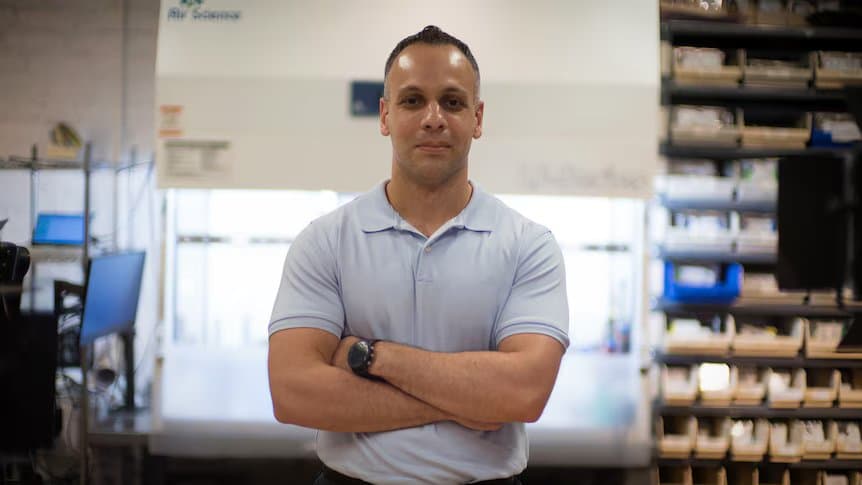
Louis Rossmann
Written by
Louis Rossmann
Founder & Chief Technician
Updated May 2026
Samsung Elpis Controller Specifications02/10

Samsung Elpis Controller Specifications

ManufacturerSamsung
InterfaceNVMe Gen4
NAND Types3D TLC
DRAM CacheYes
Channels8
PC-3000 SupportSupported (Active Utility)
Chip-Off ViabilityNot viable (AES-256 hardware encryption)

Portable III supports NVMe Samsung. 8nm custom ARM design. Hardware-bound encryption (SED) and proprietary NAND encoding make chip-off not viable.

Affected SSD Models03/10

Affected SSD Models

The Samsung Elpis Controller is deployed in the following consumer drives. A failure in this controller impacts access to the NAND flash on these specific models.

#Drive ModelInterface
1Samsung 980 PRONVMe Gen4
2Samsung PM9A1 (OEM equivalent)NVMe Gen4
3Late 970 EVO Plus revisionsNVMe Gen4
Common Failure Modes and Symptoms04/10

Common Failure Modes and Symptoms

Each failure mode below describes a specific way the Samsung Elpis Controller fails and the symptoms you will observe. If your SSD matches any of these patterns, do not run recovery software; it cannot communicate with a dead controller. See the zero-byte SSD diagnostic reference for a deeper technical explanation of controller and FTL failures.

980 PRO read-only failure

Firmware 3B2QGXA7 causes permanent read-only mode (primarily 2TB models). SMART attribute 0E balloons. Firmware fix 5B2QGXA7 prevents but cannot undo damage.

  • Drive becomes read-only
  • SMART attribute 0E increasing
  • Cannot write any data
  • Samsung Magician shows health warnings
Samsung Magician firmware update failure

Interrupted or failed firmware updates via Samsung Magician can leave the drive in a bricked, uninitialized state.

  • Drive not detected after firmware update
  • Firmware update stuck or failed
  • Drive bricked after Magician update
Thermal throttle crash during imaging

The Gen4 Elpis controller generates immense heat during sustained operations. Prolonged recovery imaging can push the controller past 85°C, triggering firmware panics during the extraction process. Active cooling with heatsinks and high-CFM airflow is mandatory during PC-3000 imaging sessions.

  • Drive drops offline during extended reads
  • Drive works for a few minutes then disconnects
  • Controller surface temperature above 80°C measured via FLIR
  • Intermittent detection during sustained access
Controller Recovery Workflow05/10

How Is Data Recovered from a Failed Samsung Elpis Controller SSD?

Data is recovered from a failed controller SSD by keeping the original board alive, reading controller state with PC-3000 SSD, and rebuilding the Flash Translation Layer from surviving NAND metadata. If firmware access requires Safe Mode or a volatile loader, that work happens before imaging. When the controller also handles decryption, chip-off returns unreadable data.

At our Austin, TX lab, the goal is to keep the original controller stable long enough to expose ROM state, firmware behavior, and NAND metadata without letting the drive keep writing to itself. Our SSD data recovery overview covers lab intake and triage, why SSDs report 0 bytes explains capacity failures, and how SSD controller encryption works explains why the original silicon matters.

  • Samsung Elpis Controller failures usually break the Flash Translation Layer, firmware boot path, or local power rail before macOS or Windows sees a mountable volume. Symptoms such as Drive becomes read-only, SMART attribute 0E increasing, Cannot write any data point to controller-level work, not file-copy software.
  • PC-3000 SSD gives us a controller-aware path into Samsung Elpis Controller so we can inspect ROM behavior, load working code into SRAM, and rebuild translator metadata from NAND page headers before imaging starts.
  • If encryption is bound to the original controller, board-level repair comes before any NAND removal because the controller still holds the path needed to turn ciphertext back into files.
Samsung Elpis Controller Recovery Process06/10

Samsung Elpis Controller Recovery Process

PC-3000 cannot perform full FTL reconstruction for Elpis. If the FTL is catastrophically corrupted and the controller is dead, recovery depends entirely on board-level microsoldering to revive the original hardware. The AES-256 Media Encryption Key is bound to the Elpis silicon; a controller swap yields only ciphertext.

  1. Connect drive to PC-3000 Portable III via M.2 NVMe adapter
  2. Use PC-3000 Samsung NVMe Active Utility to send vendor-specific commands (VSCs) placing the Elpis controller into Technological Mode
  3. For 0E read-only drives: clear the forced read-only log in the service area to temporarily unlock the drive for sector-by-sector imaging
  4. Dynamically shift NAND read voltage thresholds (Vread) via PC-3000 to extract data from degraded TLC cells that fail ECC at default voltages
  5. If drive is in BSY state from electrical failure: use FLIR thermal camera to identify shorted PMIC, then microsolder a replacement to restore controller power
  6. Image data with active cooling (heatsinks and high-CFM airflow) to prevent thermal panic during extended extraction

Equipment Used

  • PC-3000 Portable III
  • PC-3000 SSD Samsung NVMe Active Utility
  • FLIR thermal camera
  • Hakko FM-2032 microsoldering iron

Typical timeline: 4-12 hours

Learn more: controller encryption affects recovery, and how wear leveling works

Transparent Pricing for NVMe Gen407/10

Transparent Pricing for NVMe Gen4 SSD Recovery

Flat-rate pricing with no diagnostic fees. The cost to recover data from a Samsung Elpis Controller-based SSD depends on the severity of the failure. For the full diagnostic path across controller, firmware, and NAND-level failures, see our SSD recovery flagship; deleted-file cases are governed by DZAT and NAND physics. No data, no recovery fee. Full SSD recovery cost breakdown.

TierWhat It CoversPrice
Simple CopyYour NVMe drive works, you just need the data moved off it$200
File System RecoveryYour NVMe drive isn't showing up, but it's not physically damagedFrom $250
Circuit Board RepairYour NVMe drive won't power on or has shorted components$600–$900
Firmware RecoveryYour NVMe drive is detected but shows the wrong name, wrong size, or no data$900–$1,200
PCB / NAND SwapYour NVMe drive's circuit board is severely damaged and requires NAND chip transplant to a donor PCB$1,200–$2,500

A donor drive is a matching SSD used for its circuit board. Typical donor cost: $40–$100 for common models, $150–$300 for discontinued or rare controllers. +$100 rush fee to move to the front of the queue.

Faq09/10

Frequently Asked Questions

Can software recover data from a dead Samsung Elpis Controller?
No. When the Samsung Elpis Controller fails, the drive does not enumerate in your operating system. Recovery software requires a functional controller to communicate with the NAND flash. The first step is board-level component repair to restore power delivery and controller function, then firmware-level access through PC-3000 SSD.
Why not use chip-off recovery on Samsung SSDs?
The Samsung Elpis Controller uses hardware-level AES-256 encryption with keys fused to the controller silicon. Desoldering the NAND chips and reading them in a programmer produces only encrypted data. The only recovery path is reviving the original controller through board-level component repair so it can decrypt its own NAND contents.
How much does Samsung Elpis Controller data recovery cost?
NVMe Gen4 SSD recovery at our Austin, TX lab ranges from $200 for a simple data copy to $1,200–$2,500 for NAND transplant. Circuit board repair for a failed Samsung Elpis Controller falls in the $600–$900 tier. Firmware recovery is $900–$1,200. No diagnostic fee. No data, no recovery fee. +$100 rush fee to move to the front of the queue.
Can you recover deleted files from a Samsung Elpis Controller SSD?
TRIM marks deleted blocks for garbage collection on modern SSDs. The controller enforces Deterministic Zero After TRIM (DZAT on SATA, DLFEAT=001b on NVMe) at the protocol layer; every subsequent read to a TRIMmed LBA returns zeroes from the controller regardless of whether the NAND cells have been physically erased yet. The original charge states survive on NAND until garbage collection applies the +15-20V Fowler-Nordheim erase voltage, which is a narrow window. We specialize in recovering data from hardware failures: dead controllers, firmware corruption, and failed power delivery components.
Other Samsung Controllers10/10

Need Samsung Elpis Controller Recovery?

Ship your NVMe Gen4 SSD to our Austin, TX lab. Free evaluation, no diagnostic fee. If we recover your data, you pay the quoted tier. If not, you pay nothing.

(512) 212-9111Mon-Fri 10am-6pm CT
No diagnostic fee
No data, no fee
4.9 stars, 1,837+ reviews

4.9★ · 1,837+ reviews