
Skip to main contentSkip to navigation
Lab Operational Since: 17 Years, 5 Months, 24 DaysFacility Status: Fully Operational & Accepting New Cases
Rossmann Repair Group logo - data recovery and MacBook repair
Product-Specific Recovery

WD My Passport Data Recovery

My Passport not showing up? Dropped it? Set a password and forgot it? WD Passports have hardware encryption that complicates recovery; we specialize in bypassing it. We recover data from encrypted, clicking, and damaged Passports.
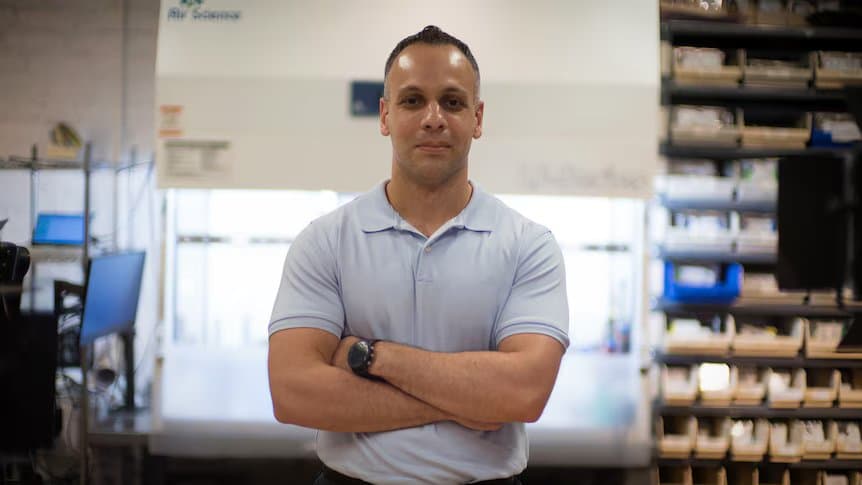
Louis Rossmann
Written by
Louis Rossmann
Founder & Chief Technician
Updated April 2026
12 min read

Important: WD My Passport Hardware Encryption

Since 2015, WD My Passport drives use hardware encryption by default, even if you never set a password. This has major implications for recovery:

  • The drive has an integrated USB interface; it cannot be connected via SATA to bypass the encryption
  • The encryption credentials are unique to your specific circuit board (stored in the ROM/MCU)
  • You need BOTH the original board AND the drive for recovery
  • Do NOT throw away the enclosure, even if it seems dead

Data Recovery Standards & Verification

Our Austin lab operates on a transparency-first model. We use industry-standard recovery tools, including PC-3000 and DeepSpar, combined with strict environmental controls to make sure your hard drive is handled safely and properly. This approach allows us to serve clients nationwide with consistent technical standards.

Open-drive work is performed in a ULPA-filtered laminar-flow bench, validated to 0.02 µm particle count, verified using TSI P-Trak instrumentation.

Transparent History

Serving clients nationwide via mail-in service since 2008. Our lead engineer holds PC-3000 and HEX Akademia certifications for hard drive firmware repair and mechanical recovery.

Media Coverage

Our repair work has been covered by The Wall Street Journal and Business Insider, with CBC News reporting on our pricing transparency. Louis Rossmann has testified in Right to Repair hearings in multiple states and founded the Repair Preservation Group.

Aligned Incentives

Our "No Data, No Charge" policy means we assume the risk of the recovery attempt, not the client.

We believe in proving standards rather than just stating them. We use TSI P-Trak instrumentation to verify that clean-air benchmarks are met before any drive is opened.

See our clean bench validation data and particle test video

Common WD My Passport Problems

WD My Passport failures fall into four categories: USB bridge controller failure (drive not detected), mechanical head damage (clicking), firmware corruption (wrong capacity or freezing), and physical impact damage. Bridge failures are the most common because every Passport routes all data through a single encryption chip that also handles USB translation.

Not Showing Up / Not Detected

The drive doesn't appear in File Explorer or Disk Management when connected.

Possible causes:

  • • USB bridge board failure (most common)
  • • Cable or USB port issue
  • • Internal drive not spinning
  • • Encryption chip malfunction
  • • Bridge firmware corruption (OS shows "Initio Default Controller" or raw chip identifier instead of drive name)
  • • Virtual CD-ROM mount: the drive shows up as a ~200MB disc containing "WD Unlocker" software. If you set a password, this is normal; enter it to unlock. If you never set a password and WD Security reports "No supported device detected," the bridge controller has failed and lost access to the Data Encryption Key.
  • • Micro-B USB port physically broken off the PCB. Because the bridge is integrated into the board, the drive cannot be placed in a different enclosure. The port must be resoldered to the original board or a SATA conversion performed.

Recovery: $600–$900

Clicking Sound

You hear clicking/ticking when the drive is connected. This indicates head failure.

What's happening:

  • • Read/write heads are damaged
  • • Heads can't find servo tracks
  • • Each click attempt risks more damage

Recovery: $1,200–$1,500 (head swap needed)

Dropped / Physical Damage

The drive was dropped while running or while connected. May or may not show symptoms immediately.

Potential damage:

  • • Head crash (clicking)
  • • Platter damage (grinding)
  • • Head stiction: heads land on the platter surface instead of the parking ramp & bond through molecular adhesion. The spindle motor can't break free on next spin-up.
  • • PCB damage (not detected)
  • • Connector damage

Many 2.5-inch Passports have a built-in accelerometer (free-fall sensor) that parks the heads before impact. If the drive was powered off or the fall was too short for the sensor to react, the heads stay over the platters during impact.

Recovery: $600–$900 to $1,200–$1,500 depending on damage

Password Forgotten

You set a WD Security password and can't remember it. Drive is locked.

Recovery options:

  • • If drive hardware is intact: Decryptable
  • • Depends on encryption implementation
  • • Some older models more recoverable
  • • Contact us for assessment

Recovery: Case-by-case evaluation

WD Passport Failure Diagnosis by Symptom

Before assuming the data is lost, check Windows Disk Management (right-click Start > Disk Management) and match the symptom below. The result identifies the failure category and whether the drive requires clean bench work or firmware repair.

SymptomDisk Management ShowsProbable CauseDIY Recovery?
Clicking or beeping on power-upNot listed at allHead crash or stictionNo. Requires 0.02µm clean bench head swap.
Freezes PC when plugged inListed as RAW or hangs Disk ManagementSMR firmware panic (Module 32 or T2 corruption)No. PC-3000 SA repair required.
Mounts as ~200MB CD-ROM only200MB CD-ROM partition visible; data partition missingUSB bridge controller failure (lost encryption key access)No. MCU key extraction needed.
Shows 0GB or wrong capacityListed but with incorrect sizeT2 translator corruption in SMR firmwareNo. Module 190 rebuild via PC-3000.
Accidental deletion or formatListed, correct capacity shownUser error; file system metadata overwrittenSometimes. Software recovery works if data is not yet overwritten. Do not write new data to the drive.

WD Passport Models We Recover

WD sells the My Passport line in Standard, Ultra, and Mac variants, but all three share the same internal drive platforms, encryption architecture, and PCB families. The recovery procedure is identical regardless of the external casing or color. Identifying your model number tells us which bridge controller and firmware module set to expect.

My Passport (Standard)

  • • 1TB, 2TB, 4TB, 5TB capacities
  • • USB 3.0 / USB-C models
  • • WDBYNN, WDBYFT, WDBPKJ series
  • • Hardware encrypted (post-2015)

My Passport Ultra

  • • Premium metal design
  • • USB-C with USB-A adapter
  • • WDBFTM, WDBC3C series
  • • Same encryption as standard

My Passport for Mac

  • • Pre-formatted HFS+/APFS
  • • Same internal drive as Windows version
  • • Time Machine compatible
  • • Same recovery process
  • • If plugged into a Windows PC, Windows may prompt to "Initialize and Format." Clicking Yes overwrites the partition table and destroys file access. Decline the prompt and contact a lab.

WD My Passport Recovery Pricing

Service TierPrice RangeDescription
File System RecoveryFrom $250Logical corruption, partition loss, accidental format on a healthy drive
Firmware / USB Bridge Repair$600–$900USB controller failure, encryption key extraction, T2 translator rebuild via PC-3000
Head Swap + Encryption$1,200–$1,500Clicking drive requiring donor heads, then decrypt. Donor drives are matching drives used for parts. Typical donor cost: $50–$150 for common drives, $200–$400 for rare or high-capacity models. We source the cheapest compatible donor available.
Surface / Platter Damage$2,000Head crash, platter scoring. Requires platter cleaning & head swap. Donor drives are matching drives used for parts. Typical donor cost: $50–$150 for common drives, $200–$400 for rare or high-capacity models. We source the cheapest compatible donor available.

Need it faster? +$100 rush fee to move to the front of the queue. SMR (Shingled Magnetic Recording) drives require more work at the firmware and head-swap tiers due to their overlapping track architecture.

No Data, No Charge: If we can't recover your data, you pay nothing. No diagnostic fees.

Do Not Swap the PCB

Modern WD My Passport drives (2015 and later) use MCU-encrypted firmware. The main processor on the circuit board stores a unique encryption key that cannot be transferred by swapping ROM chips alone. If you replace the PCB with a donor board, the new processor will not have the correct decryption credentials, and your data will be inaccessible.

Recovery requires either repairing the original board or using PC-3000 to extract and transfer the processor state (DEK, adaptive parameters, and SA configuration) to a working donor board. We perform this procedure using vendor-trained techniques specific to WD encryption architectures.

WD Passport LED Diagnostic Patterns

The LED on a WD My Passport reflects the bridge controller's internal state. Note the exact blink pattern before doing anything else; it identifies where the failure originated.

LED BehaviorProbable CauseAction
Solid / steadyDrive powered, initialized, idleNormal. Drive is ready for use.
Slow pulse (~2.5s interval)Standby / sleep modeNormal power-saving state. Move the mouse or send a read request to wake.
Fast flash (~3/sec)Normal read/write activityHeads are actively accessing data. Normal during file transfers.
Rapid blink + unresponsiveFirmware panic (Module 32 overflow or T2 translator failure)Unplug immediately. The drive's CPU is stuck in an error loop. Requires PC-3000 SA repair.
Light on + no spinUSB bridge powered, motor not receiving voltage (stiction, burned motor controller, blown TVS diode)Do not power-cycle. Each attempt can score platters. Send to lab for clean bench evaluation.
Steady light + mounts as CD-ROMBridge controller partially functional; only the WD Unlocker virtual partition is exposed. Normal if password was set; hardware failure if no password was ever configured.If no password was set: bridge controller failure. The chip lost access to its Data Encryption Key. Do not format or reinitialize the drive.

How We Recover WD My Passport Drives

We solder SATA data pairs directly to test points on the Passport PCB, bypassing the USB bridge entirely. This gives PC-3000 direct Service Area access to the drive firmware. Standard SATA adapters do not work because these drives have no SATA connector; the USB bridge is integrated into the only circuit board.

USB-to-SATA Conversion

PC-3000 cannot send firmware commands through the proprietary USB bridge protocol. To gain Service Area access, we remove the USB isolation capacitors near the MCU and solder SATA data pairs directly to the E71, E72, E73, and E75 test points on the PCB. This converts the native USB board into a SATA-compliant device for connection to our PC-3000 Portable III.

SMR Firmware Repair via PC-3000

High-capacity Passports (2TB through 5TB) use Shingled Magnetic Recording on Spyglass (WD40NMZW, WD50NMZW) & Palmer platforms with integrated Marvell controllers. Two firmware failures dominate:

Module 190 (T2 Translator) corruption
The drive reports correct capacity but reads all zeros. The logical-to-physical sector map is broken. We apply a Service Area write-lock before the drive completes its power-on sequence, then rebuild Module 190 from media cache fragments via composite reading.
Module 32 (Relocation List) overflow
Bad sector tracking overflows, causing the firmware to enter a panic loop. The drive becomes unresponsive or clones at kilobytes per second. We disable the background housekeeping process in the SA & image the drive before it locks again.

Additional Service Area Modules

Beyond Module 190 & Module 32, several other SA modules affect Passport recovery outcomes. Corruption in any of these requires PC-3000 terminal access; consumer tools have no visibility into the Service Area.

Module 02 (ROM / Configuration)
Contains fundamental drive configuration data: model number, serial number, capacity, and password lock status. If Module 02 is damaged, the drive won't complete its initialization sequence and stays in a busy state indefinitely. Recovery requires sourcing a compatible ROM from a donor drive with matching firmware revision & head map, then patching it via PC-3000 before the drive can respond to any commands.
Module 47 (SA Adaptives)
Contains head-specific adaptive parameters: read channel gain profiles, servo calibration, and microjog values. If Module 47 is unreadable, donor heads will often fail to initialize or enter a clicking loop because they lack the precise electrical tuning required for the patient drive's platters. We reconstruct these parameters via PC-3000 to stabilize donor heads after a head swap.
Module 31 (P-List / Primary Defect List)
The factory-programmed list of bad sectors identified during manufacturing. Unlike Module 32 (which grows during the drive's life), Module 31 is written once at the factory. If Module 31 integrity is compromised, the drive's baseline sector alignment shifts, causing read errors on sectors that were previously stable. Because physical platter defects are unique to each individual drive, Module 31 cannot be sourced from a donor. PC-3000 must parse the SA defect logs to rebuild the P-List for the patient drive.
Module 189 (T2 Index)
The index structure for the secondary translator (T2). Module 189 header errors frequently occur alongside Module 190 corruption on Spyglass 2 Ultra and Spyglass 3 platforms. When Module 189 is damaged, the drive cannot locate the T2 translator entries and reports 0 capacity to the host. PC-3000 must repair Module 189 headers before Module 190 reconstruction can proceed; fixing Module 190 alone will not restore access if the T2 index is also corrupt.

Always-On AES-256 Encryption

Every WD Passport manufactured since 2015 encrypts data at the hardware level, even without a user-set password. The USB bridge chip generates a Data Encryption Key (DEK) stored in the bridge chip's EEPROM or MCU. If the user sets a password through WD Security, that password creates a Key Encryption Key (KEK) that wraps the DEK.

Swapping the PCB with a donor board means the new chip lacks the original DEK. The data on the platters becomes unreadable ciphertext. Recovery requires either repairing the original board or transplanting the encryption ROM to a working donor under microscope, then using PC-3000 to decrypt the image.

PC-3000 v7.1.6 introduced a "Techno Mode" unlock for WD SMR SED drives (Palmer, Charger, Spyglass 2). This eliminates the need for a custom unlocked donor SATA PCB, though it still requires reading and reprogramming the ROM chip via an external programmer. Drives with physical board damage or a dead MCU still require the manual SATA conversion via test points.

USB Bridge Controllers in WD My Passport

The bridge controller is the chip that translates between the internal SATA protocol & the external USB interface. It also manages the hardware encryption pathway. When this chip fails, the drive may spin up with healthy mechanics but refuse to mount. Identifying which controller your Passport uses tells us how the encryption key is stored & what repair approach to take.

Initio INIC-1607E (older Passport generations)
Found in pre-2014 Passports. When this controller fails, the operating system displays "Initio Default Controller" in Device Manager instead of the drive's volume label. This indicates the bridge firmware is corrupted & the chip can't initialize the encryption handshake. The drive's data remains encrypted on the platters until the original board is repaired or the encryption ROM is transplanted to a working Initio board.
JMicron JMS567 / JMS578 (mid-generation Passports)
JMicron bridges handle SATA-to-USB 3.0 (JMS567) & SATA-to-USB 3.1 Gen 1 (JMS578) translation. These chips store the Data Encryption Key in their own EEPROM. A common failure mode is SATA negotiation breakdown: the bridge chip powers up, the drive spins, but the chip fails to complete the SATA handshake with the internal drive. The Passport appears in Disk Management as an unknown device with no media. We bypass the dead bridge by soldering SATA data pairs directly to the PCB test points & connecting to PC-3000.
Marvell 88i1054 SoC (current-generation Passports)
Current Spyglass 2 Ultra, Spyglass 3, and Oakmont 2 Passports no longer use a discrete USB bridge chip. The Marvell 88i1054 SoC integrates native USB-C, SATA controller, and AES-256 encryption into a single processor. When this chip fails, the entire USB, encryption, and drive controller pathway goes down simultaneously. Recovery requires SATA conversion via test points (E71, E72, E73, E75) to bypass the dead USB interface & extract the DEK from the MCU before the image can be decrypted.

Regardless of which bridge chip your Passport uses, the recovery principle is the same: the original board (or at minimum its encryption ROM) must be preserved. A generic PCB swap from eBay will produce a drive that mounts but shows only encrypted gibberish, because the new chip lacks the correct Data Encryption Key.

Why Software Recovery Fails on Modern WD Passports

Consumer recovery software (Disk Drill, EaseUS, Recuva) depends on two things: an intact firmware translator that maps logical sectors to physical locations, and a working USB bridge that presents the drive as a standard block device. On a failing WD Passport, one or both of these are broken, and no software download can fix that.

Firmware Corruption Blocks All Software Access

If Module 190 (T2 translator) is corrupt, the drive reports 0 bytes to the host OS. Software sees an empty volume & scans nothing. The sector map that translates logical block addresses to physical platter locations is broken at the firmware level; no application running on your computer can reach the Service Area to repair it. That requires PC-3000 terminal commands sent via a direct SATA connection, not USB.

Module 32 (Relocation List) overflow is worse. The drive's firmware enters a panic loop on every power-on, freezing the host OS within seconds. Software can't scan a drive that won't stay responsive long enough to enumerate its partition table.

SMR Write Amplification Risks

Most 2TB-5TB Passports use Shingled Magnetic Recording, where data tracks overlap like roof shingles. Any write operation forces the firmware to rewrite entire shingled bands. Recovery software that writes metadata, scan state, or file tables back to the source drive triggers this rewrite cycle. If the T2 translator is already degraded, the additional write pressure causes a full translator panic that bricks the drive permanently. PC-3000 avoids this by applying a Service Area write-lock before the drive completes its power-on sequence.

WD SMR drives also rely on a secondary translator (T2, Module 190) to track pending data in the media cache before it is folded into the shingled bands. Executing incorrect vendor-specific terminal commands on an SMR Passport can corrupt this translator mapping, permanently destroying access to any data still queued in the media cache. This is why firmware repair on SMR drives requires a lab with PC-3000 and a technician who understands the correct command sequence for each platform.

Encryption Prevents Raw Sector Reads

Even if you remove the internal drive & connect it via a generic SATA adapter (bypassing the dead USB bridge), every sector on the platters is AES-256 encrypted. Software reads encrypted ciphertext and returns gibberish. The Data Encryption Key lives on the original USB bridge chip's EEPROM or MCU. Without extracting that key using PC-3000 & decrypting the image, no software tool can produce readable files. Recovery: $600–$900 for bridge repair & decryption.

WD Passport Internal Drive Platforms

WD uses different internal drive platforms across Passport generations. Each platform has distinct firmware behavior, failure patterns, & encryption implementations. Identifying your Passport's platform by model number tells us which PC-3000 module set to load & which donor drives are compatible.

Spyglass / Spyglass 2 / Spyglass 2 Ultra / Spyglass 3 (WD40NMZW, WD40NDZW, WD50NDZW)
High-capacity SMR platform found in 4TB & 5TB Passports across multiple generations. Spyglass 2 Ultra and Spyglass 3 are the current production variants (2024-2026), built on 2060-810035 (USB 3.0) and 2060-810033 (USB-C) PCBs with the Marvell 88i1054 SoC handling both SATA bridging and AES-256 encryption. All Spyglass variants use MCU-level encryption with a locked processor that prevents standard firmware reads. The T2 translator on Spyglass drives is larger & more complex than earlier platforms because SMR requires precise management of overlapping shingled bands. Module 190 corruption is a known firmware failure pattern, and Module 189 (T2 Index) corruption frequently occurs alongside it on Spyglass 2 Ultra and Spyglass 3 PCBs. Firmware repair: $600–$900.
Palmer (WD20SPZX and similar 1TB/2TB Passport internals)
SMR platform used in 1TB & 2TB Passports with T2 translator architecture. Palmer models use PCBs such as 2060-800066 and 2060-800069, whose MCUs are locked via the native USB interface. Firmware repair requires reading the ROM with an external programmer and transplanting the original ROM chip to a working board before PC-3000 can access the Service Area. Palmer drives are susceptible to a firmware condition called "Disco Dance": a boot loop where the drive spins up, knocks once, spins down, then repeats the cycle every 3-5 seconds. This is not a mechanical head failure. The translator fails to load during initialization, and the firmware retries indefinitely. PC-3000 resolves this by intercepting the boot sequence with a Service Area write-lock before the drive enters the loop.
Charger (WD20SDRW)
2TB SMR platform that shares the same SED (Self-Encrypting Drive) lock architecture as Spyglass. If the bridge controller fails, the SED lock engages & the drive rejects all commands until the original encryption credentials are restored. Charger drives use the same SATA test points as Spyglass (E71, E72, E73, E75), so the USB bridge bypass procedure is identical. Head swap if clicking: $1,200–$1,500. Donor drives are matching drives used for parts. Typical donor cost: $50–$150 for common drives, $200–$400 for rare or high-capacity models. We source the cheapest compatible donor available.
Oakmont 2 (WD60NDZW and newer 6TB+ models)
High-capacity SMR platform for 6TB and larger Passports. Oakmont 2 shares the same PCB family and Marvell 88i1054 SoC as Spyglass 2 Ultra / Spyglass 3, so the SATA conversion procedure and encryption bypass are identical. The larger platter count increases the T2 translator complexity and the number of head-specific adaptive parameters in Module 47, which makes donor head matching more constrained. Firmware repair: $600–$900. Head swap: $1,200–$1,500. Donor drives are matching drives used for parts. Typical donor cost: $50–$150 for common drives, $200–$400 for rare or high-capacity models. We source the cheapest compatible donor available.

Frequently Asked Questions

Can data be recovered from an encrypted WD My Passport?
Yes. WD My Passport uses hardware encryption tied to the USB bridge board. If you never set a password, the encryption key is stored on the bridge. We extract this key and decrypt the data. If you set a password and forgot it, recovery depends on the specific failure.
Why is my WD My Passport not showing up?
Common causes include USB bridge board failure, internal drive failure (clicking, not spinning), encryption chip issues, or simple cable/port problems. Try a different cable and port first. If it still does not show up, professional diagnosis is needed.
Can I remove the drive from the enclosure myself?
You can physically remove it, but newer Passports (2015+) use hardware encryption. Connecting the bare drive to a computer shows only encrypted data. You need both the original USB bridge board AND the drive for recovery. Do not discard the enclosure.
How much does WD My Passport recovery cost?
At Rossmann Repair Group: firmware and controller repair is $600–$900, encryption bypass with healthy drive is $600–$900, and mechanical failures requiring head swaps cost $1,200–$1,500. All with no data, no charge guarantee.
My WD Passport shows 0GB or wrong capacity. What happened?
This indicates T2 translator corruption in the SMR firmware. The drive has lost its internal map of where data is stored on the platters. We rebuild this translator using PC-3000 to restore access to user data sectors.
My WD Passport freezes Windows Explorer when I plug it in. Is the data gone?
No. This is typically a Module 32 (Relocation List) overfill. The drive firmware enters a panic loop trying to process its internal housekeeping queue. We disable this background process in the firmware and image the drive before it can lock up again.
Can I run CHKDSK or recovery software on a failing WD Passport?
On SMR-based Passports (most 2TB-5TB models built on Spyglass & Palmer platforms), running CHKDSK is dangerous. CHKDSK triggers random writes across the drive, which forces the SMR firmware to rewrite entire shingled bands. If the T2 translator is already degraded, this write pressure causes a full translator panic, bricking the drive. Software recovery scans carry the same risk: any tool that writes metadata back to the source drive can push a marginal SMR firmware into an unrecoverable state. If the drive clicks, beeps, or shows wrong capacity, power it off & send it to a lab.
Why is my WD Passport asking for a password I never set?
This is a bridge controller logic failure, not a real password prompt. WD Passports encrypt data at the hardware level even without a user password. When the USB bridge chip (Initio, JMicron, or ASMedia) partially fails, it can lose access to its internally stored Data Encryption Key. The drive then falls back to its default locked state & displays a password prompt. Since you never set a password, there is no password to enter. Recovery requires repairing or bypassing the bridge controller to restore access to the stored encryption key. We extract the key from the bridge chip's EEPROM or firmware modules using PC-3000 & decrypt the image.
What should I do if I dropped my WD Passport while it was running?
Do not plug it back in. A running 2.5-inch Passport dropped from desk height can suffer a head crash (heads scrape the platter surface), head stiction (heads bond to the platters via molecular adhesion & prevent spin-up), or spindle bearing damage (motor jams & the drive buzzes or stays silent). Each additional power-on attempt risks converting a recoverable head crash into permanent platter scoring. If the drive clicks, buzzes, or stays silent after the drop, leave it powered off & send it to a lab. We open it in a 0.02 micron ULPA-filtered clean bench, assess the platter surfaces under magnification, & swap the head stack assembly from a matched donor drive if needed. Recovery for head swap cases: $1,200–$1,500. Donor drives are matching drives used for parts. Typical donor cost: $50–$150 for common drives, $200–$400 for rare or high-capacity models. We source the cheapest compatible donor available.
Can data be recovered from a dead WD Passport?
In most cases, yes. A WD Passport that will not power on, makes no sound, and shows no LED activity typically has a failed USB bridge controller or a blown TVS diode on the PCB. The platters inside are unaffected. We repair the original circuit board or perform a SATA conversion to bypass the dead bridge, then extract the encryption key and decrypt the image. If the internal drive also has mechanical damage (clicking, stiction), a head swap in our 0.02 micron ULPA-filtered clean bench is needed first. Pricing: $600–$900 for bridge/firmware repair, $1,200–$1,500 if heads need replacement. Donor drives are matching drives used for parts. Typical donor cost: $50–$150 for common drives, $200–$400 for rare or high-capacity models. We source the cheapest compatible donor available.
How long does WD My Passport data recovery take?
Firmware and bridge controller repairs typically take 3-6 weeks. Head swap cases with donor matching take 4-8 weeks. Imaging time depends on capacity: a healthy 1TB drive images in a few hours, while a 5TB SMR drive with degraded heads can take weeks of slow sector-by-sector cloning on the DeepSpar Disk Imager. +$100 rush fee to move to the front of the queue.
Why does my WD Passport show as a CD-ROM drive?
If you set a password, seeing a ~200MB CD-ROM with WD Unlocker is the normal unlock prompt; enter your password. If you never set a password and the Passport mounts as a CD-ROM only, the USB bridge controller has partially failed. WD Security reports "No supported device detected" because the bridge chip lost access to its Data Encryption Key. Do not format or reinitialize the drive. Recovery requires repairing the bridge controller or extracting the encryption key from the MCU to decrypt the data partition.
My Mac says 'the disk you attached was not readable.' Is my data gone?
No. This macOS message means the OS can't mount the partition table or file system directory. On a WD Passport, two causes are common: damaged exFAT/NTFS metadata from an unsafe eject, or the USB bridge controller partially losing its encryption handshake. Do not click "Initialize" in Disk Utility; that reformats the drive & overwrites the partition map. If the drive isn't clicking or making unusual sounds, the platters are likely fine. We repair the bridge controller or rebuild the file system after imaging. Firmware & bridge repair: $600–$900.
Why is my WD Passport transferring files very slowly?
Slow transfers on a WD Passport (dropping from 100+ MB/s to under 1 MB/s) indicate the drive is hitting bad sectors. The read/write heads retry each failing sector dozens of times, and the firmware logs every failure into Module 32 (Relocation List). As Module 32 fills, the firmware spends more time on internal housekeeping than data transfer. Disconnect the drive immediately. Continued use pushes Module 32 toward overflow, which triggers a firmware panic & bricks the drive. We image the drive sector-by-sector using DeepSpar Disk Imager before Module 32 reaches capacity. Firmware repair: $600–$900. Head swap if heads are degraded: $1,200–$1,500.
Can recovery software like Disk Drill or Recuva recover my WD Passport?
Only if the problem is purely logical: accidental file deletion on a mechanically healthy drive with intact firmware. Software recovery fails on WD Passports with firmware corruption because consumer tools can't send vendor-specific ATA commands to the Service Area. If Module 190 (T2 translator) is corrupt, the drive reports 0 bytes & software scans nothing. On SMR Passports, software that writes metadata back to the source can push marginal firmware into an unrecoverable state. On clicking or beeping drives, software causes further platter damage with every read attempt. If your Passport has any hardware or firmware symptoms, power it off & send it to a lab with PC-3000 access. Firmware repair: $600–$900. Head swap: $1,200–$1,500.
My WD Passport shows in Device Manager but not Disk Management. What does this mean?
If the drive appears in Device Manager, the OS recognizes the USB bridge controller and is communicating with it over USB. If it fails to appear in Disk Management (or shows "Not Initialized" with 0 capacity), the internal drive mechanism has failed to read its firmware or file system. This points to SA firmware corruption (Module 190 T2 translator damage or Module 189 T2 Index header errors) or mechanical failure (heads cannot read the Service Area from the platters). Consumer software cannot access the Service Area to diagnose or repair this. PC-3000 SA repair is required. Firmware repair: $600–$900. Head swap if mechanical: $1,200–$1,500.
Can a macOS update cause my WD Passport to stop showing up?
macOS updates can break WD Discovery and WD Security driver compatibility, causing the Passport to disappear from Finder. Open Disk Utility first: if the drive appears there but will not mount, the file system may need repair. Also check Finder > Settings > Sidebar and confirm "External Disks" is enabled. If Disk Utility shows no external disk at all, the USB bridge controller or the internal drive has a hardware failure that requires professional diagnosis with PC-3000.
Is my WD Passport ticking because of a power issue or a head failure?
Both are possible, and the distinction matters. USB 2.0 ports supply 500mA (2.5W), while USB 3.0 ports supply 900mA (4.5W). A Passport plugged into a low-power USB hub or a front-panel USB 2.0 port may tick because the spindle motor can't reach operating speed. Test by plugging the drive directly into a rear motherboard USB 3.0 port with no hub in between. If the ticking stops, it was a power issue. If the ticking persists on a direct USB 3.0 connection, the read/write heads have failed. Power off the drive immediately; each spin-up attempt with damaged heads risks scoring the platters. Head swap recovery: $1,200–$1,500. Donor drives are matching drives used for parts. Typical donor cost: $50–$150 for common drives, $200–$400 for rare or high-capacity models. We source the cheapest compatible donor available.
Can running terminal commands on my WD Passport destroy the data?
Yes. SMR-based Passports (2TB-5TB) rely on a secondary translator (T2, stored in Module 190) that tracks data moving between the media cache and shingled bands. Executing incorrect vendor-specific ATA commands or using unverified firmware tools can corrupt the T2 translator or overflow the relocation list (Module 32), permanently bricking the drive and destroying cached data. Do not run terminal commands, hdparm, or firmware utilities found online against a failing Passport. Firmware repair on SMR drives requires PC-3000 and a technician who understands the correct command sequence for each WD platform. Firmware repair: $600–$900.

WD My Passport Not Working?

We specialize in encrypted Passport recovery. Free evaluation, no data no charge.

(512) 212-9111Mon-Fri 10am-6pm CT
No diagnostic fee
No data, no fee
4.9 stars, 1,837+ reviews