
A Lightroom Catalog Is an SQLite Database
An .lrcat file is not a proprietary Adobe format. It is a standard SQLite Version 3 database. Every catalog edit, metadata tag, keyword, develop adjustment, and collection assignment lives in relational tables inside this database. The file header starts with the bytes 53 51 4C 69 74 65 20 66 6F 72 6D 61 74 20 33 00, which decodes to "SQLite format 3" followed by a null terminator.
Lightroom uses SQLite's Write-Ahead Logging for performance. Active edits go first to a .lrcat-wal file (the Write-Ahead Log) and a .lrcat-shm file (Shared Memory map). A checkpoint operation periodically merges the WAL back into the main database. If power is lost or the storage device disconnects before this checkpoint completes, the WAL and the main database are out of sync.
Standard file carving software (Disk Drill, EaseUS, Stellar, R-Studio) searches for the SQLite header bytes and extracts what it finds. But the carving process captures the .lrcat alone and misses the .lrcat-wal. The recovered file is structurally incomplete. Lightroom rejects it as corrupted because the transactions recorded in the WAL never got checkpointed into the database pages.
Lightroom Catalog File Structure
A Lightroom catalog folder contains several interdependent files. Losing any one of them can result in data loss, but the severity varies.
| File | Purpose | Impact if Lost |
|---|---|---|
.lrcat | Main SQLite database. All edits, metadata, keywords, collections. | All catalog organization and edit history lost |
.lrcat-wal | Write-Ahead Log. Pending transactions not yet checkpointed. | Recent edits lost; main catalog may be inconsistent |
.lrcat-shm | Shared Memory map. Coordinates WAL reads between processes. | Regenerated on next open; safe to lose |
Previews.lrdb | Rendered JPEG previews at various resolutions. | Lightroom rebuilds from originals; slow but non-destructive |
Smart Previews.lrdata | Lossy DNG files (up to 2540px long edge). Offline editing copies. | Last-resort image source if original RAWs are gone |
External SSD Disconnects During Catalog Writes
Professional photographers frequently edit directly from external NVMe enclosures: SanDisk Extreme Portable, Samsung T7, WD My Passport SSD. These drives use a USB-C bridge board to translate NVMe protocols to USB. If the bridge controller overheats, the cable gets bumped, or the USB port loses contact, the drive drops off the bus without warning.
If this I/O dropout happens while Lightroom is committing a transaction to the catalog, the SQLite Write-Ahead Log checkpoint is interrupted mid-write. The filesystem (exFAT on cross-platform drives, APFS on Mac-formatted drives) loses the metadata pointer to the database block. The .lrcat-wal is now orphaned, and the main .lrcat file references pages that were partially written.
Do not run chkdsk or Disk Utility First Aid on a drive that is disconnecting. These tools attempt to "repair" the filesystem by deleting orphaned inodes and truncating incomplete file entries. On a drive with a partially written SQLite database, this operation permanently destroys the catalog data that a professional recovery tool could still read from the raw NAND.
Repeated disconnects compound the damage. Each interrupted write creates another inconsistency in the SQLite page table. If your external drive is dropping connections, the bridge board hardware is failing. Stop using the drive for active editing and send it for evaluation before the corruption becomes unrecoverable.
TRIM and Deleted Catalog Files on SSDs
If you accidentally delete a Lightroom catalog from a modern SSD, the TRIM command makes recovery virtually impossible. This is true for internal NVMe drives, SATA SSDs, and any external SSD formatted with APFS, NTFS, or ext4 on a TRIM-aware operating system.
When you delete the .lrcat file (even from the Recycle Bin or Trash), the operating system issues a TRIM/UNMAP command to the SSD controller. This tells the controller to mark those NAND flash cells as available for garbage collection. During the next GC cycle, the controller physically zeroes those cells. Any subsequent read returns 0x00 for those sectors.
Running consumer recovery software (Disk Drill, EaseUS, Stellar) on the same SSD after deletion makes the situation worse. Installing and running the software writes data to the very NAND cells that the garbage collector just freed. On mechanical hard drives, deleted data persists until the sectors are physically overwritten. On SSDs with TRIM, the data is proactively erased by the controller. The only chance is if the drive was powered off within seconds of deletion before the GC cycle executed.
Extracting Images from Smart Previews
When the original RAW files (Canon CR3, Nikon NEF, Sony ARW, Fuji RAF) are permanently lost due to catastrophic drive failure, the Lightroom catalog folder may still contain usable image data. If you generated Smart Previews before the failure, those files survive independently of the original source photos.
Smart Previews are stored in the Smart Previews.lrdata folder as lossy DNG files. Each DNG measures up to 2540 pixels on the long edge. These files retain your Lightroom develop settings baked in. They are not full-resolution replacements for the originals, but for a wedding photographer who lost the primary drive, 2540px DNGs with correct color grading can salvage deliverables for clients.
The Previews.lrdb file stores standard JPEG previews at multiple sizes (thumbnail through full-screen). These are lower quality than Smart Previews but can still serve as proof-of-capture for insurance claims, client proofing galleries, or personal archive documentation when nothing else survives.
Apple Silicon Macs and Encrypted Catalog Recovery
Photographers who spill liquid on a MacBook while editing often hear that a technician can "desolder the storage chip" to retrieve the Lightroom catalog. On modern Macs (T2 security chip, M1, M2, M3, M4 Apple Silicon), this is not possible. The NAND flash is cryptographically bound to the Secure Enclave coprocessor integrated into the main CPU package. Every block written to NAND is encrypted with keys that never leave the silicon.
Removing the NAND chips and reading them on external hardware produces encrypted, scrambled data. Without the Secure Enclave's key hierarchy, the APFS volume cannot be decrypted, and the Lightroom catalog inside it is inaccessible. A chip-off approach is not viable.
Recovery requires component-level logic board repair. We diagnose which power rails failed due to the liquid damage, replace the corroded components (MOSFETs, voltage regulators, filter capacitors), and restore the power delivery path to the CPU and Secure Enclave. Once the board boots, the APFS volume decrypts normally and the Lightroom catalog, Creative Cloud cache, and all other user data becomes accessible for imaging.
Creative Cloud Synchronization Cache Failures
Lightroom Classic stores catalogs locally. The cloud-based Lightroom (formerly Lightroom CC) uses a synchronization cache that holds local copies of your photos and pending edits before they upload to Adobe's servers. If the drive fails or the OS crashes during a sync operation, this cache can become corrupted, trapping edits that never reached the cloud.
Windows Cache Location
%LocalAppData%\Adobe\Lightroom CC\DataContains SQLite database files tracking sync state, pending uploads, and locally cached photo proxies.
macOS Cache Location
~/Library/Caches/Adobe/LightroomStores offline copies of cloud library photos and edit metadata in fragmented .db files across the volume.
If Adobe Creative Cloud shows a sync conflict or your edits disappeared after a crash, the local cache may still contain the pending changes. Recovering these files requires targeting specific filesystem offsets, as the cache database is fragmented across the storage medium. Standard backup restoration from Adobe's cloud may not include edits that were queued but never uploaded.
What Not to Do with a Corrupted Lightroom Catalog
Do not run "Optimize Catalog" on a catalog you suspect is corrupted.
This SQLite VACUUM operation rewrites the entire database. If the underlying storage has bad sectors or firmware instability, the rewrite amplifies the damage by forcing reads from failing areas and writing them back.
Do not install recovery software on the same drive as the lost catalog.
Installing software writes data to the drive. On an SSD that has already TRIMmed the deleted catalog sectors, the installation writes to exactly the NAND cells the garbage collector freed. On an HDD, the installation overwrites sectors that may still contain recoverable data.
Do not copy just the .lrcat file and ignore the .lrcat-wal.
The WAL contains transactions that have not been checkpointed into the main database. Copying the .lrcat without the .lrcat-wal loses all edits made since the last checkpoint. If you are manually backing up, copy the entire catalog folder.
Do not run chkdsk, fsck, or Disk Utility First Aid on a drive with SSD disconnection symptoms.
These utilities restructure the filesystem to match its internal consistency model. On a drive with partially written SQLite transactions, the utility deletes the orphaned data blocks that a professional recovery tool could still interpret.
Pricing
Lightroom catalog recovery: $200–$1,500. Pricing depends on the physical condition of the storage device, not the catalog size or value of the photos. Free evaluation, firm quote before paid work, no data recovered = no charge.
Low complexity
Simple Copy
Your drive works, you just need the data moved off it
Functional drive; data transfer to new media
Rush available: +$100
$200
3-5 business days
Low complexity
File System Recovery
Your drive isn't showing up, but it's not physically damaged
File system corruption. Visible to recovery software but not to OS
Starting price; final depends on complexity
From $250
2-4 weeks
Medium complexity
Circuit Board Repair
Your drive won't power on or has shorted components
PCB issues: failed voltage regulators, dead PMICs, shorted capacitors
May require a donor drive (additional cost)
$450–$600
3-6 weeks
Medium complexity
Most Common
Firmware Recovery
Your drive is detected but shows the wrong name, wrong size, or no data
Firmware corruption: ROM, modules, or system files corrupted
Price depends on extent of bad areas in NAND
$600–$1,200
3-6 weeks
High complexity
PCB / NAND Swap
Your drive's circuit board is severely damaged and requires NAND chip transplant to a donor PCB
NAND swap onto donor PCB. Precision microsoldering and BGA rework required
50% deposit required; donor drive cost additional
50% deposit required
$1,200–$1,500
4-8 weeks
Hardware Repair vs. Software Locks
Our "no data, no fee" policy applies to hardware recovery. We do not bill for unsuccessful physical repairs. If we replace a hard drive read/write head assembly or repair a liquid-damaged logic board to a bootable state, the hardware repair is complete and standard rates apply. If data remains inaccessible due to user-configured software locks, a forgotten passcode, or a remote wipe command, the physical repair is still billable. We cannot bypass user encryption or activation locks.
No data, no fee. Free evaluation and firm quote before any paid work. Full guarantee details. NAND swap requires a 50% deposit because donor parts are consumed in the attempt.
- Rush fee
- +$100 rush fee to move to the front of the queue
- Donor drives
- A donor drive is a matching SSD used for its circuit board. Typical donor cost: $40–$100 for common models, $150–$300 for discontinued or rare controllers.
- Target drive
- The destination drive we copy recovered data onto. You can supply your own, or we'll provide one. All prices are plus applicable tax.
Catalogs on functional drives needing only SQLite repair fall in the $200 to From $250 range. Drives with bridge board failures or firmware corruption run $450–$600 to $600–$1,200. MacBook logic board repair for liquid-damaged machines falls in the $600–$1,200 to $1,200–$1,500 tier. Compare to industry-wide data recovery pricing.
Data Recovery Standards & Verification
Our Austin lab operates on a transparency-first model. We use industry-standard recovery tools, including PC-3000 and DeepSpar, combined with strict environmental controls to maintain drive integrity. This approach allows us to serve clients nationwide with consistent technical standards.
Localized Clean Zone
Open-drive work is performed in a 0.02 micron ULPA-filtered laminar clean bench.
Transparent History
Serving clients nationwide via mail-in service since 2008. Our lead engineer holds PC-3000 and HEX Akademia certifications for hard drive firmware repair and mechanical recovery.
Media Coverage
Our repair work has been covered by The Wall Street Journal and Business Insider, with CBC News reporting on our pricing transparency. Louis Rossmann has testified in Right to Repair hearings in multiple states and founded the Repair Preservation Group.
Aligned Incentives
Our "No Data, No Charge" policy means we assume the risk of the recovery attempt, not the client.
Technical Oversight
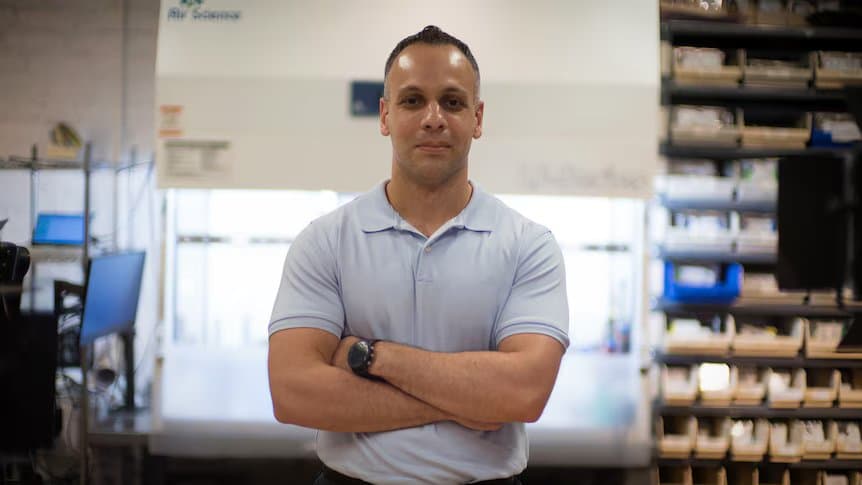
Louis Rossmann
Our engineers review all lab protocols to maintain technical accuracy and honest service. Since 2008, his focus has been on clear technical communication and accurate diagnostics rather than sales-driven explanations.
We believe in showing the bench rather than just describing it. Open-drive work runs on a 0.02 micron ULPA-filtered laminar clean bench, and we filmed it.
See the particle counter test at the benchFrequently Asked Questions
Can a corrupted Lightroom catalog be recovered?
In most cases, yes. A .lrcat file is a standard SQLite Version 3 database. When Lightroom reports corruption, the issue is usually an inconsistency between the main database and its Write-Ahead Log (.lrcat-wal). If the underlying SSD is physically healthy, the catalog can often be repaired by reconciling the WAL with the main database at the hex level. If the SSD has a firmware or hardware failure, the drive needs professional recovery first; the catalog repair comes after the raw data is imaged off the failing storage.
My external SSD keeps disconnecting. Is my Lightroom catalog at risk?
Yes. If Lightroom is writing to the catalog when the SSD disconnects, the SQLite transaction is interrupted mid-commit. The Write-Ahead Log (.lrcat-wal) becomes orphaned, and the main .lrcat file is left in an inconsistent state. Repeated disconnects compound the damage. The disconnects themselves often signal a failing USB-C bridge board controller, thermal throttling, or a bad cable. Do not run chkdsk or Disk Utility First Aid on a drive that is disconnecting; these tools restructure the filesystem and can permanently destroy the catalog data.
I accidentally deleted my Lightroom catalog from an SSD. Can it be recovered?
On a modern NVMe or SATA SSD with TRIM enabled (the default on APFS and NTFS), deleted file recovery is virtually impossible. When you delete the .lrcat file, the operating system immediately issues a TRIM/UNMAP command telling the SSD controller to clear those NAND flash cells during the next garbage collection cycle. The controller returns zeros for those sectors. Unless the drive was powered off within seconds of the deletion and TRIM had not yet executed, the catalog data is gone. This is fundamentally different from mechanical hard drives, where deleted data persists until overwritten.
Can you recover my Lightroom edits if I lost the original RAW files?
Lightroom stores two types of preview data alongside the catalog. The Previews.lrdb file holds rendered JPEG previews at various resolutions. The Smart Previews.lrdata folder contains lossy DNG files at up to 2540 pixels on the long edge. These Smart Previews retain your develop adjustments and can be forensically extracted even if the original RAW files (CR3, ARW, NEF) are permanently lost. They are not full-resolution replacements, but they can save a wedding or commercial shoot when the primary storage is unrecoverable.
How much does Lightroom catalog recovery cost?
Recovery cost depends on the physical condition of the storage device holding the catalog, not the size of the catalog or the value of the photos. Simple data copies from a functional drive start at $200. File system and SQLite repair for logical corruption is From $250. If the SSD has a board-level failure, pricing ranges from $450–$600. Firmware-level recovery is $600–$1,200. Severe board or NAND damage on encrypted MacBook storage falls into the $1,200–$1,500 tier. Free evaluation, firm quote before work, no data recovered means no charge.
Can you recover a Lightroom catalog from a dead MacBook with Apple Silicon?
Yes, but chip-off is not an option. On T2, M1, M2, M3, and M4 MacBooks, the NAND storage is cryptographically bound to the Secure Enclave coprocessor on the logic board. The encryption keys never leave the chip. Desoldering the NAND and reading it on external hardware produces encrypted, undecipherable data. Recovery requires component-level logic board repair to restore power delivery to the CPU and Secure Enclave. Once the board boots, the APFS volume decrypts and the Lightroom catalog becomes accessible.
Sources
- 1.SQLite documentation: Write-Ahead Logging (sqlite.org/wal.html). Describes WAL mode, checkpoint operations, and crash recovery semantics.
- 2.Adobe Lightroom Classic Help: Manage catalogs (helpx.adobe.com). Documents .lrcat, .lrcat-wal, Previews.lrdb, and Smart Previews.lrdata file relationships.
- 3.NVM Express Specification 2.0: Dataset Management (TRIM/Deallocate) command semantics and garbage collection implications for deleted data.
- 4.Apple Platform Security Guide (2024): Secure Enclave architecture, hardware-bound encryption keys, and APFS volume protection on Apple Silicon.
- 5.Adobe DNG Specification: Smart Preview format (lossy DNG, 2540px maximum dimension on long edge).
Since 2008
Established
As Featured In
Related services
Related Recovery Services
Full SSD recovery service overview
Logic board repair for Apple Silicon Macs
External SSD enclosure disconnection recovery
Why SSD deletion is different from HDD
FTL encryption blocks consumer tools
Mac filesystem corruption recovery
Lightroom catalog corrupted or lost?
Free evaluation. Firm quote. No data, no fee. Ship from anywhere in the U.S.