
RAID 10 Data Recovery Services
RAID 10 combines mirroring and striping to deliver both redundancy and throughput. When a mirror pair fails or a controller loses its metadata, the array goes offline and standard tools cannot read it. We image each member drive through write-blocked channels, reconstruct the stripe-of-mirrors layout from cloned data, and extract your files without writing to the originals. Our RAID data recovery service covers all array levels; this page focuses on RAID 10 specifically. Free evaluation. No data = no charge.
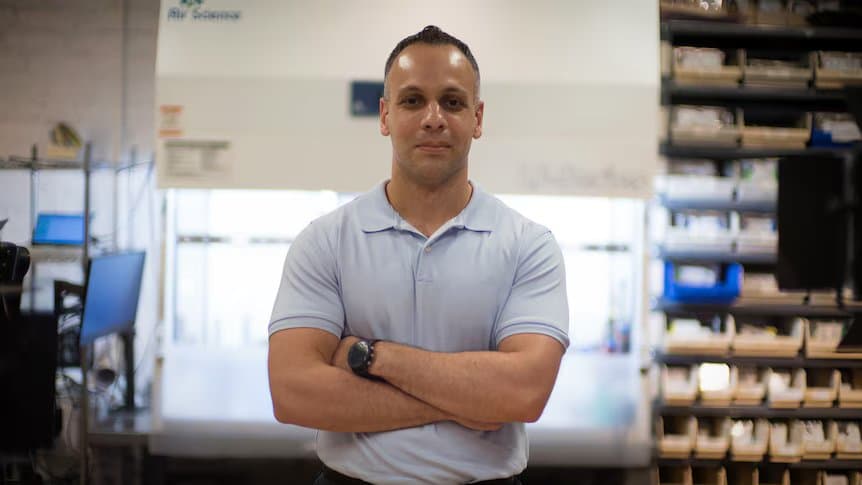
What Does RAID 10 Data Recovery Cost and How Does the Service Work?
Pricing at a Glance
- We image every member before we reconstruct the array read-only from the clones. We bill each drive on our published standard HDD tiers ($100–$2,000), depending on what failed on that drive.
Sealed helium drives are on their own price list, $200–$5,000+. When a head swap or platter repair opens one, we refill it with helium. That adds $400–$800, and the donor has to be an exact match. Helium drive prices
- RAID 10 is priced as the sum of per-member imaging plus a single array reconstruction fee. The full per-tier and reconstruction breakdown is in the pricing section lower on this page.
- Faster turnaround is available: +$100 rush fee to move to the front of the queue.
We run a single lab at 2410 San Antonio Street, Austin, TX 78705. No franchises, no outsourcing, no satellite offices, and no diagnostic fee. Your drives are evaluated and imaged by the same engineers who reconstruct the array, and you get a quote before any work begins.
How Does RAID 10 Combine Mirroring and Striping?
- In a 4-drive RAID 10, drives are grouped into two mirror pairs. Drive A1 and A2 hold identical data (mirror pair A). Drive B1 and B2 hold identical data (mirror pair B). Incoming writes are split into stripes and distributed across mirror pair A and mirror pair B.
- A 6-drive RAID 10 has three mirror pairs; a 12-drive RAID 10 has six. Each pair operates as an independent RAID 1 within the larger striped set.
- Enterprise deployments commonly run RAID 10 across 8, 12, 16, or 24 drives for database servers (SQL Server, Oracle, PostgreSQL), virtualization hosts (VMware ESXi, Hyper-V), and any workload that demands high IOPS with fault tolerance.
Should You Rebuild a Degraded RAID 10 Array?
A degraded RAID 10 array is at its highest risk when you leave it running during a rebuild. Power down a degraded array and contact a recovery service before initiating a rebuild on questionable hardware.
Do not rebuild: Forcing a RAID rebuild on aging drives under heavy I/O often triggers a second failure in the same mirror pair. Power down and preserve the current state.
Our RAID 10 Recovery Process
- Free evaluation and intake: Document the array configuration: member count, controller model (Dell PERC, HP Smart Array, LSI MegaRAID, software mdadm), RAID level confirmation, stripe size, and slot positions. Drives are labeled with their original bay numbers.
- Write-blocked forensic imaging: Each member drive is cloned individually using PC-3000 and DeepSpar hardware with conservative retry settings and head-map optimization. For a 12-drive RAID 10, this means 12 sequential imaging sessions. No writes touch the original drives.
- Physical intervention (when needed): Members with mechanical failures receive donor head transplants or motor repair on a 0.02 micron ULPA-filtered clean bench before imaging. Electrically damaged PCBs are diagnosed and repaired at the component level under microscope.
- Controller metadata analysis: Proprietary RAID metadata from the controller is extracted from member drive reserved areas. For hardware controllers like Dell PERC H755 or HP P816i, the metadata encodes mirror pair assignments, stripe block size, and member ordering. When the original controller is unavailable, we reverse-engineer these parameters from the raw data layout across member images.
- Offline array reconstruction: Data Extractor Express RAID Edition, running on the PC-3000, assembles the virtual RAID 10 from cloned images. Mirror pairs are mapped, the stripe interleave is validated against known filesystem structures, and mirror pair consistency is cross-checked. The reconstructed volume is mounted read-only.
- Filesystem extraction and delivery: R-Studio or UFS Explorer extracts files from the reconstructed volume (NTFS, EXT4, XFS, ZFS, VMFS). Priority data such as database files, virtual machine images, and shared folders are verified first. Recovered data is delivered on your target media and all working copies are purged on request.
How Do We Detect Chunk Size and Mirror Pairing From Imaged Members?
- Hardware controller anchors: On hardware RAID 10, the controller writes metadata to known locations on each member. LSI MegaRAID and Dell PERC use a DDF variant anchored at the last LBA of each drive. HP Smart Array uses a RAID Information Sector in reserved physical sectors at the start of each drive, independent of any OS partitioning. We parse those structures off the cloned images.
How Is the RAID 10 Stripe Map Rebuilt Across the Surviving Mirrored Pairs?
Once the array is offline and every surviving member has been imaged through a write-blocker, the layout is solved from the raw images, not from the dead controller. Mirror partners are identified by byte-identical content at the same LBA.
Stripe order and chunk size are recovered by locating a known filesystem anchor (the NTFS $MFT, an ext4 superblock backup, or an XFS allocation group header) and measuring where successive chunks land across the candidate members. With the mirrors collapsed to one member each, the remaining members interleave as a standard RAID 0 stripe.
None of this requires writing to the original drives, and none of it requires a live rebuild. Because the reconstruction runs against cloned images, a wrong chunk-size guess or a wrong member selection can be redone without consuming any of the surviving members. A degraded hardware rebuild does the opposite: it writes to the survivors at the moment they are most fragile, which is why we never use it as a recovery step.
What Are the URE Risks During a RAID 10 Rebuild?
- Consumer SATA URE probability: Manufacturer specifications list one URE per 10^14 bits read as a worst-case floor, meaning the drive is guaranteed to be no worse than that error rate, and real drives commonly perform far better than the guaranteed spec. Dividing the bytes read during a rebuild by the 12.5 TB that 10^14 bits represents gives the worst-case URE count the spec permits, not an expected number of errors. A full read of a 4 TB consumer member during a degraded rebuild is still a large enough fraction of that worst-case interval that the risk is real and scales with member capacity and drive age.
- Silent corruption window: If the surviving mirror member returns a bad sector during rebuild and the controller does not surface the error to the host, the new mirror inherits the corruption. The array then reports healthy while data is wrong. Some controllers issue a medium error and abort the rebuild; others retry, succeed on a random read, and proceed. Behavior is firmware-specific and must be characterized per controller model before any live rebuild.
- SMR drive eviction during rebuild: Shingled magnetic recording (SMR) consumer drives stall during sustained sequential writes when the CMR cache zone overflows. The kernel or the controller interprets a 30 to 60 second stall as a dead drive and ejects it, taking the rebuild offline mid-flight. SMR drives must never be placed into a RAID 10 array.
Our policy on a degraded RAID 10 with anything more than a clean single-drive failure is to refuse the live rebuild path. We power down the array, image every member with ddrescue or PC-3000 Portable III or PC-3000 Express through a write-blocker, then reconstruct the virtual array offline from the cloned images.
The original drives are never written to during recovery, which means a failed reconstruction can be redone with a different chunk-size guess or a different mirror-pair assumption without burning any of the surviving members.
What Happens When the Last Surviving Mirror Member Develops Bad Sectors?
This is a different failure than a dead pair, where both members are gone, and different than a URE on a member whose twin is healthy. When a twin survives, the controller or our offline reconstruction reads the lost LBA off the good member, and nothing is lost. When the pair is already down to one drive, the surviving leg is the only copy of that span, so a single bad sector in user data has no fallback. The math is the same one in our RAID array recovery work: redundancy is gone the moment a span drops to one member, and every read after that point is unprotected.
How we triage a depleted mirror
- Power down immediately. A degraded pair under live rebuild I/O is the worst place the surviving leg can be. We stop reads to the original drive before it degrades further.
- Write-blocked multi-pass imaging. The lone leg is cloned with DeepSpar Disk Imager and PC-3000 Portable III or PC-3000 Express through a write-blocker. The first pass grabs every easily readable sector fast; later passes return to the bad regions with adjusted timeouts and head-map selection to recover the maximum LBAs around damaged sectors before the heads wear out.
- Selective head-map recovery. Imaging is ordered to read the most valuable regions first and to skip and revisit bad zones, so a head that fails partway through has already pulled the priority data rather than dying on a slow linear sweep.
- Virtual reconstruction from the best image. PC-3000 and DeepSpar image and extract sectors; the array is then assembled in software from the best clone, with the surviving mirrors of every healthy pair filling their spans normally.
Here is the limit. If the only surviving member of a span has unreadable LBAs inside user data, those exact LBAs are gone; no twin and no parity exists to regenerate them. We still reconstruct the rest of the volume from the readable sectors and the healthy pairs. On the affected span, we read as much as the one remaining drive will give us. There's no diagnostic fee, and if we don't recover any data, there's no recovery fee.
How Much Does RAID 10 Recovery Cost?
Per-Member Imaging
- Logical or firmware-level issues: $250 to $900 per drive. Covers filesystem corruption, firmware module damage requiring PC-3000 terminal access, and SMART threshold failures preventing normal reads.
- Mechanical failures (head swap, motor seizure): $1,200 to $1,500 per drive with a 50% deposit. Donor parts are consumed during the transplant. Head swaps and platter work are performed on a validated laminar-flow bench before write-blocked imaging.
Array Reconstruction
- The reconstruction fee depends on member count, filesystem type (NTFS, EXT4, XFS, ZFS, VMFS), and whether mirror pair assignments and stripe parameters must be detected from raw data versus captured from surviving controller metadata.
- For large RAID 10 arrays (12, 16, 24 members), the per-drive imaging cost scales with member count. The reconstruction process operates on already-imaged data regardless of how many members contributed to it.
No Data, No Recovery Fee: If we don't recover anything from your array, there's no recovery fee. The evaluation is free, and you're under no obligation.
If a 4-drive RAID 10 has two members requiring firmware repair while two are healthy reads, the cost model applies 2 drives at the firmware tier, 2 drives at the logical tier, plus the array reconstruction fee.
Enterprise RAID Controllers We Recover From
Dell PERC
PERC stores DDF (Disk Data Format) metadata on each member. We read that metadata directly from the raw drive images.
HP Smart Array
HP uses a proprietary metadata format stored in reserved sectors on each member.
LSI MegaRAID
LSI metadata is stored on each member. We parse those structures off the cloned images during offline virtual assembly, so we never write to the live array during recovery.
Software RAID configurations (Linux mdadm, Windows Storage Spaces, ZFS) store their metadata in standardized superblock locations. These are easier to parse than hardware controller formats but still require correct identification of mirror pair groupings and stripe chunk sizes during reconstruction.
- Rebuild ordering, in our lab
- For every hardware controller above, the rebuild order is the same: clone first, parse second, assemble virtually third. We never run a foreign import on a live array. We never let the original controller write to a degraded member. If the customer has already accepted a foreign import and the result is unstable, we still image the members in their current state and reconstruct offline. The risk surface of a live rebuild on a multi-disk failure exceeds any time savings from skipping the imaging step.
RAID 10 Terminology Reference
The terms below are used throughout this page and across vendor documentation. Mixing them up is the single most common reason a recovery attempt destroys data that could otherwise have been retrieved.
- Mirror set
- Two member drives that hold byte-identical copies of the same stripe segment. A 4-drive RAID 10 has two mirror sets; a 12-drive RAID 10 has six.
- Stripe set
- The group of mirror sets that data is interleaved across. In RAID 10 the stripe set contains all mirror pairs, with each successive chunk written to the next mirror set in sequence.
- Chunk size
- The number of contiguous bytes written to one mirror set before the controller moves to the next.
- DDF (Disk Data Format)
- The SNIA-standardized on-disk RAID metadata format. LSI MegaRAID writes a SNIA-compliant DDF with its 512-byte Anchor Header at the absolute last LBA of each member, the reserved region growing inward from the end; MegaRAID reserves 512 MB for it. Dell PERC writes a Dell variant of DDF to the same trailing region.
- RIS (RAID Information Sector)
- HP's proprietary RAID metadata layout for Smart Array controllers, written at reserved physical sectors at the start of each member drive, independent of any OS partitioning. Not DDF and not interchangeable with DDF parsers.
- Virtual drive group
- The controller-level abstraction that maps a set of physical members to a single logical block device presented to the operating system. The OS sees one device; the controller knows the underlying member layout.
- Write-back cache (FBWC / BBWC)
- A controller-side memory buffer that acknowledges writes to the host before the data lands on the member drives. A flash-backed (FBWC) or battery-backed (BBWC) cache holds dirty data through power loss until the data is flushed. A failed cache module loses in-flight writes regardless of the array state.
- URE (Unrecoverable Read Error)
- A sector that returns a read error despite ECC retries. Consumer drives spec one URE per 10^14 bits read.
RAID 10 Recovery Questions
What is the difference between RAID 10 and RAID 01?
Can a RAID 10 be recovered if a full mirror pair fails?
My RAID controller died. Can you rebuild the array without the original hardware?
How long does RAID 10 recovery take?
A mirror pair is already down to one drive and it has bad sectors. Is the data lost?
Data Recovery Standards & Verification
Our Austin lab operates on a transparency-first model. We use industry-standard recovery tools, including PC-3000 and DeepSpar, combined with strict environmental controls to maintain drive integrity. This approach allows us to serve clients nationwide with consistent technical standards.
Localized Clean Zone
Open-drive work is performed in a 0.02 micron ULPA-filtered laminar clean bench.
Transparent History
Serving clients nationwide via mail-in service since 2008. Our lead engineer holds PC-3000 and HEX Akademia certifications for hard drive firmware repair and mechanical recovery.
Media Coverage
Our repair work has been covered by The Wall Street Journal and Business Insider, with CBC News reporting on our pricing transparency. Louis Rossmann has testified in Right to Repair hearings in multiple states and founded the Repair Preservation Group.
Aligned Incentives
Our "No Data, No Charge" policy means we assume the risk of the recovery attempt, not the client.
Technical Oversight
Louis Rossmann
Our engineers review all lab protocols to maintain technical accuracy and honest service. Since 2008, his focus has been on clear technical communication and accurate diagnostics rather than sales-driven explanations.
We believe in showing the bench rather than just describing it. Open-drive work runs on a 0.02 micron ULPA-filtered laminar clean bench, and we filmed it.
See the particle counter test at the benchSince 2008
Established
As Featured In
Need your RAID 10 array recovered?
Evaluation is free. If we don't recover any data, there's no recovery fee. You can mail your drives in from anywhere in the U.S.