
Technical Reference
What PC-3000 Actually Does
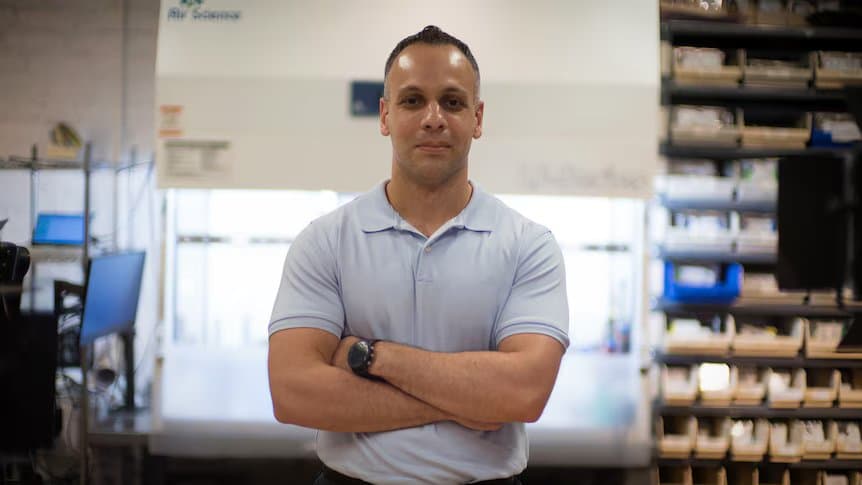
PC-3000 is the primary professional tool used by data recovery labs worldwide. Manufactured by ACE Lab, it is a combined hardware and software platform that provides manufacturer-specific access to hard drive data recovery and SSD firmware. The hardware interface sends diagnostic commands that are not part of the standard ATA or NVMe command sets; these are proprietary commands that drive manufacturers use during manufacturing and factory testing.
The software provides modules for each drive family (Seagate, Western Digital, Samsung, Toshiba, Hitachi/HGST) with tools to read, modify, and rebuild firmware structures.
The PC-3000 tool explainer covers what the tool is, what a lab spends to own one, and the firmware failures it addresses.
Hardware Interface: Bypassing the Drive's Normal I/O Path
Consumer software communicates with a hard drive through the standard ATA or NVMe command set. These commands are limited to what the drive's firmware exposes: read sectors, write sectors, SMART data, identify device. If the firmware is corrupted, the drive may not respond to standard commands at all. The drive's controller IC (Marvell 88i9XXX series in Western Digital drives, proprietary ASICs in Seagate & Toshiba) rejects commands it can't process against a valid firmware state.
The PC-3000 hardware interface board connects between the host system and the drive. It sends Vendor Specific Commands (VSC), proprietary opcodes that each manufacturer's controller recognizes from factory calibration & test procedures. These commands bypass the drive's normal firmware path entirely. They allow:
- Accessing the drive's System Area (SA) on the platters, where firmware modules are stored
- Reading & writing individual firmware modules stored in the System Area: translator (LBA-to-physical-block mapping), P-List (factory defect list), G-List (grown defect list), adaptive parameters (head flight height, voice coil current, read channel equalization settings), SMART overlay, & head map
- Putting the drive into a diagnostic or engineering mode where it responds even if its firmware is partially corrupted
- Controlling individual read/write heads independently (selecting which head to use for reading, skipping damaged heads)
- Setting custom timeout and retry parameters for sector reads (controlling how long to attempt reading a difficult sector before moving on)
The hardware interface also provides stable power management. Consumer SATA ports drop a drive that takes too long to respond or that sends unexpected status codes. The PC-3000 interface maintains the connection even when the drive behaves abnormally, which is critical when working with drives that have firmware corruption or intermittent head issues.
On Western Digital drives, each drive stores unique adaptive parameters & micro-jog offsets calibrated to its specific platters. Some WD families store this data in NVRAM integrated into the controller IC; others use an external SPI flash chip on the PCB.
In either case, a simple PCB swap from a donor drive won't work because the donor board lacks the patient drive's unique platter calibration data. PC-3000 can extract and transfer this data between boards.
Software Modules: Vendor-Specific Firmware Access
Each drive manufacturer uses a different firmware architecture, different System Area layout, and different proprietary command set. PC-3000's software is organized into manufacturer-specific modules:
| Module | Drive Families | Key Capabilities |
|---|---|---|
| Seagate F3 | All Seagate drives using F3 architecture (2008+, including Rosewood, Grenada, Makara) | SA module read/write, translator rebuild, head map editing, LED code interpretation, UART serial terminal access (38400 baud, Ctrl+Z interrupt to reach the F3 T> diagnostic prompt) |
| WD Marvell | Western Digital drives with Marvell 88i9XXX series controllers (most WD drives 2010+) | ROM extraction from integrated NVRAM or SA platters, CRC checksum repair on corrupted overlay modules, head map modification, service area backup/restore, adaptive parameter adjustment (Module 47: voice coil current, head flight height, read channel equalization) |
| Samsung | Samsung HDD (legacy) and some Seagate Samsung-architecture drives | SA module access, translator rebuild, Safe Mode boot to bypass corrupted SA modules |
| Toshiba/Hitachi | Toshiba, HGST, and legacy Hitachi drives | Microcode loading, SA access, G-List management |
Each module contains scripts (called "utilities" in ACE Lab terminology) for common repair procedures. The Seagate F3 module includes utilities for SA Write Fault repair (a common Rosewood failure where the drive can't write to its System Area tracks), translator regeneration, & head map reconfiguration after a head swap.
When the drive's processor hangs during boot, a technician can access the F3 terminal directly through a UART serial connection, interrupt the boot sequence with Ctrl+Z, & issue commands at the T> prompt to clear SMART counter overflows or regenerate the translator. For WD Marvell drives, PC-3000 extracts surviving adaptive data from the SA on the platters, resolves CRC checksums in corrupted overlay modules, & reconstructs ROM data so a donor PCB can read the patient drive's platters.
Data Extractor: Hardware-Level Imaging
PC-3000 includes a companion imaging tool called Data Extractor (DE). While standalone imaging tools like ddrescue read sectors through the standard ATA path, Data Extractor reads through the PC-3000 hardware interface. It disables the drive's native retry logic & substitutes millisecond-level timeout thresholds controlled by the technician, preventing the drive from hanging on damaged sectors. This provides:
- Head-selective imaging. Read only from specific heads, skipping heads that are damaged or unstable. A four-head drive with one bad head can be imaged using only the three good heads, recovering the data stored on those surfaces.
- Multi-pass imaging. First pass reads easy sectors quickly. Subsequent passes increase timeouts & retry counts to recover difficult sectors. The drive can be powered off & rested between passes to allow thermal recovery of marginal heads.
- Sector-level error handling. Configurable behavior for bad sectors: skip, retry N times, mark and continue. Consumer tools typically abort or hang on persistent bad sectors.
- Real-time head stability monitoring. If a head begins to degrade during imaging (increasing error rate, decreasing read speed), the technician can disable that head and continue with the others before the failing head causes platter damage.
PC-3000 Variants
| Variant | Interface | Target Devices |
|---|---|---|
| PC-3000 Express | PCI-E card with SATA/PATA ports, dedicated power management for abnormal drive behavior | SATA & PATA hard drives (primary HDD tool, supports all vendor-specific command sets) |
| PC-3000 Portable III | Standalone unit | SATA, PATA, USB, and NVMe PCIe storage devices |
| PC-3000 SSD | SATA + M.2 + adapter support | SATA SSDs (controller-specific firmware access) |
| PC-3000 Portable PRO | Standalone unit, successor to the Portable III | SATA, USB, and NVMe PCIe storage devices |
| PC-3000 SSD Extended (software add-on, not standalone hardware) | No interface of its own; licensed onto PC-3000 SSD and run from Portable III or Portable PRO hardware | Extends the PC-3000 SSD module set with NVMe technological-mode support |
A full PC-3000 setup (Express + SSD + Data Extractor licenses) costs tens of thousands of dollars in hardware, software licenses, and annual support subscriptions. The tool is only useful with the knowledge to operate it; the software provides the mechanism, but the technician must understand drive firmware architecture to use it effectively, which is why firmware-level cases are routed to our PC-3000 data recovery tool service.
What the Portable PRO and the SSD Extended Add-On Do at the Bench
The PC-3000 Portable PRO is hardware: the standalone platform that succeeded the Portable III. The PC-3000 SSD Extended is software: a licensed add-on to the PC-3000 SSD module set that widens which devices the suite can talk to once they are attached.
People shop these two as if they compete. They do not. Attaching a device under controlled power is a hardware problem, & understanding that device's firmware once it is attached is a software problem, so the PC-3000 line answers each with a separate purchase.
A drive can sit on a port with a clean link & still be unreadable because nothing in the module set understands its controller family; a device the software knows cold is useless if no unit on the bench has a port for it.
- PC-3000 Portable PRO
- Hardware. The newer standalone portable platform in the PC-3000 line, successor to the Portable III. It supplies the physical PCIe lane connectivity & the power control that a marginal device needs during a long imaging run.
- PC-3000 SSD Extended
- Software. An add-on license layered onto the PC-3000 SSD module set, carrying the NVMe technological-mode utilities that reach a device's firmware. It ships no hardware of its own & runs from Portable III or Portable PRO hardware.
How the Portable III and Portable PRO run side by side
Both units run standalone, without a host workstation, so neither one ties up the workstation a PC-3000 Express is already using for SATA hard drive work. The Portable III did not leave the bench when the PRO arrived; the two run side by side, & jobs are assigned by what the device needs rather than by which unit is newer.
What the SSD Extended add-on covers
The base PC-3000 SSD module set covers SATA solid-state drives with controller-specific firmware access, as the variants table above records. SSD Extended is the license that carries the NVMe technological-mode utilities on top of that base set.
It is bought as software, keyed to the PC-3000 SSD suite, and run from the portable hardware; there is no separate box to plug in. When a device attaches cleanly and reports nothing useful, the gap is a firmware-access gap, & the add-on is where that gap gets closed rather than in another cable.
Hardware decides whether the device attaches; software decides whether it can be read.
The PC-3000 Express, the Portable III, and the Portable PRO are the attachment & power layer. Data Extractor, the vendor-specific hard drive modules, PC-3000 SSD, and the SSD Extended add-on are the firmware-diagnostic layer that runs on top. Both layers sit in the Austin lab under one roof; firmware-level work is not shipped to a partner lab or a franchise, because there is only the one lab.
What PC-3000 Cannot Do
PC-3000 addresses firmware and logical-level problems. It has specific limitations:
- Cannot repair physical damage. PC-3000 cannot fix damaged heads, scored platters, seized motors, or broken preamp chips. Physical repairs (head swap, motor swap, PCB repair) must be done first. PC-3000 works with the drive after physical problems are resolved.
- Cannot bypass hardware encryption without keys. If an SSD controller uses hardware AES encryption, the data on the NAND is ciphertext. PC-3000 SSD can read the raw NAND, but the data will be encrypted. The decryption key must be accessible (either from the controller itself or extracted before controller replacement).
- Cannot recover TRIMmed data. If an SSD's controller has processed TRIM commands and the garbage collector has erased the blocks, the data is physically gone from the NAND cells. PC-3000 SSD cannot recover data that has been physically erased.
- Cannot guarantee 100% recovery. Sectors with severe media damage (platter scoring, advanced NAND degradation) may be unreadable regardless of timeout & retry settings. On HDDs, areas where the platter surface is scored through the magnetic coating destroy the servo wedges embedded at the factory; without valid servo data, the drive can't calculate a Position Error Signal (PES) from the burst patterns, loses servo lock, & aborts reads for that zone. Even with read channel tuning, there is no signal left to decode. PC-3000 maximizes what can be recovered, but physical damage to the recording surface sets a hard limit.
PC-3000 is a professional diagnostic platform, not a magic recovery tool.
The value of PC-3000 is access: it communicates with drives at a level that consumer software cannot reach. It exposes the drive's internal firmware structures, allowing a technician to diagnose the exact failure mode and apply the appropriate repair. Without a trained operator who understands drive firmware architecture, the tool cannot produce results. The tool enables the technician; it does not replace the technician.
User Mode vs Factory Mode Access
Standard operating systems communicate with hard drives through the ATA command set, which exposes only what the drive's firmware allows. PC-3000 Factory Mode bypasses that firmware layer entirely, sending Vendor Specific Commands directly to the controller IC.
| Feature | User Mode (Standard OS Access) | Factory Mode (PC-3000 Access) |
|---|---|---|
| Communication Layer | Standard ATA/SCSI command set through OS driver stack | Vendor Specific Commands (VSC) sent directly to controller IC through PC-3000 hardware interface |
| Data Access | User data sectors only (LBA 0 through max LBA) | User data sectors plus System Area (SA) on reserved platter tracks: firmware modules, translator, defect lists, adaptive parameters |
| Error Handling | Drive firmware controls retry logic; OS receives timeout or I/O error after drive gives up | Technician sets millisecond-level timeouts, retry counts, & power cycling parameters; drive firmware retry logic is disabled |
| Module Editing | No access to firmware modules; SMART attributes are read-only | Full read/write access to all SA modules: translator, P-List, G-List, head map, adaptive parameters, SMART overlay, ROM data |
| Head Control | No head selection; drive firmware decides which head reads which sector | Per-head selection & disabling; selective imaging from individual platters; real-time head stability monitoring |
This distinction matters because most data recovery cases that reach a professional lab involve firmware-level failures. The drive's controller IC has detected an internal error (corrupted translator, overflowed defect list, damaged SA track) and refuses to process standard ATA commands. Consumer recovery software cannot proceed because it has no way to reach the firmware layer. PC-3000 Factory Mode bypasses that barrier.
Common Firmware Failure Modes
Each drive manufacturer uses a different firmware architecture, so firmware failures present differently across Seagate, Western Digital, Samsung, & Toshiba families. PC-3000's vendor-specific modules address each architecture with targeted repair procedures.
Seagate F3 Rosewood: SA Write Fault & MCMT Corruption
Seagate Rosewood drives (ST1000LM035, ST2000LM007, and related models) use Shingled Magnetic Recording (SMR) with a Media Cache Management Table (MCMT). The MCMT maps which user data sectors are held in the media cache (a CMR buffer zone) versus which have been migrated to the shingled user data area. A power loss during cache flush corrupts the MCMT, and the drive enters a BSY (busy) state with LED code 000000BD.
The workflow in PC-3000:
- ROM unlock via the UART serial connection at 38400 baud (the F3 T> diagnostic prompt is reached with a Ctrl+Z break)
- Backup SysFiles 1B, 28, & 35 plus the media cache map before any modification
- Reconstruct the Media Cache Management Table in RAM using PC-3000's Seagate F3 module, which reads the media cache zone & rebuilds the mapping table without erasing cached data
- If translator regeneration is still required, it runs from the F3 terminal only after the MCMT is secured
Fork direction detection ambiguity errors during translator regeneration require manual identification of defective sectors. The technician locates the ambiguous sector range, resolves the fork direction, & reruns the translator build. This is a firmware-level repair that falls under the $600–$900 tier (CMR drive: $600. SMR drive: $900.).
WD Marvell: Slow Responding & ROM Corruption
Western Digital drives using Marvell 88i9XXX series controllers store firmware in the System Area on the platters and cache critical boot data in either integrated NVRAM (within the Marvell IC) or an external SPI flash chip (U12 on the PCB). Two common failure patterns:
Module 32 relo-list overflow. Module 32 stores the runtime reallocation list (the list of sectors that the drive has remapped to spare area during normal operation). When this module fills to capacity, the drive's firmware enters a "slow responding" state: it initializes correctly but hangs for minutes per sector read as it searches the overflowed relo-list. PC-3000 reads Module 32 from the SA, trims or clears the overflow entries, & writes the corrected module back. The technician then images the drive through Data Extractor before the relo-list fills again.
T2 Translator Module 190 corruption on SMR drives. WD SMR drives use a separate T2 translator (Module 190) that maps between the shingled zone layout & the logical block addresses. If Module 190 is corrupted, the drive reports the wrong capacity or returns garbage data. PC-3000's WD Marvell module can read Module 190 from the SA, identify corrupted entries, & rebuild the T2 translator in RAM.
ROM recovery. If the ROM data (either in integrated NVRAM or SPI flash) is corrupted, the drive will not spin up or will click without initializing. PC-3000 can extract the ROM directly from the SPI chip using a hardware programmer, or read it from a backup copy in the SA. In kernel mode, the technician boots the drive with a minimal firmware set uploaded to RAM, bypassing the corrupted ROM entirely. After imaging, the ROM can be reconstructed using adaptive parameters from Module 47 (microjog offsets calibrated to the patient drive's specific platters).
Samsung: Translator Corruption & Overlay Read Failures
Samsung hard drives (legacy Samsung-manufactured models & some Seagate drives that use Samsung firmware architecture) store firmware overlays in the SA that are loaded into controller RAM during boot. If an overlay is corrupted, the drive fails during initialization with boot sector errors or overlay read failures.
PC-3000 provides a Safe Mode boot that bypasses the normal SA overlay loading sequence. The technician uploads a minimal firmware set directly to controller RAM using the BURN resource loading function.
Once the drive is running in Safe Mode, the SA can be read & repaired: corrupted overlays are identified, backed up, & reconstructed. Head map editing in RAM allows the technician to disable degraded heads before imaging through Data Extractor.
Toshiba & Hitachi: Microcode Failures & G-List Damage
Toshiba and legacy Hitachi/HGST drives use a different firmware architecture from Seagate & WD.
PC-3000 pairs with Data Extractor's "read from active PC-3000 utility" mode, which bypasses the drive's native error handling and reads sectors via Technological Mode through the read channel hardware. This is useful for drives where the firmware is functional enough to spin the platters & position the heads but not stable enough to process standard read commands.
The virtual translator setup allows the technician to construct a temporary translator in RAM, avoiding the corrupted G-List entirely, and image the drive through Data Extractor.
SMART Data Analysis: PC-3000 vs Consumer Tools
Consumer SMART monitoring tools read only the SMART attribute table exposed through standard ATA commands. PC-3000 accesses the underlying SA modules that store raw SMART data, overflow logs, & firmware panic triggers that consumer tools cannot see.
Tools like CrystalDiskInfo, HD Sentinel, & smartmontools send ATA SMART READ DATA (command B0h, subcommand D0h) and SMART READ LOG (command B0h, subcommand D5h) through the host operating system. The drive's firmware decides which attributes to expose and how to format them. Some firmware versions suppress attributes that indicate internal problems, and most consumer tools cannot distinguish between a drive with "all green" SMART values & a drive whose firmware is hiding a critical condition.
PC-3000 reads the SA SMART modules directly from the reserved tracks on the platters. This reveals:
- Overflowed SMART logs that cause firmware panic states. Some Seagate F3 drives enter BSY when the internal SMART event log fills to capacity; the firmware attempts to write a new entry, fails, & enters a loop. PC-3000 clears the overflowed log module directly in the SA.
- Hidden reallocated sector counts. Consumer SMART shows the "Reallocated Sector Count" attribute (05h), but the actual pending & reallocated sector lists live in SA modules (Module 32 on WD, SysFile-based on Seagate). PC-3000 reads these modules to see the full scope of media degradation.
- Background SMART monitoring disable. During imaging of an unstable drive, PC-3000 can disable the firmware's background SMART monitoring to prevent the drive from pausing mid-read to update SMART counters or run self-test routines. This keeps the drive focused on data output and reduces the risk of firmware hangs during long imaging sessions.
Data Extractor Task Scripting
Data Extractor (DE) includes a task scripting system that automates multi-pass imaging workflows for unstable drives. The technician configures power cycling parameters, head selection, & timeout escalation in advance, and DE executes the imaging plan without manual intervention.
Loss-of-Readiness Power Cycling
When an unstable drive loses readiness during imaging (heads park, firmware hangs, or the drive stops responding to commands), Data Extractor can automatically power cycle the drive & resume from the last successfully read sector. The technician configures:
- Hard power-off. DE cuts power to the drive completely through the PC-3000 hardware interface, waits a configurable period, then re-powers the drive.
- Configurable wait times. The delay between power-off & power-on can be set per task. Drives with thermal sensitivity (heads that degrade as the drive warms up) benefit from longer cool-down periods between imaging passes.
- Retry limits. The technician sets a maximum number of power cycles per sector range. If a sector range fails after the configured number of attempts, DE marks it & moves on rather than destroying the heads with repeated attempts.
Head Map Building for Selective Imaging
Before starting a full image, Data Extractor can build a head map that tests each head's read performance across the drive's LBA range. The head map identifies which heads are stable, which are marginal, & which are non-functional. The technician then configures DE to:
- Image all stable heads first (fastest pass, lowest risk)
- Image marginal heads second with relaxed timeouts & shorter continuous-read windows
- Skip non-functional heads entirely (the data on those platter surfaces requires a donor head swap to recover)
Multi-Pass Timeout Escalation
DE supports multi-pass imaging with configurable timeout escalation across passes:
- Pass 1: Short timeouts. Reads all sectors that respond quickly. Skips anything that takes longer than the threshold.
- Pass 2: Medium timeouts. Returns to sectors skipped in Pass 1 and attempts them with longer wait times.
- Pass 3: Extended timeouts. Reads directly from the active PC-3000 utility (on supported drive families) to bypass the drive's native error handling and extract data through Technological Mode.
Between passes, the drive can be powered off for thermal recovery. The entire sequence runs unattended; the technician reviews results after completion & decides whether additional passes or a head swap is needed to recover remaining sectors.
PRML Read Channel and FIR Equalizer Tuning
PC-3000's adaptive parameter modules expose the coefficients that a drive's read channel uses to decode the analog waveform coming off the preamp. When heads degrade, when a donor head stack is installed, or when preamp bias drifts over a long imaging session, retuning those coefficients can rescue bits that the drive would otherwise report as unreadable. This section walks through the signal chain the coefficients control and the specific adaptive files PC-3000 edits.
PRML and EPRML: How a Modern Drive Reads Bits
Consumer storage articles describe an HDD as if bits were read one at a time like keys on a piano. A modern drive does not work that way. The linear recording density is high enough that magnetic transitions on the platter overlap.
The sample the read channel captures at any given bit position contains contributions from the preceding and following bits. This effect is called Intersymbol Interference (ISI). Peak detection, the scheme used in pre-1990 drives, fails completely at modern densities.
Partial Response Maximum Likelihood (PRML) was introduced in the IBM 0681 in 1990 and replaced peak detection across the industry. PRML deliberately shapes the analog readback signal to a known "partial response" target (PR4, EPR4) and then runs a maximum likelihood sequence detector over the samples instead of making bit-by-bit hard decisions.
Extended PRML (EPRML) and generalized PRML extended the target class to higher orders as areal density kept climbing. Modern drives pair EPRML targets with iterative decoders such as LDPC and with noise-predictive maximum likelihood (NPML) detectors that embed a noise-whitening filter into the branch metric computation.
Viterbi Detector: Sequence Estimation on a Trellis
The maximum likelihood detector inside a PRML channel is a Viterbi detector. It operates on a finite-state machine representation (a trellis) where each state represents the recent bit history and each branch represents a possible next bit. For every new sample the ADC produces, the detector computes a branch metric: the squared distance between the observed sample and the sample that the channel would produce if the bit sequence followed that branch.
An Add-Compare-Select (ACS) unit accumulates branch metrics along surviving paths and drops paths that are no longer competitive. After a fixed decoding delay, the detector outputs the bit on the unique surviving path and slides the window forward.
This matters for data recovery because the branch metrics depend on expected sample values that were calibrated for specific heads. Install donor heads with a different preamp revision or a different magnetoresistive impedance, and the expected samples the detector compares against no longer match what comes off the head.
The ACS picks wrong paths, bit error rate rises, and the ECC below the detector stops correcting. The drive does not return bad data; it returns unrecoverable read errors, and on a Seagate it may fail to boot the Service Area at all.
FIR Equalizer Coefficients in Adaptive Modules
Before the Viterbi detector sees a sample, the signal is equalized. A continuous-time analog filter shapes the preamp output, the ADC digitizes it, and a digital FIR (Finite Impulse Response) filter runs a short set of tap coefficients over successive samples to force the waveform into the PR target shape. The FIR coefficients are unique per head. They are calibrated at the factory alongside voice coil motor current, head flight height, write pre-compensation, and microjog offsets.
PC-3000 reads and writes these coefficients through vendor-specific adaptive parameter modules:
- WD Marvell Module 47. Stores the per-head microjog and servo adaptive parameters. After a head swap, PC-3000 can transfer Module 47 from a donor of the same family, which lets the firmware re-calibrate against the installed head stack. SMR WD drives also carry operational data in Module 190 that must be preserved across the transfer.
- Seagate RAP (Read Adaptive Parameters). Controls the read channel amplifier settings and FIR equalization coefficients for each head. RAP is reread at spin-up; corrupted RAP on a Rosewood drive produces LED codes that look like mechanical failure but are actually a firmware read channel fault.
- Seagate SAP (Servo Adaptive Parameters). Calibrates voice coil motor current curves for track-following. Without a matching SAP, a swapped actuator can overshoot track centers and present as clicking during seek.
- Seagate CAP (Controller Adaptive Parameters). System-level parameters that PC-3000 reads via F3 terminal commands at the T> prompt.
Failure Modes Where Read Channel Tuning Matters
Not every failing drive benefits from read channel tuning. The adaptive-parameter path is reserved for specific physical and electronic failure modes.
- Weak or marginal heads. As a head ages or picks up particulate contamination, read amplitude drops. The Viterbi detector's branch metrics become dominated by noise instead of signal, and ECC stops correcting. Widening the read channel gain or retuning FIR taps in RAP (Seagate) or Module 47 (WD) can recover signal margin long enough to finish imaging before the head fails outright.
- Preamp mismatch. The preamp IC is mounted on the Head Stack Assembly, so replacing heads with a donor stack also replaces the preamp.
- Post-head-swap adaptive mismatch. After a physical head swap in the 0.02 micron ULPA-filtered clean bench, the new heads cannot read the patient platters with the old adaptive parameters. PC-3000 transfers Module 47 or RAP from the donor, rebuilds the head map to mark dead heads, and the drive is then stable enough for data recovery imaging through Data Extractor or DeepSpar.
Data Extractor Imaging Order: When to Read Forward, Reverse, or Head-by-Head
Sequential LBA-forward imaging is the default on healthy drives. On a drive with degrading heads, localized platter damage, or firmware that delays on read-lookahead into known bad zones, sequential imaging finishes the destruction the drive started on its own. Data Extractor lets the technician set the imaging order, and the choice is driven by the symptom set the drive presents on the bench.
Head-by-head, healthiest first
The technician builds a RAM head map (see the head-map editing workflow below), tests each physical head's read performance across a sample of LBAs, and configures Data Extractor to image confirmed-stable heads in the first pass. Marginal heads run second with relaxed timeouts and shorter continuous-read windows. Dead heads are skipped; the data on those surfaces is only recoverable through a head swap to a matched donor.
The rationale is that if the donor stack fails mid-pass or a marginal head degrades further under load, the maximum amount of data from healthy platters is already secured. This is the default on any drive that reaches the bench with a clicking history, a recent head swap, or a known weak head identified during the initial head map.
Reverse-LBA imaging
The imaging pass is configured to read from the maximum LBA back to LBA 0. Two conditions favor this order. First, when the drive's read-lookahead caching trips a firmware hang inside a known bad zone, reversing the read direction often sidesteps the lookahead window because the prefetch logic looks ahead in ascending LBA order.
Second, when a scratch or media defect physically spans the outer tracks (low LBAs on most drives), reading from the inner tracks outward captures the cleanly readable surface before the heads sweep into the damaged zone. Reverse imaging is also useful as a second pass after a forward pass stalls; a sector that timed out forward sometimes responds on a reverse approach.
Zone-based phased imaging
Data Extractor renders the LBA space as a color-coded bitmap, with each tile representing a sector range. The technician configures the first phase to capture green tiles (fast, reliable reads) with tight timeouts and large block sizes. Yellow tiles (slow but eventually readable) are deferred to a second phase with relaxed timeouts.
Red tiles (timeout or error) move to a third phase with sector-level retries and per-sector power cycling. This ordering is appropriate when the head map shows uniformly healthy heads but the platter has localized damage zones; the goal is to harvest the easy capacity quickly, then commit head time to recovery on the hard zones once the safe ground is secured.
Forward sequential
Forward LBA 0 to maximum is the correct order only when the drive is confirmed stable on every head and the platter shows no localized damage on the head map. In practice this applies to file-system corruption recoveries on drives where the mechanics and firmware are intact and the only problem is logical: a deleted partition, a corrupted MFT, a failed RAID rebuild.
The forward order maximizes sustained throughput and minimizes actuator wear because the heads travel monotonically across the platter.
Hot-Swap Procedure for Unstable PCBs
A hot-swap is the procedure for drives where the controller IC and the Service Area modules are damaged on the patient, but the head disk assembly itself can still read user data once the firmware is loaded into RAM from a different source. The technique borrows a compatible donor drive's controller and SA, holds the firmware live in controller RAM, and physically transplants the active PCB onto the patient HDA without dropping the ATA bus.
- Donor selection. A compatible donor matches the patient model, family, firmware revision, and head configuration. Mismatched donors produce a working PCB but a head map that does not correspond to the patient's physical heads, which causes the drive to attempt initialization on heads that do not exist.
- Donor initialization. The donor is connected to PC-3000 and powered on. The technician waits for the drive to reach Drive Ready and confirms the SA loaded cleanly. A backup of the donor's SA modules is captured into controller RAM and also written to a file for reference.
- SLEEP command. The technician issues the ATA Standby Immediate command (E0h) or the vendor-specific SLEEP command through PC-3000. The spindle motor spins down and the heads park, but the SATA bus stays powered and the ATA link stays active. Critically, the firmware loaded into the controller's RAM remains in place.
- Physical transplant. Without removing the SATA or power cables, the technician unscrews the PCB from the donor HDA and mounts it on the patient HDA. All preamp pins and motor pads must seat simultaneously; a partial seat causes a premature spin-up attempt that can disturb the active firmware state in RAM.
- Recalibration. A recalibration command is issued through PC-3000. The patient spindle spins up under the donor PCB's control, and the donor firmware already resident in RAM drives the patient HDA. Because the SA was never read off the patient platters, the unreadable SA cylinders are bypassed entirely.
- Data access. Once the patient drive reports Drive Ready under the transplanted PCB, the technician proceeds to image user data through Data Extractor or DeepSpar. Adaptive parameters from the patient ROM are not in play here, so the image quality is sensitive to mismatch and the head map should be verified before a full imaging pass starts.
Head-map editing to disable failing heads
The Head Map Building H3 above describes how Data Extractor identifies which heads are stable. The editing workflow described here covers the parallel procedure where the technician overwrites the head map in the controller's RAM to force initialization through a single specific head, which is necessary when the drive cannot complete its boot sequence because head 0 has failed.
- Enter factory mode. PC-3000 boots the drive into kernel mode by reading ROM and auto-detecting the drive family. The drive does not need to reach Drive Ready for this; factory mode is reached before the firmware finishes its normal boot sequence.
- Edit the head map in RAM. The interface displays the physical head map for the family (for example, a four-head drive shows 0, 1, 2, 3). The map shown is the in-RAM copy, not the ROM-resident copy; edits here are volatile and revert on a hard power cycle.
- Probe one head at a time. To test whether physical head 0 is functional, the technician overwrites the map to 0, 0, 0, 0, forcing every logical head request to route through physical head 0. A soft reset is issued. If the drive reaches Drive Ready, head 0 is confirmed working. If the drive clicks or times out, head 0 is dead and the technician repeats the test with 1, 1, 1, 1, then 2, 2, 2, 2, until a working head is found.
- Build the working head map. Once the functional heads are identified, the map is rewritten to enable only those heads (for example, if heads 0 and 2 are dead, the map becomes 1, 1, 3, 3 or similar depending on the drive's firmware convention). Data Extractor then images only the LBA ranges that map to the surviving heads.
- Validation. The technician runs a short read pattern across each enabled head and confirms the sectors come back with acceptable error rates. If a head shows excessive bit errors under load (read channel mismatch from a prior head swap, or adaptive parameter drift), the head map is reverted in RAM by a hard power cycle and adaptive parameters are reloaded before the next attempt.
- Never write the edited map to ROM. RAM edits are reversible; ROM edits are not.
Translator Rebuild: Seagate F3 vs Western Digital Marvell
The translator is the firmware module that maps logical block addresses to physical cylinder, head, and sector coordinates. When the translator corrupts, the drive reports the wrong capacity, throws uncorrectable read errors on valid sectors, or hangs in BSY. The rebuild procedure is procedurally distinct between Seagate F3 and Western Digital Marvell families because the firmware architectures store translator inputs in different places and validate them through different routines.
Seagate F3: terminal-driven regeneration
Seagate F3 drives expose a UART serial terminal at 38400 baud. The technician breaks into the F3 T> diagnostic prompt before the firmware finishes its boot sequence (newer families ship the terminal locked and require a Boot Code RAM patch first). The translator inputs live in specific SysFiles: SysFile 1B (translator source data) and SysFile 35 (non-resident G-List, abbreviated NRG). The rebuild reads these inputs, regenerates the primary translator (SysFile 28), and writes the new translator back to the SA.
The technician backs up SysFiles 1B, 28, and 35 to a file before running the rebuild, then runs the regeneration and validates by issuing a Drive ID query and reading a small set of LBAs distributed across the address space.
Western Digital Marvell: module-driven rebuild
The translator inputs live in numbered modules. Module 30 holds the Service Area defect list (from which the LBA translator is regenerated). Module 32 holds the relocation list (pending sector remap table). Module 47 holds adaptive parameters including microjog offsets that the translator depends on for physical positioning.
The most common rebuild scenario is the "slow responding" bug, where Module 32 overfills with pending sectors. The technician applies a write lock to the SA through PC-3000 and clears Module 32.
On WD SMR families, the T2 translator lives in Module 190 and maps logical sectors to physical shingle zones; when Module 190 corrupts, the drive clones at kilobytes per second because every read forces a translator lookup that fails and retries.
Validation is the same as on Seagate: a Drive ID query confirms the reported capacity matches the expected value, and a sampled read across the address space confirms the translator returns the right physical locations.
Symptom-to-PC-3000-Workflow Mapping
The PC-3000 workflow selected on the bench is driven by the symptom set the drive presents at intake, not by the brand or model alone. This matrix maps the symptoms our intake technicians most often see to the corresponding procedure and the pricing tier the recovery falls under. Pricing references pull from our published HDD pricing schedule and reflect base tier pricing before donor and target media costs.
| Observed symptom | Underlying cause | PC-3000 workflow | Pricing tier |
|---|---|---|---|
| Clicking or ticking with periodic spin-down | Drive cannot locate servo tracks; the bench separates head damage from a firmware fault | Head swap on the 0.02 micron ULPA-filtered clean bench, then PC-3000 adaptive transfer (Module 47 or RAP), RAM head-map probing, Data Extractor head-by-head imaging | $1,200–$1,500 + donor |
| Drive spins, BIOS hangs, eventually drops as "slow responding" | WD Marvell Module 32 (relocation list) overfilled | PC-3000 vendor-specific ATA access, SA write-lock, clear Module 32, image through Data Extractor | $600–$900 |
| BIOS does not detect the drive, no spin-up | PCB failure (blown TVS diode, burned controller, or damaged preamp interface) | Donor PCB selection, ROM transfer (or hot-swap if SA cylinders are damaged on the patient), PC-3000 confirms Drive Ready before imaging | $600–$900 to $1,200–$1,500 |
| Drive reports zero capacity | Translator corruption on Seagate F3 (SysFile 28), or Service Area defect-list corruption on WD Marvell (Modules 30/32) | Backup SysFiles 1B, 28, 35 on Seagate F3 then regenerate the translator; on WD, regenerate the translator from the Module 30/32 defect lists after applying SA write-lock | $600–$900 |
| Drive stuck in BSY (Busy) state on power-up, never reaches Drive Ready | Seagate Rosewood SA write fault, MCMT corruption from unplanned power loss | UART terminal at 38400 baud, break to F3 T> before boot completes (ROM unlock on locked families), backup SysFiles, regenerate translator, validate Drive ID | $600–$900 |
| Motor spins smoothly, drive drops off SATA bus immediately | Localized head degradation on Service Area cylinders; firmware cannot load into RAM | Hot-swap procedure: boot compatible donor on PC-3000, SLEEP command, physically transplant donor PCB to patient HDA without dropping bus power, recalibrate, image through Data Extractor | $1,200–$1,500 + donor |
| SMART pending sector count climbing during imaging, throughput collapsing | Heads degrading under load; drive firmware burning cycles on auto-reallocation during the imaging pass | PC-3000 disables SMART monitoring and auto-reallocation through the SA, hand off to DeepSpar Disk Imager for hardware-level multi-pass imaging | $1,200–$1,500 + donor (head swap typically required after imaging completes) |
DeepSpar Disk Imager: Hardware-Level Complement to PC-3000
PC-3000 stabilizes a drive at the firmware and read channel layer. Once the drive is stable enough to stay responsive, the imaging itself can be performed either through PC-3000's Data Extractor or through a dedicated DeepSpar Disk Imager appliance. DeepSpar operates at the ATA/SATA bus layer and is designed specifically to keep a failing drive alive for as long as possible.
What DeepSpar Does Differently
DeepSpar is a PCIe-based hardware imager running its own firmware; it does not rely on the host OS ATA stack. That matters because a Linux or Windows host will drop the link, reset the SATA PHY, or escalate to bus reset when a drive stops responding, all of which stress the drive further.
DeepSpar controls the PHY directly. It issues COMRESET and selective power cycles at configurable intervals and restarts reads from the last known good LBA without letting the OS see the failure.
It also disables firmware background processes that waste head life on a failing drive: auto-reallocation to spare area, background media scan, and SMART self-tests. A drive in DeepSpar's "disable SMART" mode will not try to remap or log during imaging, which reduces head seeks and buys time.
Multi-Pass Imaging Strategy
- Pass 1: stable sectors and metadata. Short timeouts, forward direction. Capture partition tables, filesystem metadata, and sectors that respond within a few milliseconds. Skip anything that takes longer than the threshold. This pass finishes a large percentage of the drive quickly and prioritizes the structures needed to mount the image later.
- Pass 2: client-requested files. If the intake identified specific critical files, DeepSpar can image the LBA ranges those files occupy before touching anything else. This prevents losing the important data to a head failure that happens during a low-priority region.
- Pass 3: skipped ranges with escalated timeouts. Return to the sectors Pass 1 skipped. Timeouts are raised, and the read direction can be reversed.
- Pass 4: aggressive recovery on remaining bad ranges. Per-head retries with long cool-down between attempts, and power cycles between blocks. DeepSpar can also attempt a read that ignores the drive's ECC, but DeepSpar's own documentation notes that most modern drives do not process those commands correctly, so it is a long shot rather than a routine step. The technician reviews what remains and decides whether to stop or continue.
Head-Selective Imaging
DeepSpar builds a head map by sampling LBAs across each head's tracks and measuring response time and error rate. Healthy heads image first at full speed. Marginal heads image second with relaxed timeouts and shorter continuous-read windows.
Dead heads get skipped entirely; the data on those surfaces is only recoverable through a physical head swap to a matched donor. Isolating passes to a single head group minimizes voice coil sweeps and lets a marginal actuator rest between runs.
PC-3000 and DeepSpar in the Same Workflow
| Operation | PC-3000 Portable III / Express | DeepSpar Disk Imager |
|---|---|---|
| Primary domain | Firmware, ROM, Service Area, adaptive parameters, read channel coefficients | ATA/SATA bus control, per-sector timeouts, multi-pass imaging |
| Read channel tuning | Rewrites FIR taps, RAP, Module 47 | Not applicable; operates on decoded ATA layer |
| Head control | Disables heads in firmware, rebuilds head map in RAM | Physically sequences reads by head group to limit actuator stress |
| Timeout handling | Data Extractor task scripts | Hardware-level PHY reset, COMRESET, and per-sector timeouts |
| SMART management | Clears corrupted SMART logs and module overflows | Disables SMART and background defect management during imaging |
A typical lab workflow for a drive with both a firmware fault and a marginal head stack looks like this: PC-3000 first stabilizes the System Area, repairs the translator or MCMT, and transfers adaptive parameters if a head swap was performed. The drive is then moved to DeepSpar for imaging because DeepSpar's bus-level control keeps the drive responsive longer on marginal heads.
If DeepSpar stalls on a specific LBA range, the drive returns to PC-3000 for read channel retuning or head-map adjustment, and then back to DeepSpar. The two tools are not redundant; each handles a layer the other cannot reach.
Comparing HDDSuperClone, OpenSuperClone, and ddrescue shows where kernel and ATA pass-through cloning ends and where DeepSpar bus-level control starts.
PC-3000 Technical Glossary
These terms appear throughout PC-3000 documentation, ACE Lab training materials, & data recovery forums. Each describes a specific firmware structure or access method used during hard drive firmware repair.
- Service Area (SA)
- Reserved tracks on the platter surfaces where the drive stores its firmware, not accessible through standard ATA commands. The SA contains all firmware modules (translator, defect lists, adaptive parameters, SMART data, head map, ROM backup). SA tracks are typically located on the outer or inner cylinders of the platters, depending on the manufacturer. PC-3000 reads and writes SA modules through Vendor Specific Commands.
- Translator
- The firmware module that maps Logical Block Addresses (LBA, the sequential sector numbers the OS uses) to Physical Block Addresses (the actual cylinder, head, & sector locations on the platters). A corrupted translator causes the drive to mismap sectors, return garbage data, or report the wrong capacity. Translator regeneration in PC-3000 rebuilds this mapping table from the physical layout of the platters.
- P-List (Primary Defect List)
- Factory defect list written during manufacturing. Contains the physical addresses of sectors that failed quality testing at the factory & were remapped to spare area before the drive shipped. The P-List is permanent & does not change during the drive's operational life. PC-3000 reads the P-List to understand the baseline defect layout when rebuilding translators.
- G-List (Grown Defect List)
- Defect list that grows during the drive's operational life. When the firmware detects a sector that can no longer be reliably read or written, it adds that sector's physical address to the G-List & remaps it to a spare sector.
- Adaptive Parameters / Microjogs
- Calibration data unique to each individual drive. Includes voice coil motor current curves, head flight height settings, read channel equalization coefficients, & microjog offsets (fine positioning adjustments for each head). On WD Marvell drives, these are stored in Module 47.
- MCMT (Media Cache Management Table)
- Found on SMR (Shingled Magnetic Recording) drives, on Seagate F3 Rosewood models. The MCMT tracks which user data sectors are currently in the media cache (CMR buffer zone) versus migrated to the shingled recording area. MCMT corruption from power loss during cache flush is the primary failure mode for Rosewood drives.
- Vendor Specific Commands (VSC)
- Proprietary ATA or SCSI opcodes that each drive manufacturer's controller IC recognizes from factory calibration procedures. VSCs are not part of the ATA or SCSI standards and are not documented in public specifications. PC-3000 sends these commands through its hardware interface to access the SA, enter diagnostic modes, and control individual heads.
- PRML / EPRML (Partial Response Maximum Likelihood)
- Signal processing architecture used by modern HDD read channels to decode the analog waveform from the read head into bits. PRML shapes the signal to a known partial-response target and then applies a maximum likelihood sequence detector. Extended PRML (EPRML) raised the target class for higher areal densities and has been the standard since the mid-2000s, often combined with LDPC coding and noise predictive maximum likelihood (NPML) detection.
- Viterbi Detector
- Maximum likelihood sequence detector inside the PRML read channel. Operates on a trellis representing the channel's state machine, computes branch metrics (squared distance between observed and expected samples), and runs an Add-Compare-Select unit to keep the most likely path. Expected samples are calibrated per head; mismatched adaptive parameters after a head swap cause the Viterbi detector to pick wrong paths and read errors to climb.
- FIR Equalizer
- Finite Impulse Response digital filter that runs after the ADC in the read channel. Its tap coefficients shape the sampled signal to the partial-response target the Viterbi detector expects. Coefficients are unique per head and stored as adaptive parameters. PC-3000 reads and writes these coefficients to retune the channel after head degradation or donor head installation.
- RAP / SAP / CAP
- Seagate F3 head-specific adaptive parameter blocks held in the SPI ROM on the PCB. RAP holds read channel amplifier settings and FIR coefficients. SAP holds servo adaptive parameters that calibrate voice coil motor current for track-following. CAP holds controller-level parameters. PC-3000's Seagate F3 module exposes these blocks through the T> terminal prompt for read, write, and recalculation after head or PCB changes.
- DeepSpar Disk Imager (DDI)
- Dedicated PCIe-based imaging appliance from DeepSpar that runs its own firmware and controls the SATA/PATA bus directly, bypassing the host OS ATA stack. Handles per-sector timeouts at the hardware layer, issues PHY resets and selective power cycles to revive hung drives, builds a head map to enable head-selective imaging, and disables firmware background processes (SMART, auto-reallocation) during imaging. Complementary to PC-3000: PC-3000 handles firmware and read channel, DDI handles the bus-level imaging workload.
- System File (SysFile)
- Seagate's naming convention for individual firmware modules stored in the System Area. Each SysFile has a numeric identifier (SysFile 1B, 28, 35, and so on) and contains a specific firmware structure. Other manufacturers use "module" (WD: Module 32, Module 47, Module 190) or similar terminology for the same concept.
Frequently Asked Questions
What is PC-3000 and why do data recovery labs use it?
PC-3000 is a hardware & software platform from ACE Lab that provides vendor-specific access to hard drive & SSD firmware. The hardware sends Vendor Specific Commands (VSC) that bypass the drive's normal firmware path, giving technicians direct access to System Area modules: the translator (which maps logical block addresses to physical cylinder/head/sector locations), the P-List (factory defect map), the G-List (grown defect list that the drive populates during its operational lifespan), & the adaptive parameters that control voice coil motor current, head flight height, & read channel equalization.
Without this level of access, firmware-level failures leave the drive unresponsive to standard ATA commands.
Can PC-3000 recover data from a physically damaged drive?
PC-3000 addresses firmware & logical-level failures, not physical damage. If a drive has damaged heads, scored platters, or a seized motor, the physical problem must be fixed first in a 0.02 micron ULPA-filtered clean bench. For drives where the heads can read user data but can't read the System Area (localized media damage on the SA cylinders), a hot-swap procedure boots a donor drive, loads firmware into RAM, parks the heads via a SLEEP command, & transfers the PCB to the patient drive's head disk assembly.
After physical repair, PC-3000 handles firmware-level work: adjusting head maps to disable degraded heads, rebuilding translators, & imaging sector by sector through Data Extractor with configurable timeout & retry parameters.
Can PC-3000 fix a clicking hard drive?
That depends on what is behind the clicking. The sound means the drive cannot locate its servo tracks, so it retracts to the parking ramp & retries in a loop; a Service Area fault, a dead preamp, & physically damaged heads in the head stack assembly all end there. PC-3000 is what tells them apart, & where the fault is in firmware it is also the repair, without opening the drive. Where the heads themselves are damaged, PC-3000 cannot fix that: the head swap using a matched donor drive in a 0.02 micron ULPA-filtered clean bench (starting at $1,200–$1,500 + donor) has to happen first.
After the head swap, PC-3000 transfers adaptive parameters (Module 47 microjog offsets on WD drives, or equivalent calibration data on Seagate), adjusts the head map to disable any marginal heads, & images the drive through Data Extractor with per-head timeout control.
Why do data recovery software tools fail when PC-3000 succeeds?
Consumer data recovery software (Recuva, R-Studio, DMDE) sends standard ATA read commands through the operating system. If the drive's firmware is corrupted, the drive's controller IC rejects standard ATA commands entirely; the drive may not appear in BIOS, may report the wrong capacity, or may hang during initialization.
PC-3000 bypasses the firmware layer by sending Vendor Specific Commands (VSC) directly to the controller IC through its hardware interface. These VSC opcodes reach the System Area on the platters without relying on the drive's normal boot sequence. A technician can read & repair corrupted firmware modules (translator, head map, adaptive parameters) and then image the drive through Data Extractor, which also uses the hardware interface rather than standard ATA.
What is a firmware lock on a hard drive?
Modern Seagate drives lock the diagnostic terminal interface to prevent unauthorized firmware access. On Seagate F3 drives, the UART serial terminal at 38400 baud requires a ROM-level unlock procedure before the T> diagnostic prompt accepts commands.
PC-3000 handles that unlock sequence automatically through its vendor-specific modules. Without the unlock, the drive's System Area modules (translator, head map, defect lists) are inaccessible, & firmware repair cannot proceed. Firmware repair for locked drives falls under the $600–$900 tier.
PC-3000 vs ddrescue: which should I use on a failing hard drive?
ddrescue is an open-source software cloner that issues standard ATA read commands through the host operating system. PC-3000 with Data Extractor is a hardware-software complex that issues Vendor Specific Commands directly to the drive controller through its own PCIe or USB interface. The difference matters in three ways.
First, when a drive is stuck in BSY state or fails to reach Drive Ready, ddrescue cannot enumerate it at all because the kernel never registers the device, while PC-3000 can inject a loader into controller RAM and bring the drive up in factory mode. Second, ddrescue cannot disable background reallocation or SMART self-tests, so a failing drive wastes head life on defect management during the clone, while PC-3000 holds the drive in technological mode where these processes are suspended.
Third, ddrescue images sequentially by LBA, which forces a degrading head stack to sweep across every track, while PC-3000 builds a RAM head map and images only the confirmed-stable heads first. ddrescue is a reasonable tool for a healthy drive with a few bad sectors; for a drive with firmware corruption, head degradation, or Service Area damage, it accelerates failure.
How long does PC-3000 firmware repair take?
Firmware repair duration depends on the failure mode. Clearing an overfilled Western Digital Module 32 (the "slow responding" bug) can take under an hour once the drive is on the bench and the SA modules have been backed up. A Seagate F3 translator regeneration through the UART terminal at 38400 baud, including SysFile backups (1B, 28, 35) and post-regeneration validation, typically runs four to twelve hours depending on capacity and how many defect list entries need to be processed.
SMR (Shingled Magnetic Recording) translator rebuilds are the longest case because the SMR translation metadata maps logical sectors to physical shingle zones, and corruption of that metadata forces a full media cache reconciliation that can run for several days. Per our published pricing, firmware repair falls in the $600–$900 tier with an ETA of 3-6 weeks, which accounts for queue time, the actual firmware work, and the subsequent imaging pass through Data Extractor or DeepSpar.
Is it legal to own PC-3000 in the United States?
Yes. PC-3000 is a commercial diagnostic and recovery platform sold by ACE Laboratory and distributed in the United States through authorized resellers. Ownership and use of PC-3000 for data recovery on drives you own or are authorized to service is lawful in all fifty states.
Using Vendor Specific Commands to repair drive firmware is not a circumvention of any DMCA-protected access control.
What is not lawful is operating on drives without the owner's authorization, or using the platform to bypass full-disk encryption on a drive you do not own. The platform is expensive (a full PC-3000 Express setup with software modules runs into the tens of thousands of dollars) and the training curve is steep, which is why it is concentrated in professional recovery labs rather than retail availability.
Customers searching for a local provider or for hard drive recovery near you ship to our Austin, TX lab through nationwide mail-in service, since the PC-3000 hardware and the firmware work it performs are run in-house there.
What is the difference between Data Extractor and PC-3000 UDMA?
PC-3000 UDMA is one of ACE Laboratory's hardware platforms. Data Extractor (DE) is the imaging software module that runs on top of the PC-3000 hardware, regardless of generation. On modern Express or Portable III hardware, Data Extractor uses the same hardware interface as the diagnostic modules but switches the software into imaging mode: it reads sectors through the controller, supports task scripting for loss-of-readiness power cycling, builds head maps, and writes the output to a sector-accurate image file or directly to a target drive.
The PC-3000 Express and UDMA hardware do not support NVMe SSDs, because those cards have no NVMe-capable PCI-E controller; NVMe is handled on the PC-3000 Portable III and the Portable PRO. In practice, working labs run PC-3000 Express for bench work and PC-3000 Portable III for field or secondary station use, and Data Extractor is the imaging layer on both.
Why does a Seagate F3 BSY drive require PC-3000 instead of ddrescue?
A Seagate F3 drive stuck in BSY (Busy) state never reaches Drive Ready, which means the SATA host never sees an enumerable device. ddrescue, smartctl, and every other tool that runs over the standard ATA stack cannot send a single read command because the operating system has not assigned the drive a block device.
PC-3000 reaches the drive through the UART terminal at 38400 baud, sends Ctrl+Z to break into the F3 T> diagnostic prompt before the firmware finishes its boot sequence, and lets the technician inspect the boot log to identify what failed (typically MCMT corruption on Rosewood SMR drives, or a corrupted translator on legacy CMR units). After backing up the affected SysFiles (1B for translator inputs, 28 for the primary translator, 35 for the non-resident G-List), the technician regenerates the translator, then exits factory mode.
Once the drive reaches Drive Ready, imaging can proceed through Data Extractor or DeepSpar. ddrescue has no path to any of this because every step happens before the drive becomes addressable.
If you are experiencing this issue, PC-3000 data recovery service in our lab.