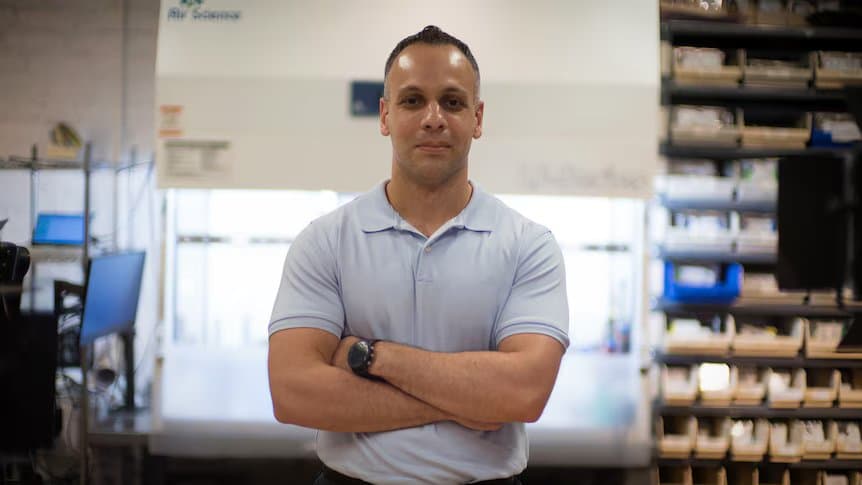
“My story isn't much different than anyone else on here leaving a Rossmann review, but I feel compelled to write all this anyway. After importing 14GB of RAW photos from my brand new camera to my 13" MBP (A2338), I started to excitedly sift through my gorgeous sunset photos in Lightroom. After 5 minutes of editing, my MacBook died. Wouldn't turn on, wouldn't charge, wouldn't make any sound. It's always been well taken care of and I was dumbfounded as to why this happened. Absolutely clueless as to what to do next, I took it to the "Genius Bar".”
Apple Fusion Drive Data Recovery
iMac and Mac Mini Fusion Drives combine an SSD blade with a spinning hard drive under one volume. When either component fails, we image both drives independently and reconstruct the CoreStorage or APFS container at our Austin lab.

What Apple Data Recovery Customers Say
“I used their mail-in service and followed their simple instructions on how to send it it. First fill out a form, then you get a ticket number and write it down and put it in the box you ship the device in. Few days later from delivery I got an email indicating diagnosis was beginning.”
“I just got my Macbook Pro back from RRG. I have to say I was overjoyed and honestly getting my Macbook Pro back was the one time I felt pure joy in a while. I caught Louis on the phone a couple of the times that I called and he is super nice, incredibly nice to customers. I called in to tell him I wanted rush service and he noted that I approved $45 rush service.”
“True story: I found the shop through Louis's youtube. Love his content. So I didn't even think twice about trusting the repair I needed for my macbook 13" 2017. One of my usb-c ports died, and my battery was bad. Here's where things get interesting. I got an update saying my facetime camera failed during QA testing after the repair.”
How Fusion Drive Recovery Works
A Fusion Drive is two physical drives managed as one logical volume. Recovery requires handling both.
Apple introduced the Fusion Drive in late 2012 as a middle ground between pure SSD speed and HDD capacity. A small SSD blade (24GB in early models, 128GB in later ones) handles frequently accessed files and system data, while a 1TB to 3TB Seagate or HGST spinning hard drive stores bulk data. macOS ties both drives together using CoreStorage (macOS Sierra and earlier) or APFS (High Sierra and later) so they appear as a single volume to the user.
When a Fusion Drive fails, the recovery path depends on which component broke. If the HDD has a mechanical failure (clicking, head crash, motor seizure), we perform a standard hard drive recovery on the HDD, then merge its image with the SSD data to reconstruct the full volume. If the SSD blade has a firmware lockout or controller failure, we address that through our SSD recovery workflow. If both components are functional but the logical volume is corrupted (the "split" scenario), we image both drives and rebuild the volume metadata offline.
All Fusion Drive recovery work is performed in-house at our Austin, TX lab using PC-3000, DeepSpar Disk Imager, and a 0.02µm ULPA-filtered clean bench for any head swap work on the HDD component.

Fusion Drive Architecture
The SSD Component
The SSD blade is a proprietary Apple PCIe module (not a standard M.2 slot). Capacities vary by model: 128GB in the iMac 27" (2012 onward) and iMac 21.5" (Late 2012), 24GB in the iMac 21.5" (2013-2015), and 32GB or 128GB in the 2017-2019 iMacs depending on configuration. The Mac Mini Late 2014 Fusion option used a 128GB blade. This blade stores the volume metadata, frequently accessed application binaries, and recently written files that macOS promotes to the fast tier.
SSD blade failures are less common than HDD failures in Fusion Drive systems. When they do fail, the symptom is typically the entire Fusion volume becoming unmountable because macOS cannot read the tier map or volume superblock stored on the SSD. We read the blade using a Sintech or OWC adapter connected to PC-3000 SSD.
The HDD Component
The HDD is a standard 3.5" SATA drive in iMacs (typically a Seagate Barracuda or HGST Deskstar) or a 2.5" drive in the Mac Mini. This drive holds the majority of user data: large files, old documents, photo libraries, and Time Machine local snapshots. Capacity ranges from 1TB to 3TB.
HDD failures account for the majority of Fusion Drive recovery cases. Common failure modes include clicking (head failure), beeping (motor seizure), firmware corruption, and growing bad sector counts from media degradation. Each of these follows our standard HDD recovery workflow before the Fusion volume reconstruction step.
Common Fusion Drive Failures
Three distinct failure categories, each with a different recovery path.
HDD Mechanical Failure
Most common Fusion Drive failure mode.
The Seagate or HGST hard drive develops clicking, grinding, or fails to spin. The iMac shows a folder with a question mark on boot. Recovery requires head swap or motor work inside a clean bench, followed by imaging with PC-3000 and volume reconstruction.
Pricing: $1,200–$1,500 for head swap, $600–$900 for firmware repair.
Fusion Volume Corruption
Second most common. Software-level failure.
The CoreStorage LVG or APFS container loses its binding between the SSD and HDD. macOS shows two separate unformatted drives instead of one Fusion volume. This happens after power loss during a write, failed macOS upgrades, or running Disk Utility First Aid on a degraded volume.
Pricing: from From $250, because the drives are physically intact and the recovery is logical.
SSD Blade Failure
Least common. Firmware or controller issue.
The proprietary Apple SSD blade stops responding or shows incorrect capacity. Since critical Fusion metadata lives on the SSD, the entire volume becomes inaccessible even though the HDD is physically fine. We address the SSD with PC-3000 SSD using an adapter, then reconstruct the volume.
Pricing: $600–$900 to $900–$1,200 for SSD component, plus HDD imaging if needed.
Fusion Drive Recovery Process
Every Fusion Drive recovery follows a four-step process. The specific tools and duration vary based on the failure mode, but the workflow is consistent.
| Step | Action | Tools |
|---|---|---|
| 1. Diagnosis | Identify which component failed. Power on the HDD to listen for mechanical symptoms. Connect the SSD blade via adapter to check firmware state. Determine if the failure is mechanical, firmware, or logical. | PC-3000 Portable III, Sintech/OWC SSD adapter |
| 2. Component repair | If the HDD has a head failure: swap head stack assembly from a matching donor in the clean bench. If the SSD has a firmware lockout: use PC-3000 SSD vendor-specific protocols to unlock. If both components read cleanly: skip to step 3. | 0.02µm ULPA clean bench, PC-3000 SSD, donor drives |
| 3. Dual imaging | Create a bit-for-bit image of both the SSD blade and the HDD independently. Head-mapped or multi-pass imaging for drives with surface damage. The SSD image captures the Fusion tier map and volume metadata. | PC-3000 Portable III, DeepSpar Disk Imager |
| 4. Volume reconstruction | Merge the SSD and HDD images into a single Fusion volume. For CoreStorage: parse the LVG metadata to rebuild the block map. For APFS: walk the container checkpoints and Fusion tier allocation tables. Extract files from the reconstructed volume. | PC-3000 (Apple module), UFS Explorer |
Fusion Drive Models and Configurations
Every Mac that shipped with a Fusion Drive option, with the SSD and HDD capacities for each.
| Mac Model | Years | SSD Size | HDD Size | Volume Format |
|---|---|---|---|---|
| iMac 27" (Late 2012) | 2012-2013 | 128GB | 1TB or 3TB | CoreStorage |
| iMac 21.5" (Late 2012) | 2012-2013 | 128GB | 1TB | CoreStorage |
| iMac 27" (Late 2013-2015) | 2013-2015 | 128GB | 1TB or 3TB | CoreStorage |
| iMac 21.5" (Late 2013-2015) | 2013-2015 | 24GB | 1TB | CoreStorage |
| iMac 21.5" and 27" (2017-2019) | 2017-2019 | 32GB or 128GB | 1TB, 2TB, or 3TB | APFS Fusion (if upgraded to High Sierra+) |
| iMac 27" (2020) | 2020 | 32GB or 128GB | 1TB, 2TB, or 3TB | APFS Fusion |
| Mac Mini (Late 2014) | 2014 (sold through 2018) | 128GB | 1TB (2.5") | CoreStorage |
CoreStorage vs. APFS Fusion Recovery
CoreStorage Fusion (2012-2017)
CoreStorage creates a Logical Volume Group (LVG) that spans the SSD and HDD. The LVG header stores a block-level tier map that records which logical block addresses reside on the SSD versus the HDD. macOS promotes and demotes blocks between tiers based on access frequency.
When the LVG header is corrupted (power loss during a tier migration, for example), the volume becomes unmountable and Disk Utility may report it as a "broken" CoreStorage volume. We parse the LVG metadata from the raw disk images to reconstruct the block map. If the LVG header is destroyed, we fall back to carving files directly from the HDD image, which still holds the majority of user data.
APFS Fusion (2017+)
APFS Fusion uses an APFS container with a Fusion role. The container spans both the SSD and HDD, and APFS manages block tiering through its own allocation metadata. APFS containers use a copy-on-write design with periodic checkpoints, which means older states of the volume can sometimes be recovered even after corruption.
Recovery from APFS Fusion corruption involves walking the container checkpoint history to find the most recent consistent state. If the current checkpoint is damaged, we search for prior checkpoints that reference a valid Fusion tier map. PC-3000's Apple module automates this process for most corruption scenarios.
Do not run Disk Utility First Aid on a failing Fusion Drive
If your Fusion Drive is degraded (one component failing, intermittent errors), running First Aid can overwrite the tier map or LVG metadata and make the corruption permanent. Shut down the Mac and contact a recovery lab before attempting any repair utilities.
Fusion Drive Recovery Pricing
Pricing depends on which component failed and the type of failure. Most Fusion Drive recoveries involve the HDD component. No data = no charge.
HDD Component (Seagate/HGST)
Applies to: the spinning hard drive inside the Fusion Drive pair. This is the most common component to fail.
| Service Tier | Price | Description |
|---|---|---|
| Simple CopyLow complexity | $100 | Your drive works, you just need the data moved off it Functional drive; data transfer to new media Rush available: +$100 |
| File System RecoveryLow complexity | From $250 | Your drive isn't recognized by your computer, but it's not making unusual sounds File system corruption. Accessible with professional recovery software but not by the OS Starting price; final depends on complexity |
| Firmware RepairMedium complexity – PC-3000 required | $600–$900 | Your drive is completely inaccessible. It may be detected but shows the wrong size or won't respond Firmware corruption: ROM, modules, or translator tables corrupted; requires PC-3000 terminal access Standard drives at lower end; high-density drives at higher end |
| Head SwapHigh complexity – clean bench surgery50% deposit | $1,200–$1,500 | Your drive is clicking, beeping, or won't spin. The internal read/write heads have failed Head stack assembly failure. Transplanting heads from a matching donor drive on a clean bench 50% deposit required. Donor parts are consumed in the repair |
| Surface / Platter DamageHigh complexity – clean bench surgery50% deposit | $2,000 | Your drive was dropped, has visible damage, or a head crash scraped the platters Platter scoring or contamination. Requires platter cleaning and head swap 50% deposit required. Donor parts are consumed in the repair. Most difficult recovery type. |
Hardware Repair vs. Software Locks
Our "no data, no fee" policy applies to hardware recovery. We do not bill for unsuccessful physical repairs. If we replace a hard drive read/write head assembly or repair a liquid-damaged logic board to a bootable state, the hardware repair is complete and standard rates apply. If data remains inaccessible due to user-configured software locks, a forgotten passcode, or a remote wipe command, the physical repair is still billable. We cannot bypass user encryption or activation locks.
All tiers: Free evaluation and firm quote before any paid work. No data, no fee on simple copy, file system, and firmware tiers. Head swap and surface damage require a 50% deposit because donor parts are consumed in the attempt.
Target drive: The destination drive we copy recovered data onto. You can supply your own or we provide one at cost. For ultra-high-capacity drives (20TB and above), the target drive costs approximately $400+ due to the large media required. All prices are plus applicable tax.
SSD Blade Component
Applies to: the Apple proprietary SSD blade. Required when the SSD has firmware corruption, controller failure, or is not detected.
| Service Tier | Price | Description |
|---|---|---|
| Simple CopyLow complexity | $200 | Your drive works, you just need the data moved off it Functional drive; data transfer to new media Rush available: +$100 |
| File System RecoveryLow complexity | From $250 | Your drive isn't showing up, but it's not physically damaged File system corruption. Visible to recovery software but not to OS Starting price; final depends on complexity |
| Circuit Board RepairMedium complexity – PC-3000 required | $600–$900 | Your drive won't power on or has shorted components PCB issues: failed voltage regulators, dead PMICs, shorted capacitors May require a donor drive (additional cost) |
| Firmware RecoveryMedium complexity – PC-3000 required | $900–$1,200 | Your drive is detected but shows the wrong name, wrong size, or no data Firmware corruption: ROM, modules, or system files corrupted Price depends on extent of bad areas in NAND |
| Advanced Board RebuildHigh complexity – precision microsoldering and BGA rework | $1,200–$1,500 | Your drive's circuit board is severely damaged and requires advanced micro-soldering Advanced component repair. Micro-soldering to revive native logic board or utilize specialized vendor protocols 50% deposit required upfront; donor drive cost additional |
Hardware Repair vs. Software Locks
Our "no data, no fee" policy applies to hardware recovery. We do not bill for unsuccessful physical repairs. If we replace a hard drive read/write head assembly or repair a liquid-damaged logic board to a bootable state, the hardware repair is complete and standard rates apply. If data remains inaccessible due to user-configured software locks, a forgotten passcode, or a remote wipe command, the physical repair is still billable. We cannot bypass user encryption or activation locks.
All tiers: Free evaluation and firm quote before any paid work. No data, no fee on all tiers (advanced board rebuild requires a 50% deposit because donor parts are consumed in the attempt).
Target drive: The destination drive we copy recovered data onto. You can supply your own or we provide one at cost. All prices are plus applicable tax.
Fusion volume reconstruction included
The CoreStorage/APFS volume reconstruction step is included in the recovery price. You are not charged separately for merging the SSD and HDD images. If both components need hardware repair, the total price reflects the work required on each individual drive.
What Not to Do with a Failing Fusion Drive
Do not attempt to "recreate" the Fusion pair
Terminal commands like diskutil cs create or diskutil apfs createContainer will overwrite the existing volume metadata and destroy any chance of recovery. If your Fusion Drive has split, the data is still on the drives; re-binding them overwrites the block map.
Do not run consumer recovery software on a clicking drive
If the HDD component is clicking, the read/write heads have failed. Running Disk Drill, EaseUS, or any software-based tool will cause the damaged heads to scrape the platters, turning a recoverable head swap into a surface damage case with lower success probability and higher cost.
Do not upgrade macOS on a degraded Fusion Drive
macOS upgrades (especially the High Sierra upgrade that converts CoreStorage to APFS) perform heavy writes to both the SSD and HDD. Running an OS upgrade on a Fusion Drive with bad sectors or intermittent read errors can corrupt the volume beyond what checkpoint recovery can fix.
Do not erase one half of the pair
If Disk Utility shows the SSD and HDD as separate unformatted volumes (a "split"), do not erase either one. The data is still on both drives in its tiered locations. Erasing either component destroys the files that were stored on it.
Why Choose Rossmann for Fusion Drive Recovery?
One lab. Both components handled in-house. Published pricing. No data, no charge.
Dual-component imaging
Fusion Drives require imaging both the SSD blade and the HDD independently before reconstruction. We handle both in a single recovery ticket.
No data, no charge
If we cannot recover your data from either component, you pay $0. That applies to every Fusion Drive we work on.
Published pricing tiers
HDD component: $100–$2,000. SSD component: $200–$1,500. No hidden diagnostic fees.
CoreStorage and APFS reconstruction
We reconstruct both CoreStorage LVG and APFS Fusion containers from raw block images. PC-3000's Apple module handles both formats.
FileVault handled
Pre-T2 Fusion Drives use software encryption. We decrypt offline with your recovery key after imaging both components.
Nationwide mail-in
Not in Austin? Ship your iMac hard drive or Mac Mini drive to us from anywhere in the U.S. Free evaluation on arrival.
Data Recovery Standards & Verification
Our Austin lab operates on a transparency-first model. We use industry-standard recovery tools, including PC-3000 and DeepSpar, combined with strict environmental controls to make sure your hard drive is handled safely and properly. This approach allows us to serve clients nationwide with consistent technical standards.
Open-drive work is performed in a ULPA-filtered laminar-flow bench, validated to 0.02 µm particle count, verified using TSI P-Trak instrumentation.
Transparent History
Serving clients nationwide via mail-in service since 2008. Our lead engineer holds PC-3000 and HEX Akademia certifications for hard drive firmware repair and mechanical recovery.
Media Coverage
Our repair work has been covered by The Wall Street Journal and Business Insider, with CBC News reporting on our pricing transparency. Louis Rossmann has testified in Right to Repair hearings in multiple states and founded the Repair Preservation Group.
Aligned Incentives
Our "No Data, No Charge" policy means we assume the risk of the recovery attempt, not the client.
Technical Oversight
Louis Rossmann
Louis Rossmann's well trained staff review our lab protocols to ensure technical accuracy and honest service. Since 2008, his focus has been on clear technical communication and accurate diagnostics rather than sales-driven explanations.
We believe in proving standards rather than just stating them. We use TSI P-Trak instrumentation to verify that clean-air benchmarks are met before any drive is opened.
See our clean bench validation data and particle test videoFusion Drive Recovery FAQ
What is an Apple Fusion Drive?
Which Macs have Fusion Drives?
My Fusion Drive split into two separate volumes. Can you recover the data?
What happens if the SSD half of my Fusion Drive fails?
My iMac Fusion Drive is clicking. What does that mean?
How much does Fusion Drive data recovery cost?
Can you recover a Fusion Drive with FileVault enabled?
What is the difference between CoreStorage and APFS Fusion Drives?
Secure Mail-In from Anywhere in the US
1 Business Day
FedEx Priority Overnight delivers to Austin by 10:30 AM the next business day from most US addresses.
- New York City 1 Business Day
- Los Angeles 1 Business Day
- Chicago 1 Business Day
- Seattle 1 Business Day
- Denver 1 Business Day
Fully Insured
Use FedEx Declared Value to cover hardware costs. We return your original drive and recovered data on new media.
Packaging Standards
- ✓Use the box-in-box method: float a small box inside a larger box with 2 inches of bubble wrap.
- ✓Wrap the bare drive in an anti-static bag to prevent electrical damage.
- ✗Do not use packing peanuts. They compress during transit and allow heavy drives to strike the edge of the box.
Related Recovery Services
Recovery for all Mac desktops: iMac, Mac Pro, Mac Mini, Mac Studio.
Full HDD recovery service for the spinning drive component of Fusion Drives.
SSD recovery for the Apple SSD blade and other solid-state drives.
MacBook-specific recovery for all generations from 2015 through M4.
FileVault, BitLocker, and other full-disk encryption recovery.
Diagnosis and recovery for clicking HDDs, the most common Fusion Drive failure symptom.
Fusion Drive failing? Let us recover your data.
Free estimate. No data = no charge. Austin walk-in or mail-in from anywhere in the U.S.