PCB Failure Recovery
The Board Is Dead. Your Data Isn't.
A fried circuit board doesn't mean your data is gone. The platters inside the drive are usually safe, though severe surges can sometimes damage the internal read/write heads. We swap the board and transfer the ROM chip that contains your drive's unique calibration data. This case sits inside our broader hard drive data recovery service, which covers mechanical, firmware, and PCB cases in our Austin lab.
PCB failure recovery priced at the firmware-repair tier. No data, no charge. Mail-in from all 50 states.
Do not try a simple board swap: Modern hard drives store unique calibration data in a ROM chip on the PCB. Swapping boards without transferring the ROM will not work - the drive needs its specific calibration data to read its own platters.
What Causes PCB Failure
Power Surges
Lightning strikes, brownouts, or plugging in after an outage. Power strips without surge protection. Cheap or failing power supplies that send unstable voltage. The most common cause of PCB failure. See our power surge recovery page for details.
TVS Diode Failure
TVS diodes protect the board from voltage spikes. When they fail, they often short and prevent the drive from powering on. Sometimes the diode can be removed and the drive will work - until the next surge.
Motor Controller
The large chip that controls the spindle motor. When this fails, the drive won't spin.
Physical Damage
Dropped drives can crack the PCB. Liquid damage corrodes traces and components. Improper handling can cause static discharge that damages chips invisibly.
Manufacturing Defects
Some drives ship with marginal components that fail early.
ROM Chip Identification and Adaptive Parameters
The ROM chip on a hard drive PCB is typically an 8-pin SOIC-8 serial flash IC, marked as U12 on Western Digital boards. This chip stores the drive's adaptive parameters: head-specific servo micro-jog offsets.
These values are written during manufacturing as each head assembly is tested against its specific platters. No two drives share the same adaptive data, even if they are the same model and firmware revision. Without this data, the heads cannot track the servo sectors accurately. The result is clicking, mistracking, or scoring of the platter surface.
This is why a board swap without ROM transfer fails on modern hard drives. The donor board's ROM contains calibration data for a completely different head-platter combination.
Signs of PCB Failure
Likely PCB Issue
- Drive doesn't spin at all - completely dead
- Burning smell from the circuit board
- Visible burn marks or damaged components
- Failed immediately after power surge or outage
- Drive worked fine for years, then suddenly dead
Probably Not PCB
- Drive clicks - usually head failure
- Drive beeps
- Drive spins but not detected - likely firmware
- Drive detected but shows wrong size - partition issue
- Drive grinds - active head crash
The Recovery Process
Diagnosis
We examine the PCB for visible damage and test components. Check for shorted TVS diodes, failed motor controllers, and damaged ROM chips. Determine exactly what failed.
Find Donor
We locate a matching donor board. Same model, same revision, same firmware version. The board must be compatible with your drive's head configuration.
ROM Transfer
We desolder the ROM chip from your original board and transfer it to the donor, or read the ROM contents and program them to the new board. This contains your drive's unique calibration.
Image Drive
With the new board installed, we image the drive using PC-3000. If the platters are undamaged (which they usually are after PCB failure), the data is typically recoverable in full.
Not Every Dead Drive Has a Board Fault
Some drives that appear dead have a firmware fault rather than a board-level fault.
Whether the root cause is a fried TVS diode, a dead motor controller, or corrupted SA modules, the downstream imaging workflow is the same one we use for every failed hard drive that arrives at our lab.
PCB Recovery Pricing
| Scenario | What's Involved | Price |
|---|---|---|
| TVS Diode Short | Remove shorted diode, test drive | Component-level repair |
| Standard PCB Swap | Donor board + ROM chip transfer | $600–$900 |
| PCB + ROM Damage | Board swap with firmware reconstruction | $600–$900 |
| PCB + Head Failure | Board swap + head swap (surge caused both) | $1,200–$1,500 |
PCB-only failures are among the more tractable cases on the bench when the platters are undamaged. No data, no charge applies to all cases.
Data Recovery Standards & Verification
Our Austin lab operates on a transparency-first model. We use industry-standard recovery tools, including PC-3000 and DeepSpar, combined with strict environmental controls to maintain drive integrity. This approach allows us to serve clients nationwide with consistent technical standards.
Localized Clean Zone
Open-drive work is performed in a 0.02 micron ULPA-filtered laminar clean bench.
Transparent History
Serving clients nationwide via mail-in service since 2008. Our lead engineer holds PC-3000 and HEX Akademia certifications for hard drive firmware repair and mechanical recovery.
Media Coverage
Our repair work has been covered by The Wall Street Journal and Business Insider, with CBC News reporting on our pricing transparency. Louis Rossmann has testified in Right to Repair hearings in multiple states and founded the Repair Preservation Group.
Aligned Incentives
Our "No Data, No Charge" policy means we assume the risk of the recovery attempt, not the client.
Technical Oversight
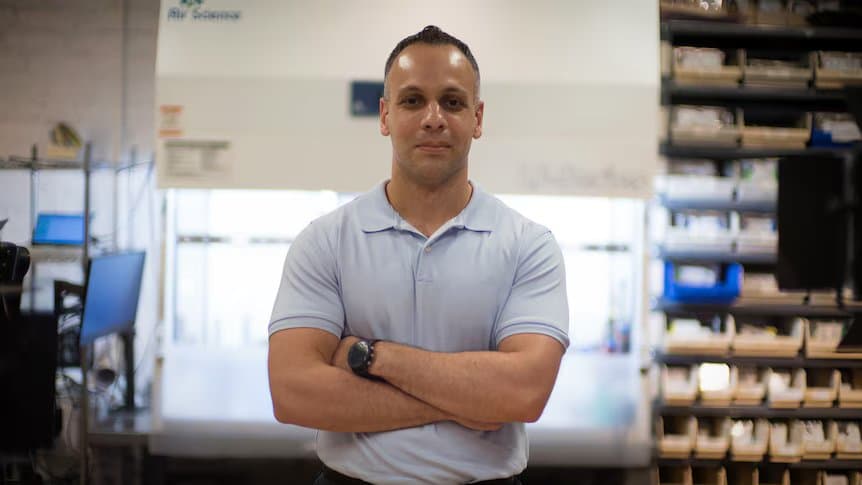
Louis Rossmann
Our engineers review all lab protocols to maintain technical accuracy and honest service. Since 2008, his focus has been on clear technical communication and accurate diagnostics rather than sales-driven explanations.
We believe in showing the bench rather than just describing it. Open-drive work runs on a 0.02 micron ULPA-filtered laminar clean bench, and we filmed it.
See the particle counter test at the benchCommon Questions
Can I buy a matching PCB and swap it myself?
You can buy the board, but you'll need to transfer the ROM chip. This requires desoldering equipment and skill. If you damage the ROM chip, recovery becomes much more difficult. If the data is important, don't risk it.
The drive smells burned. Is my data gone?
Probably not. The burned smell is from the PCB, not the platters. The magnetic coating on the platters that stores your data is physically separate from the electronics.
My drive has visible burn marks. Can you still recover it?
Usually yes. Burn marks show you where the failure occurred. We assess what components were damaged and whether the ROM chip is intact. Even with significant board damage, the data on the platters is typically recoverable.
How do I prevent PCB failure?
Use a quality surge protector or UPS. Avoid cheap power supplies. Don't plug the drive in immediately after a power outage - wait a few minutes for the grid to stabilize.
The power surge killed multiple drives. Can you recover all of them?
Yes, we handle multi-drive recoveries. Each drive gets evaluated individually. We can often share donor parts across multiple similar drives, which can reduce costs. Contact us for multi-drive pricing.
Why can't I just use a heat gun to swap the ROM chip?
Consumer heat guns blast air at uncontrolled temperatures. The ROM chip is a small 8-pin SOIC-8 serial flash IC that must be desoldered with a professional hot air rework station. After removal, we read the chip with an SPI programmer to verify data integrity before installing it on the donor board. If you destroy the original ROM, the adaptive parameters must be regenerated from the drive's Service Area using PC-3000.
I found a donor board with the exact same revision number. Will it work out of the box?
No. Matching the board revision number and controller chip is only step one. The ROM chip on that donor board still contains calibration data for a different set of platters and heads. Each drive's ROM holds head-specific adaptive parameters: servo micro-jog offsets. Without a ROM transfer or PC-3000 adaptive migration, the mismatched board causes the heads to mistrack and click, risking platter damage.
Since 2008
Established
As Featured In
Related services
Related Recovery Services
Dead Board, Live Data
Free evaluation. We'll tell you exactly what failed and what recovery costs. No data, no charge.