Since 2008 | No Data, No Fee | $100–$2,000 | Nationwide Mail-In
Maxtor drives fall into two groups: legacy Maxtor designs with Maxtor's own firmware, and the Seagate-era DiamondMax 22 and 23, which are Seagate drive families. Each needs a different PC-3000 utility. We handle both. No data recovered = no charge.
Legacy Maxtor designs use Maxtor's own firmware. The Seagate-era DiamondMax 22 and 23 are Seagate drive families and follow Seagate's firmware path. Using the wrong recovery utility gets nowhere, so we identify the architecture before any work.
Legacy Maxtor
Maxtor's own designs, with Maxtor firmware.
Seagate Rebadge
DiamondMax 22 and 23. Seagate drive families, handled on Seagate's firmware path.
OneTouch External
USB enclosure with an internal hard drive behind a USB bridge board.
Maxtor data recovery costs $100–$2,000, determined by the failure type, not the drive's age or model. Simple data copies from a functioning drive cost $100. File system recovery for corrupted partitions is From $250. Firmware repair for G-List corruption or translator failures costs $600–$900. Head swaps for clicking Maxtor drives cost $1,200–$1,500. Platter damage starts at $2,000. If a OneTouch external drive has a failed USB bridge board and the drive inside is healthy, we treat it as a simple copy. Free evaluation and a firm quote for every drive. If we cannot recover your data, you pay nothing.
Critical Warning
Do Not Swap the PCB
Legacy Maxtor drives store unique adaptive calibration data in a ROM on the PCB. This data includes head positioning parameters and servo calibration specific to the individual drive. Installing a matching-model PCB without the original ROM data leaves the drive clicking or unable to initialize. Do not attempt a PCB swap on any Maxtor drive. Send it for free evaluation instead.
Seagate Rebadge Identification
Is Your Maxtor Actually a Seagate?
The DiamondMax 22 and DiamondMax 23 are Seagate drive families, and Seagate ships their firmware updates. Using legacy Maxtor recovery tools on these drives gets nowhere. They go through our Seagate data recovery workflow. We identify the correct architecture before starting any recovery attempt.
“Sent my hdd for data recovery, process was simple and I was able to pre-authorize an amount. They worked on my drive within 2 days of receiving it and the total cost was literally 1/10th of the amount of another service I got a quote from. Professional, quick, affordable. Nothing to complain about.”
“My satisfaction with Rossmann Repair Group goes beyond just 5 stars. I had a hard drive die some time ago, but I had no idea where I could send it knowing it would be safe, or there being a chance I'd be ripped off.”
“Had a raid 0 array (windows storage pool) (failed 2tb Seagate, and a working 1tb wd blue) recovered last year, it was much cheaper than the $1500 to $3500 Canadian dollars i was quoted by a Canadian data recovery service. the price while expensive was a comparatively reasonable $900USD (about $1100 CAD at the time).”
“Walked in with my wife's dead hard drive, walked out 20 minutes later with it fixed. They were friendly, professional, did the work in a snap, and saved me the hefty repair prices for other (mail in) hard drive recovery services!”
Five published tiers. Pricing is based on the failure type, not the drive model or age. OneTouch external drives with healthy internal mechanisms fall into the simple copy tier. Free evaluation for all Maxtor drives.
01
Low complexity
Simple Copy
Your drive works, you just need the data moved off it
Functional drive; data transfer to new media
Rush available: +$100
$100
3-5 business days
02
Low complexity
File System Recovery
Your drive isn't recognized by your computer, but it's not making unusual sounds
File system corruption. Accessible with professional recovery software but not by the OS
Starting price; final depends on complexity
From $250
2-4 weeks
03
Medium complexity
Firmware Repair
Your drive is completely inaccessible. It may be detected but shows the wrong size or won't respond
Your drive was dropped, has visible damage, or a head crash scraped the platters
Platter scoring or contamination. Requires platter cleaning and head swap
50% deposit required. Donor parts are consumed in the repair. Most difficult recovery type.
50% deposit required
$2,000
4-8 weeks
Hardware Repair vs. Software Locks
Our "no data, no fee" policy applies to hardware recovery. We do not bill for unsuccessful physical repairs. If we replace a hard drive read/write head assembly or repair a liquid-damaged logic board to a bootable state, the hardware repair is complete and standard rates apply. If data remains inaccessible due to user-configured software locks, a forgotten passcode, or a remote wipe command, the physical repair is still billable. We cannot bypass user encryption or activation locks.
No data, no fee. Free evaluation and firm quote before any paid work. Full guarantee details. Head swap and surface damage require a 50% deposit because donor parts are consumed in the attempt.
Rush fee
+$100 rush fee to move to the front of the queue
Donor drives
Donor drives are matching drives used for parts. Typical donor cost: $50–$150 for common drives, $200–$400 for rare or high-capacity models. We source the cheapest compatible donor available.
Target drive
The destination drive we copy recovered data onto. You can supply your own, or we'll provide one. For larger capacities (8TB, 10TB, 16TB and above), target drives cost $400+ extra. All prices are plus applicable tax.
Data Recovery Standards & Verification
Our Austin lab operates on a transparency-first model. We use industry-standard recovery tools, including PC-3000 and DeepSpar, combined with strict environmental controls to maintain drive integrity. This approach allows us to serve clients nationwide with consistent technical standards.
Serving clients nationwide via mail-in service since 2008. Our lead engineer holds PC-3000 and HEX Akademia certifications for hard drive firmware repair and mechanical recovery.
Our "No Data, No Charge" policy means we assume the risk of the recovery attempt, not the client.
LR
Technical Oversight
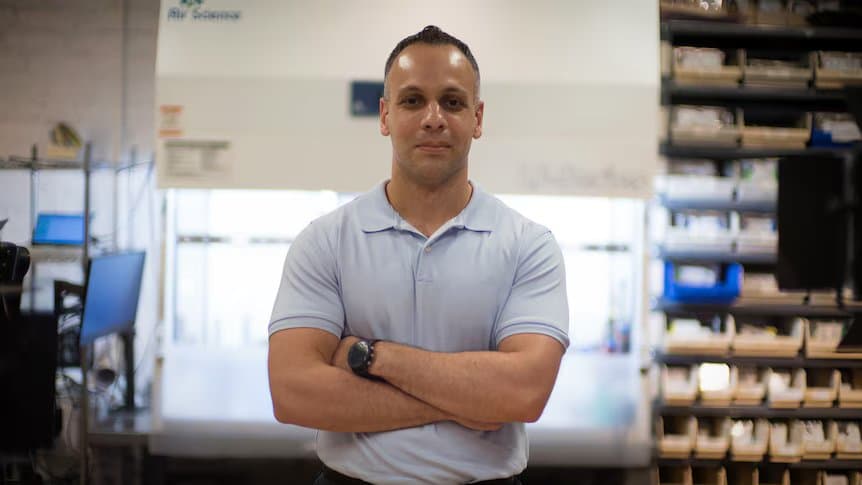
Louis Rossmann
Our engineers review all lab protocols to maintain technical accuracy and honest service. Since 2008, his focus has been on clear technical communication and accurate diagnostics rather than sales-driven explanations.
We believe in showing the bench rather than just describing it. Open-drive work runs on a 0.02 micron ULPA-filtered laminar clean bench, and we filmed it.
Legacy Maxtor drives keep their firmware in a Service Area on the platters, in Maxtor's own format. PC-3000 accesses the Service Area, reads and writes firmware modules, and rebuilds corrupted translator tables.
The G-List (Growth List) tracks defective sectors that developed after manufacturing.
The translator maps logical block addresses (LBAs) to physical cylinder-head-sector (CHS) locations on the platters. When the translator is corrupt, the drive initializes but reports zero capacity or shows as an unknown device. PC-3000 reads the raw head maps and physical zone definitions to reconstruct the translator from scratch.
Maxtor Firmware Recovery Sequence
1
Identify architecture. Legacy Maxtor design or Seagate-era DiamondMax. Load the matching PC-3000 utility.
2
Read Service Area. Identify which modules are corrupted (translator, G-List, P-List, head maps).
3
Rebuild firmware. Regenerate the G-List, reconstruct the translator table, patch any corrupted microcode modules. Verify the drive recognizes its full capacity.
4
Image the drive. Clone the drive sector-by-sector to a target disk using PC-3000 or DeepSpar Disk Imager. Work from the clone, never the original.
Common Failure Modes by Product Line
Recovery by Maxtor Product Line
Maxtor produced consumer, external, and enterprise drives.
DiamondMax (Legacy)
These are the legacy desktop drives with Maxtor's own firmware.
DiamondMax 22 and 23
These are Seagate drive families sold under the Maxtor name. Recovery follows Seagate's firmware path on PC-3000, through our Seagate data recovery workflow.
OneTouch External
Maxtor OneTouch external enclosures hold a hard drive behind a USB bridge board. If the bridge dies and the drive is healthy, we pull the bare drive and image it directly. If the OneTouch backup software encrypted the data, it's still encrypted on the bare drive, and we need your password to decrypt it.
MaxLine Enterprise
Maxtor's MaxLine drives went into servers and storage arrays. When these drives are members of a RAID array, we image each drive individually before reconstructing the array offline.
Donor Matching for Discontinued Maxtor
Donor Matching for Discontinued Maxtor Drives
Donor matching for discontinued Maxtor families is harder than for drives still in production, because the donor supply is fixed and shrinking. The general framework is described in the technical reference on how donor drives are matched.
Maxtor Donor Criteria
1
Model number, exact match. Any difference in the full model code disqualifies the donor.
2
PCB revision. For board-level swaps the PCB revision code must match.
Maxtor PCB Component Identification
On a DiamondMax Plus 9 board built around the Agere Ardent C10-C1 controller, an L7250E motor combo IC drives the spindle motor and voice coil. The component layout reference is at hard drive PCB components.
We check the powered board with FLIR thermal imaging, so we catch a shorted motor controller before it can damage a donor. We replace the damaged chip and transfer the ROM. Brand-wide context for these workflows lives on the hard drive data recovery page.
G-List Corruption Deep Dive
G-List Corruption in Maxtor Drives
The P-List (Primary List) records factory defects discovered during manufacturing. The G-List (Growth List) records new defective sectors that develop during the drive's operational life.
G-List corruption is a firmware problem. The platters, heads, and motor can be fully functional, and no clean bench work is required. We connect the drive to PC-3000, repair the defect list and the translator table, and image the drive sector by sector.
G-List corruption is not data loss. The corrupted defect table prevents the drive from booting, but the user data sectors are intact on the platters. Firmware repair restores access without any physical intervention. This is a $600–$900 firmware-tier recovery.
Motor Seizure
Motor Seizure in Stored Maxtor Drives
A Maxtor drive pulled out of long-term storage can come back with a seized spindle motor. When you power it on, it either doesn't spin at all or spins up briefly and stops.
A seized spindle motor needs clean bench work. We open the drive in our 0.02 micron ULPA-filtered clean bench and transplant the platters into a donor chassis. That's the surface and platter tier ($2,000). Head stiction is a different fault, where the heads are stuck to the platter surface. We free stuck heads on the bench and keep them, and that's priced at the firmware tier ($600–$900).
Data Security
Data Security During Maxtor Recovery
Your Maxtor drive stays in our Austin lab from intake through return. Every drive is logged, serialized, and tracked. Recovery work happens on isolated, air-gapped systems. We wipe every working copy. Our data security page has the details.
Legacy Maxtor drives often contain irreplaceable data: decade-old business records, personal archives, QuickBooks databases, family photos from the early digital era. We handle these with the same security protocols we apply to every recovery.
Shipping
Shipping
Secure Mail-In from Anywhere in the US
Shipping
Mail-in
Transit time depends on the carrier and service you choose.
Security & Insurance
Fully Insured
Use FedEx Declared Value to cover hardware costs. We return your original drive and recovered data on new media.
Packaging Standards
✓Use the box-in-box method: float a small box inside a larger box with 2 inches of bubble wrap.
✓Wrap the bare drive in an anti-static bag to prevent electrical damage.
✗Do not use packing peanuts. They compress during transit and allow heavy drives to strike the edge of the box.
Maxtor data recovery costs $100–$2,000 depending on the failure type. Simple data copies from a functioning drive cost $100. Firmware repair for G-List corruption or translator failures runs $600–$900. Head swaps for clicking Maxtor drives cost $1,200–$1,500. If a Maxtor OneTouch external drive has a failed USB bridge board and the drive inside is healthy, we treat it as a simple copy. Free evaluation; no data recovered, no charge.
Can I swap the PCB on my Maxtor DiamondMax?
Not without transferring the adaptive data. Legacy Maxtor drives store unique calibration parameters in an MCU or external ROM chip on the PCB. These adaptive values are specific to each individual drive's heads and platters. A donor PCB without the original ROM data leaves the drive clicking or unable to initialize. We move the original ROM data to a matching donor board before powering the drive.
My Maxtor DiamondMax 22 failed. Is it actually a Seagate drive?
Yes. The DiamondMax 22 and DiamondMax 23 are Seagate drive families, and Seagate ships their firmware updates. Recovery follows Seagate's firmware path through PC-3000, not legacy Maxtor firmware tools.
Can you recover a Maxtor OneTouch external drive?
Yes. A Maxtor OneTouch is a hard drive sitting behind a USB bridge board. When the bridge fails, the drive looks dead, but the mechanism inside can be healthy. We pull the drive out and connect it directly. If the OneTouch backup software encrypted your data, it's still encrypted on the bare drive. Decrypting it takes the password or key that software used, and the bridge board has nothing to do with it.
Are Maxtor donor drives still available for head swaps?
Donor availability for legacy Maxtor designs is limited, because no new ones are being made. Donor matching for pre-Seagate Maxtor drives requires matching the firmware revision, head count, and PCB revision. For the Seagate-era DiamondMax 22 and 23, we match donors the way we match Seagate drives.
Why did my old Maxtor drive stop working after sitting in storage?
A drive that sat unpowered for years can come back with a seized spindle motor, heads stuck to the platters, or a failed board. If the spindle motor has seized, we transplant the platters into a donor chassis on the clean bench. That's the surface and platter tier ($2,000). If the heads are stuck, we free them on the clean bench and keep them, and that's priced at the firmware tier ($600–$900). If the board failed, we repair it or move its ROM to a matching donor board.
We evaluate every Maxtor model for free, from the legacy designs to the Seagate-era DiamondMax drives. We identify the firmware architecture and failure pattern before quoting. No data, no charge.