Skip to main contentSkip to navigation
Rossmann Repair Group

Are Seagate Hard Drives Good Quality? What Data Recovery Professionals Know

A data recovery technician's honest assessment of Seagate Rosewood drives, with real lab examples and industry failure statistics.

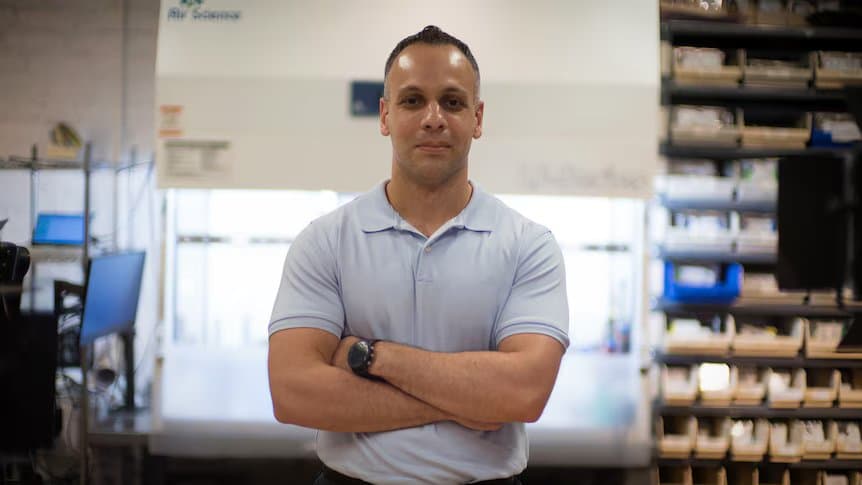
Louis Rossmann
Written by
Louis Rossmann
Founder & Chief Technician

Watch: Real Seagate Rosewood platter damage shown in our data recovery lab

Key Takeaways

  • Seagate Rosewood drives (ST1000LM035, ST2000LM007) are among the most common failed drives in data recovery labs worldwide
  • LaCie and Porsche Design external drives contain Seagate internals (Seagate acquired LaCie in 2014)
  • Three failure modes: head/preamp failure (recoverable), stuck heads (often recoverable), platter damage (unrecoverable)
  • If you own a Rosewood drive: back up your data now. Failure is not "if" but "when."

The Problem with Seagate Rosewood Drives

The Seagate Rosewood family of 2.5" drives - including models ST1000LM035 (1TB) and ST2000LM007 (2TB); represent some of the most problematic hard drives in the data recovery industry. These slim 7mm drives are found in Seagate Backup Plus and Expansion external enclosures, as well as laptops from HP, Dell, and Apple.

While these drives bring consistent business to data recovery labs, that's precisely the problem: they fail at rates that data recovery professionals consider unacceptable. In the video above, you can see a Rosewood drive where the read/write head sliders have embedded into the platter surface, destroying the magnetic coating across the entire disk - making data recovery impossible.

Why Rosewood Drives Fail So Often

The read/write heads (sliders) on Rosewood drives are considerably more fragile than those found in other 2.5" HDDs. If the heads make contact with the platter surface, there's a very high likelihood of misalignment or catastrophic damage. The 7mm ultra - thin design, while great for portability, contributes to this fragility.

Affected Models

  • ST1000LM035 ; 1TB Mobile HDD
  • ST2000LM007 ; 2TB Mobile HDD
  • ST1000LM048 ; 1TB Barracuda variant
  • ST500LM030 ; 500GB Mobile HDD

These models are used in LaCie, Maxtor, and Seagate external enclosures.

Industry Failure Rate Statistics

According to Backblaze's 2024 Drive Stats, which tracks nearly 300,000 drives, Seagate drives show significant variability:

ModelCapacityAFR (2024)Assessment
ST12000NM000712TB8.72%Worst performer
ST14000NM013814TB~3-4%Poor
ST16000NM002J16TB0.22%Excellent
WD (average)Various<0.85%Consistently reliable

Note: The consumer 2.5" Rosewood drives aren't tracked by Backblaze (they use enterprise drives), but data recovery labs report these slim drives fail at even higher rates than enterprise Seagate models.

The Three Ways Rosewood Drives Fail

1. Head/Preamp Failure

Symptoms: Drive not detected, no sounds

Recovery: Usually possible with head swap from matching donor

Outcome: High success rate when using compatible preamp

2. Stuck Heads (Stiction)

Symptoms: Beeping on power - up, clicking sounds

Recovery: Often recoverable with careful head unsticking

Warning: Do NOT power cycle repeatedly - this causes platter damage

3. Platter Damage (Unrecoverable)

Symptoms: Visible coating damage, debris on platters

Recovery: Not possible

What happens: Head sliders gouge the magnetic coating, physically destroying data

LaCie and Porsche Design: Seagate Inside

Seagate acquired LaCie in 2014 for $186 million. Since then, LaCie external drives have been fitted exclusively with Seagate drives. This includes:

  • LaCie Rugged Mini and Rugged USB-C
  • LaCie Porsche Design drives
  • LaCie Mobile Drive series
  • LaCie d2 Professional (uses Seagate IronWolf Pro)

If you purchased what you thought was a "premium" LaCie or Porsche Design external drive, there's a high probability it contains a Seagate Rosewood inside - the same drives that fill our data recovery queue.

The "Death Star" Parallel

This pattern reminds data recovery veterans of the infamous IBM Deskstar drives from the late 1990s and early 2000s - nicknamed "DeathStar" for their catastrophic failure rates. Those drives eventually led to IBM exiting the hard drive business entirely (selling to Hitachi in 2003).

The question is whether Seagate will address the Rosewood reliability issues or whether consumers will eventually abandon the brand as they did with IBM's drives.

What To Do If You Own a Rosewood Drive

Immediate Actions

  1. Back up your data now. Don't wait. Failure is inevitable.
  2. Monitor for warning signs: unusual noises, slowness, clicking
  3. Minimize power cycles (don't repeatedly plug/unplug)
  4. Avoid physical impacts while the drive is powered

When It Fails

  • Stop powering it on. Each power cycle can cause additional damage.
  • Do not attempt DIY recovery with clicking/beeping drives
  • Professional data recovery is required for head failures;contact us for a free evaluation
  • Expect recovery costs of $300-$1,500+ depending on damage severity

Why Data Recovery Professionals Avoid Recommending Seagate

It's a paradox: Seagate drives bring consistent business to data recovery labs, but that's precisely why we can't recommend them. When we see the same failure patterns daily - head crashes, platter damage, coating degradation - it's not random bad luck. It's a design issue.

In the video, you can see a drive where this damage occurred 2-3 times within just two days in our lab. That frequency indicates a systemic problem, not isolated incidents.

Western Digital drives, by comparison, rarely show this type of catastrophic platter damage. The recovery success rate is higher, and the damage patterns are generally more predictable and recoverable.

Need Data Recovery Help?

If your Seagate drive has failed, don't risk further damage with DIY attempts. Our Austin lab handles Rosewood recoveries daily with professional PC-3000 tools and clean bench procedures.

Sources

Related Videos