“Sent my hdd for data recovery, process was simple and I was able to pre-authorize an amount. They worked on my drive within 2 days of receiving it and the total cost was literally 1/10th of the amount of another service I got a quote from. Professional, quick, affordable. Nothing to complain about.”
Emergency Data Recovery Services
When your data loss is urgent, every hour matters. Our Austin lab provides fast evaluation and priority processing for emergency hard drive data recovery, SSD recovery, and RAID recovery cases.
Is This an Emergency?
Yes, if your drive is clicking, beeping, or making unusual sounds. Stop powering it on. Each power cycle can cause additional damage.
Call for immediate guidance

Data Recovery Standards & Verification
Our Austin lab operates on a transparency-first model. We use industry-standard recovery tools, including PC-3000 and DeepSpar, combined with strict environmental controls to make sure your hard drive is handled safely and properly. This approach allows us to serve clients nationwide with consistent technical standards.
Open-drive work is performed in a ULPA-filtered laminar-flow bench, validated to 0.02 µm particle count, verified using TSI P-Trak instrumentation.
Transparent History
Serving clients nationwide via mail-in service since 2008. Our lead engineer holds PC-3000 and HEX Akademia certifications for hard drive firmware repair and mechanical recovery.
Media Coverage
Our repair work has been covered by The Wall Street Journal and Business Insider, with CBC News reporting on our pricing transparency. Louis Rossmann has testified in Right to Repair hearings in multiple states and founded the Repair Preservation Group.
Aligned Incentives
Our "No Data, No Charge" policy means we assume the risk of the recovery attempt, not the client.
Technical Oversight
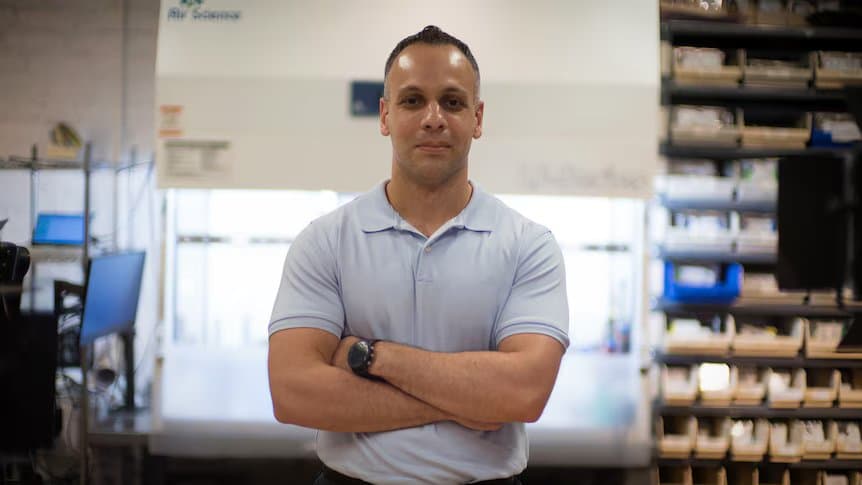
Louis Rossmann
Louis Rossmann's well trained staff review our lab protocols to ensure technical accuracy and honest service. Since 2008, his focus has been on clear technical communication and accurate diagnostics rather than sales-driven explanations.
We believe in proving standards rather than just stating them. We use TSI P-Trak instrumentation to verify that clean-air benchmarks are met before any drive is opened.
See our clean bench validation data and particle test videoWhen Is Data Recovery an Emergency?
Emergency data recovery services are appropriate when the cost of delay exceeds the cost of expedited service.
- Business Operations Halted
- Critical databases, accounting systems, or operational files needed to resume business.
- Legal or Compliance Deadline
- Court-ordered discovery, regulatory audits, or contractual obligations with hard deadlines.
- Medical or Research Data
- Patient records, clinical trial data, or irreplaceable research that cannot be reconstructed.
- Active Physical Damage
- Clicking, beeping, or grinding drives where continued use risks total data loss.
- Single Copy of Critical Files
- No backup exists and the data is essential for personal or professional reasons.
- Time-Sensitive Projects
- Wedding photos before the event, project deliverables before deadline, etc.
What Customers Say
“My satisfaction with Rossmann Repair Group goes beyond just 5 stars. I had a hard drive die some time ago, but I had no idea where I could send it knowing it would be safe, or there being a chance I'd be ripped off.”
“Had a raid 0 array (windows storage pool) (failed 2tb Seagate, and a working 1tb wd blue) recovered last year, it was much cheaper than the $1500 to $3500 Canadian dollars i was quoted by a Canadian data recovery service. the price while expensive was a comparatively reasonable $900USD (about $1100 CAD at the time).”
“Walked in with my wife's dead hard drive, walked out 20 minutes later with it fixed. They were friendly, professional, did the work in a snap, and saved me the hefty repair prices for other (mail in) hard drive recovery services!”
Emergency SSD Firmware Recovery: 0 Bytes, ROM Mode, & BIOS Dropouts
An SSD that suddenly reports 0 bytes or vanishes from BIOS isn't erased. Silicon Motion controllers (SM2258, SM2259) & Phison controllers enter a protective ROM mode when the Flash Translation Layer corrupts after a power loss or thermal event. The NAND chips still hold your data; the controller just can't map it. Consumer recovery software can't reach a drive in ROM mode because the OS storage driver has no path to the NAND. Our Austin lab uses PC-3000 SSD with the Silicon Motion or Phison Active Utility to inject volatile microcode into the controller's SRAM, reconstructing the FTL logically without desoldering NAND chips. SSD firmware recovery starts at $600–$900.
Marvell 88SS1074 Boot Loops & BSY State
Marvell 88SS1074 controllers (found in Crucial MX300 & WD Blue SATA SSDs) suffer from firmware exceptions during background garbage collection, causing an infinite initialization loop. The drive powers on but never becomes ready; it's stuck in a BSY (busy) state. We use PC-3000's Marvell family active utility to access the controller's diagnostic mode, allowing direct NAND reads to image the drive while the hardware encryption chain stays intact. If your SSD needs emergency recovery, call us before powering the drive on again; repeated boot attempts can escalate a firmware panic into permanent controller failure.
Emergency Hard Drive Recovery: Head Crashes & Seagate Rosewood Firmware Failures
A clicking or beeping hard drive is actively destroying data with every power cycle. The read/write heads are dragging across the platter surface, scoring the magnetic coating & embedding debris. Power the drive off. Don't run CHKDSK, don't try Recuva, don't plug it into another computer. Each attempt grinds the platters further.
Head swap recovery starts at $1,200–$1,500 plus donor drive cost ($50–$150 for common drives, $200–$400 for rare or high-capacity models). We open the drive in our 0.02 micron ULPA-filtered clean bench, match donor heads from our cataloged inventory by model, firmware revision, & head map, then image sector-by-sector using PC-3000 Express with selective read retries on the DeepSpar Disk Imager. A flat $100 rush fee moves emergency cases to the front of the queue.
Seagate Rosewood BSY Bug & Media Cache Corruption
The Seagate Rosewood family (ST1000LM035, ST2000LM007) is prone to BSY (Busy) state lockups & media cache corruption. The platters spin normally, but the drive's microprocessor hangs during initialization, blocking all host access. Consumer software can't reach the drive because the firmware never completes its boot sequence.
We connect PC-3000 to the drive's serial diagnostic port at 38400 baud. A Ctrl+Z command interrupts the boot sequence & drops into the factory terminal (F3 T> prompt). From there, we clear corrupted SMART tables, rebuild the translator module, & flush the media cache to restore host access without opening the drive. Rosewood firmware recovery falls in our $600–$900 tier. If heads are also damaged, the cost moves to $1,200–$1,500 plus donor.
PCB Damage: Why Simple Board Swaps Fail
If your drive suffered a power surge or electrical short, swapping the printed circuit board from a matching model won't work. Modern HDD PCBs contain a ROM chip storing unique adaptive calibration parameters; head alignment data, servo tuning, & defect lists are specific to each individual drive. Without transferring the ROM chip from the original board to the donor, the drive can't align its heads or initialize. We desolder the original ROM, transplant it to a working donor PCB, & verify initialization before imaging. This falls under our $600–$900 recovery tier.
Our Emergency Data Recovery Process
For urgent cases, we streamline our process to minimize time-to-recovery while maintaining our rigorous technical standards.
- 1Immediate Phone Consultation
Call us directly. Describe your situation. We'll assess urgency and provide initial guidance immediately.
- 2Expedited Intake
Ship overnight or drop off in Austin. We prioritize emergency cases for same-day or next-day evaluation.
- 3Priority Processing
Emergency cases jump the queue. Our engineers focus on your drive with dedicated attention.
- 4Real-Time Updates
Direct communication with the technician working your case. No phone trees, no waiting.
Emergency RAID & NAS Recovery: Array Degradation & SMR Risks
A multi-drive failure in a NAS or RAID array halts business operations instantly. Do not attempt a live rebuild with a replacement drive. The parity recalculation required during a RAID rebuild places extreme read stress on the remaining aging members, frequently triggering a secondary drive failure that collapses the entire array.
This risk is worse in modern consumer NAS devices loaded with Shingled Magnetic Recording (SMR) hard drives. SMR overlaps data tracks to increase density; rewriting data during a rebuild forces the drive to read, modify, & rewrite massive adjacent zones. The severe performance bottleneck triggers controller timeouts, causing the RAID firmware to falsely flag healthy SMR members as dead. The logical volume collapses even though the physical drives are intact.
We never rebuild a degraded array. We remove the drives from the hardware controller, clone each member independently at the physical level using DeepSpar Disk Imagers, & virtually reconstruct the array geometry in software. This preserves every sector of data without stressing the original drives. RAID recovery pricing depends on the number of member drives & their individual failure modes; each drive is assessed at our standard HDD recovery tiers ($100–$2,000 per drive). A $100 rush fee applies to the entire case, not per drive.
Emergency Recovery Services We Provide
Hard Drive Data Recovery Services
Clicking, beeping, not detected. Clean bench head swaps, firmware repair, PC-3000 imaging.
Learn moreSSD Data Recovery Services
Controller failures, firmware bugs, NAND issues. NVMe, SATA, and M.2 drives.
Learn moreRAID Data Recovery Services
Multi-drive failures, degraded arrays. RAID 0/1/5/6/10 with offline reconstruction.
Learn moreNAS Data Recovery Services
Synology, QNAP, TrueNAS. Member-by-member imaging with array reconstruction.
Learn moreMacBook Data Recovery Services
T2/M1/M2/M3 Macs with soldered storage. Board-level recovery when Apple says no.
Learn moreiPhone Data Recovery Services
Water damaged, dead, or not turning on. Board-level repair to recover photos and data.
Learn moreWhat NOT to Do in a Data Emergency
Don't keep powering on a clicking or beeping drive
Each power cycle can cause the heads to scrape the platters, destroying data permanently.
Don't run CHKDSK or Disk Utility on a failing drive
These tools write to the drive and can overwrite recoverable data or cause further degradation.
Don't open the drive yourself
Microscopic dust contamination can destroy platters. This requires a ULPA-filtered clean bench environment.
Don't freeze your hard drive
This internet myth causes condensation damage and thermal shock. It does not help recovery.
Don't use consumer recovery software on a physically damaged drive
Software cannot fix mechanical problems and will stress the drive further.
Need Emergency Data Recovery Now?
Call us directly for immediate guidance. We can assess your situation over the phone and advise on the safest next steps. For urgent cases, we offer priority processing with direct technician communication.
Call Now
(512) 212-9111Lab Location
2410 San Antonio St, Austin, TX 78705
Other Data Recovery Services
Nationwide Mail-In Data Recovery Service
We serve all 50 states with secure mail-in data recovery. Ship your failed drive to our Austin lab using our free shipping kit, and we'll diagnose it within 24-48 hours. No geographic limitations—we've successfully recovered data for customers from Alaska to Florida.
Popular Service Areas
Emergency Data Recovery Pricing
Same tiers, same prices, plus a flat $100 rush fee for priority queue placement. No after-hours surcharge, no expedited diagnostic fee, no "emergency evaluation" markup. If we can't recover your data, you pay nothing.
Simple Copy
Low complexityYour drive works, you just need the data moved off it
$100
3-5 business days
Functional drive; data transfer to new media
Rush available: +$100
File System Recovery
Low complexityYour drive isn't recognized by your computer, but it's not making unusual sounds
From $250
2-4 weeks
File system corruption. Accessible with professional recovery software but not by the OS
Starting price; final depends on complexity
Firmware Repair
Medium complexityYour drive is completely inaccessible. It may be detected but shows the wrong size or won't respond
$600–$900
3-6 weeks
Firmware corruption: ROM, modules, or translator tables corrupted; requires PC-3000 terminal access
CMR drive: $600. SMR drive: $900.
Head Swap
High complexityMost CommonYour drive is clicking, beeping, or won't spin. The internal read/write heads have failed
$1,200–$1,500
4-8 weeks
Head stack assembly failure. Transplanting heads from a matching donor drive on a clean bench
50% deposit required. CMR: $1,200-$1,500 + donor. SMR: $1,500 + donor.
50% deposit required
Surface / Platter Damage
High complexityYour drive was dropped, has visible damage, or a head crash scraped the platters
$2,000
4-8 weeks
Platter scoring or contamination. Requires platter cleaning and head swap
50% deposit required. Donor parts are consumed in the repair. Most difficult recovery type.
50% deposit required
Hardware Repair vs. Software Locks
Our "no data, no fee" policy applies to hardware recovery. We do not bill for unsuccessful physical repairs. If we replace a hard drive read/write head assembly or repair a liquid-damaged logic board to a bootable state, the hardware repair is complete and standard rates apply. If data remains inaccessible due to user-configured software locks, a forgotten passcode, or a remote wipe command, the physical repair is still billable. We cannot bypass user encryption or activation locks.
No data, no fee. Free evaluation and firm quote before any paid work. Full guarantee details. Head swap and surface damage require a 50% deposit because donor parts are consumed in the attempt.
Rush fee: +$100 rush fee to move to the front of the queue.
Donor drives: Donor drives are matching drives used for parts. Typical donor cost: $50–$150 for common drives, $200–$400 for rare or high-capacity models. We source the cheapest compatible donor available.
Target drive: The destination drive we copy recovered data onto. You can supply your own or we provide one at cost plus a small markup. For larger capacities (8TB, 10TB, 16TB and above), target drives cost $400+ extra. All prices are plus applicable tax.
Emergency Data Recovery: Common Questions
How much does emergency data recovery cost?
Emergency recovery uses our standard tier pricing: $100–$2,000 for hard drives, $200–$1,500 for SATA SSDs. A flat +$100 rush fee to move to the front of the queue for priority processing. No after-hours surcharge, no expedited diagnostic fee. Some competitors charge $900+ just to schedule an emergency evaluation. We don't charge diagnostic fees at all, rush or otherwise. If we can't recover your data, you pay nothing.
Can you recover data from a clicking hard drive the same day?
Same-day evaluation is standard for emergency cases. Full recovery depends on the failure. A clicking drive needs a head swap: we match a donor head assembly from our cataloged inventory & transplant it inside our 0.02 micron ULPA-filtered clean bench. If the donor takes cleanly, imaging via PC-3000 Express can start within hours. Severely degraded platters require throttled read speeds on the DeepSpar Disk Imager to prevent secondary head crashes; that process runs days, not hours. Head swap recovery costs $1,200–$1,500 + donor drive ($50–$150 for common drives, $200–$400 for rare or high-capacity models).
What should I do if my SSD suddenly shows 0 bytes or disappears from BIOS?
Power it off. An SSD reporting 0 bytes or dropping from BIOS is typically a firmware panic, not permanent data loss. Controllers from Silicon Motion (SM2258, SM2259) & Phison enter a protective ROM mode when the Flash Translation Layer corrupts after a power loss or thermal event. Consumer recovery software can't reach a drive in ROM mode because the OS storage driver has no path to the NAND. Our lab uses PC-3000 SSD with the Silicon Motion or Phison Active Utility to inject volatile microcode into the controller's SRAM & rebuild the FTL without desoldering NAND chips. SSD firmware recovery starts at $600–$900.
Is the $100 rush fee a percentage of the total recovery cost?
No. The rush fee is a flat $100 regardless of recovery complexity. A $250 file system recovery with a rush fee costs $350 total. A $1,500 head swap with a rush fee costs $1,600 plus donor drive cost. No percentage markups, no tiered emergency surcharges. The fee moves your drive to the front of the diagnostic & recovery queue.
How fast can you evaluate an emergency drive that arrives by overnight shipping?
We open overnight packages the morning they arrive & begin evaluation the same day. For hard drives, initial diagnostics on the PC-3000 typically take 1-2 hours: identifying the failure mode, checking firmware accessibility, & determining whether heads need replacement. We'll call you with a diagnosis & quote before starting any billable work. Ship to: 2410 San Antonio St, Austin, TX 78705. Use our free shipping label from the mail-in page.

Can you recover deleted files from a modern SSD in an emergency?
On modern SATA & NVMe SSDs, deleted file recovery is virtually impossible once TRIM has run. When you delete a file, the operating system sends a TRIM command to the SSD controller, which unmaps the logical addresses and schedules garbage collection. Once garbage collection erases the underlying NAND blocks, the data ceases to exist. No lab on earth can recover data after the controller has completed that background process. If you suspect accidental deletion on an SSD, power it off immediately; garbage collection runs during idle time, so the faster you cut power, the more blocks may survive. SSD firmware recovery starts at $600–$900.
Can you perform emergency data recovery remotely?
If your storage device has suffered a physical hardware failure, remote recovery is impossible. Software can't fix a seized spindle motor, crashed read/write heads, or a dead NVMe controller. Some competitors advertise "remote emergency recovery," but that only applies to basic logical errors on a healthy drive, like accidental formatting. For firmware panics, electrical shorts, or mechanical failures, the device must be physically connected to diagnostic hardware like the PC-3000 in our Austin lab. We don't offer remote recovery because we won't sell a service that can't deliver results on hardware failures.
Can you recover data from an Apple Silicon (M-series) or T2 MacBook?
Yes, but not by removing the storage chips. Modern Apple MacBooks with T2, M1, M2, M3, or M4 chips use hardware-level encryption tied to the logic board's Secure Enclave. Desoldering the NAND & reading it externally yields only encrypted ciphertext. Recovery requires board-level microsoldering to repair the logic board itself so the system can boot & decrypt its own storage. We perform this work in-house using Hakko FM-2032 microsoldering irons & hot air rework stations.
Have a question not listed here? Call us at (512) 212-9111 or visit our hard drive recovery & SSD recovery pages for detailed pricing & process information.
Data emergency? We're ready to help.
Call now for immediate guidance. Priority processing available.