
| Category | Rossmann Repair Group | Typical Industry Practice |
|---|---|---|
| Pricing | Published tiers: $200–$2,500 | Hidden until drive is received: often $700-$3,000+ |
| Evaluation Fee | Free. No data, no fee. | Often $50-$300 non-refundable |
| SSD Work Environment | Laminar Flow Bench (appropriate for soldering on sealed solid-state components) | Full cleanroom (necessary for opening mechanical hard drives, not SSDs) |
| Process Transparency | Repairs filmed and published on YouTube | Methods described as "proprietary" |
| Tools | PC-3000 Portable III, Hakko microsoldering stations (named specifically) | "Advanced proprietary equipment" (unnamed) |
Data Recovery Standards & Verification
Our Austin lab operates on a transparency-first model. We use industry-standard recovery tools, including PC-3000 and DeepSpar, combined with strict environmental controls to maintain drive integrity. This approach allows us to serve clients nationwide with consistent technical standards.
Localized Clean Zone
Open-drive work is performed in a 0.02 micron ULPA-filtered laminar clean bench.
Transparent History
Serving clients nationwide via mail-in service since 2008. Our lead engineer holds PC-3000 and HEX Akademia certifications for hard drive firmware repair and mechanical recovery.
Media Coverage
Our repair work has been covered by The Wall Street Journal and Business Insider, with CBC News reporting on our pricing transparency. Louis Rossmann has testified in Right to Repair hearings in multiple states and founded the Repair Preservation Group.
Aligned Incentives
Our "No Data, No Charge" policy means we assume the risk of the recovery attempt, not the client.
Technical Oversight
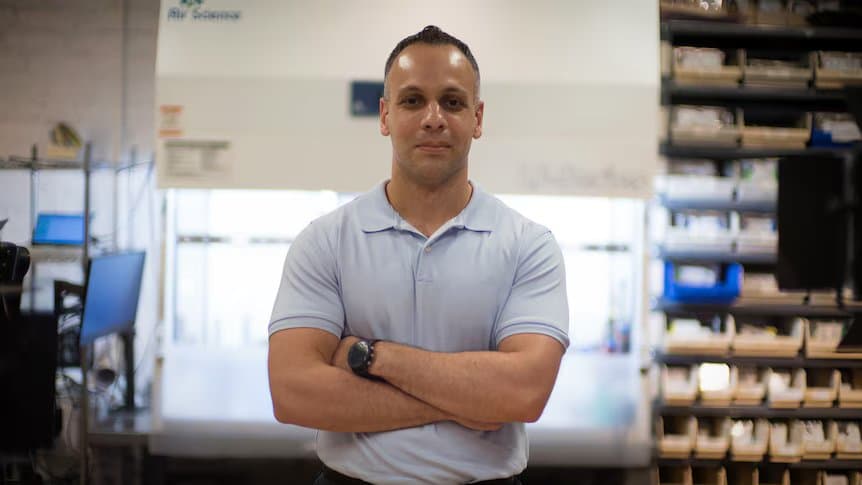
Louis Rossmann
Our engineers review all lab protocols to maintain technical accuracy and honest service. Since 2008, his focus has been on clear technical communication and accurate diagnostics rather than sales-driven explanations.
We believe in showing the bench rather than just describing it. Open-drive work runs on a 0.02 micron ULPA-filtered laminar clean bench, and we filmed it.
See the particle counter test at the benchWhy Pricing Transparency Matters
When a lab will not tell you the price until they have your drive, they can set the price based on how desperate you are rather than the actual complexity of the work. Our published tiers are based on the technical difficulty of the recovery, not your willingness to pay.
A simple data copy from a functioning SSD costs $200. File system repair starts at $250. Board-level soldering runs $450–$600 for SATA SSDs and $900–$1,200 for NVMe. Firmware reconstruction ranges from $600–$1,200 (SATA) up to $900–$1,200 (NVMe). NAND chip transplants top out at $1,200–$1,500 for SATA and $1,200–$2,500 for NVMe. Every case starts with a free evaluation and a firm quote before paid work begins. If we recover nothing, you pay nothing.
See our full SSD data recovery pricing for details on each tier. Call (512) 212-9111 for a free evaluation.
Published pricing is the standard worth holding any lab to, including this one. Other independent labs publish theirs as well, and we keep a list of the ones we would send you to if they fit your case better than we do. We take no referral fee from any of them, which is the entire reason that list is worth reading.
Here are the five published SATA SSD tiers, scored by the recovery work involved, each backed by the no data, no fee guarantee.
Low complexity
Simple Copy
Your drive works, you just need the data moved off it
Functional drive; data transfer to new media
Rush available: +$100
$200
3-5 business days
Low complexity
File System Recovery
Your drive isn't showing up, but it's not physically damaged
File system corruption. Visible to recovery software but not to OS
Starting price; final depends on complexity
From $250
2-4 weeks
Medium complexity
Circuit Board Repair
Your drive won't power on or has shorted components
PCB issues: failed voltage regulators, dead PMICs, shorted capacitors
May require a donor drive (additional cost)
$450–$600
3-6 weeks
Medium complexity
Most Common
Firmware Recovery
Your drive is detected but shows the wrong name, wrong size, or no data
Firmware corruption: ROM, modules, or system files corrupted
Price depends on extent of bad areas in NAND
$600–$1,200
3-6 weeks
High complexity
PCB / NAND Swap
Your drive's circuit board is severely damaged and requires NAND chip transplant to a donor PCB
NAND swap onto donor PCB. Precision microsoldering and BGA rework required
50% deposit required; donor drive cost additional
50% deposit required
$1,200–$1,500
4-8 weeks
Hardware Repair vs. Software Locks
Our "no data, no fee" policy applies to hardware recovery. We do not bill for unsuccessful physical repairs. If we replace a hard drive read/write head assembly or repair a liquid-damaged logic board to a bootable state, the hardware repair is complete and standard rates apply. If data remains inaccessible due to user-configured software locks, a forgotten passcode, or a remote wipe command, the physical repair is still billable. We cannot bypass user encryption or activation locks.
No data, no fee. Free evaluation and firm quote before any paid work. Full guarantee details. NAND swap requires a 50% deposit because donor parts are consumed in the attempt.
- Rush fee
- +$100 rush fee to move to the front of the queue
- Donor drives
- A donor drive is a matching SSD used for its circuit board. Typical donor cost: $40–$100 for common models, $150–$300 for discontinued or rare controllers.
- Target drive
- The destination drive we copy recovered data onto. You can supply your own or we provide one at cost plus a small markup. All prices are plus applicable tax.
How Wide Quote Ranges Inflate Recovery Costs
A quote range of $700 to $3,900 for SSD recovery is not a pricing structure; it is a negotiation tactic. The lab evaluates your drive, determines the work involved, and sets the final price somewhere in that range. Because the customer has already shipped the drive and waited days for the evaluation, walking away feels costly. The wider the range, the more room the lab has to bill toward the top.
Some labs also operate large referral networks, paying commissions to computer repair shops for each customer sent their way. Those referral fees do not appear on your invoice as a separate line item; they are absorbed into the quoted recovery price. A lab paying 10-20% referral commissions on a $3,000 recovery is collecting $300 to $600 that has nothing to do with the technical work performed on your drive.
Our five published tiers eliminate both problems. The tier is determined by the technical intervention required, not by how much the customer will tolerate. We do not operate a referral program, so zero percent of your bill subsidizes affiliate payouts. The price on our SSD recovery pricing page is what you pay.
SATA vs. NVMe: Why Architecture Dictates Recovery Cost
Not all SSDs fail the same way because not all SSDs are built the same way. SATA SSDs communicate through the legacy AHCI protocol at a maximum of 600 MB/s. NVMe SSDs connect directly to PCIe lanes, reaching 7,000+ MB/s on Gen 4 drives, and use a different command set entirely. This architectural gap affects both how drives fail and how much recovery costs.
On SATA SSDs, firmware corruption is the most common failure pattern. The controller loses its Flash Translation Layer (FTL) metadata and reports incorrect capacity or hangs in a busy state. PC-3000 SSD connects through the SATA interface, reads the corrupted firmware modules, and rebuilds the translation map. This work falls into our $600–$1,200 firmware tier for SATA drives.
NVMe drives introduce an additional complication: enterprise and high-end consumer NVMe SSDs frequently feature always-on AES-256 hardware encryption, though many mainstream DRAM-less drives omit hardware AES entirely. On encrypted drives the media encryption key is stored inside the controller. If the controller dies from a power surge or shorted voltage regulator, the NAND chips contain only ciphertext. Removing the chips (chip-off) accomplishes nothing because the encryption key died with the controller.
Recovery requires repairing the original controller's power delivery circuitry so it can initialize and decrypt. That board-level work spans the $900–$1,200 PCB repair tier through the $1,200–$2,500 NAND swap tier depending on the severity.
Controller-Specific Failures and Their Recovery Tiers
The controller chip determines how an SSD stores, encrypts, and retrieves data. When it fails, the recovery procedure and cost depend on the specific controller model.
- Silicon Motion SM2258XT / SM2259XT (common in Crucial BX500, Kingston A400, WD Green SATA)
- These DRAM-less controllers frequently suffer FTL metadata corruption, causing the drive to report 0 bytes capacity or hang in a BSY state. PC-3000 SSD loads a microcode loader into RAM via safe mode, reads the raw NAND page tables, and reconstructs the logical mapping. Firmware tier: $600–$1,200.
- Phison PS3111 / S11 (common in budget SATA SSDs from Patriot, Corsair, Kingston A400)
- When the firmware panics, these controllers report the model string as "SATAFIRM S11" instead of the actual drive name. The SLC cache corruption prevents the controller from completing its normal boot sequence. PC-3000 bypasses the corrupted cache and extracts data directly from the MLC/TLC NAND pages. Firmware tier: $600–$1,200.
- Samsung Proprietary NVMe Controllers (980 Pro / Elpis, 990 Pro, 990 EVO / Piccolo)
- Samsung designs its own NVMe controllers, each enforcing AES-256 encryption tied to the on-die key. A power rail failure kills the controller but leaves NAND data intact as ciphertext. Recovery requires micro-probing the VCC and VCCQ rails, identifying the shorted MOSFET or capacitor, and performing component-level replacement with Hakko FM-2032 soldering. This is board-level rework, not firmware work. PCB repair tier: $900–$1,200; NAND swap if the controller is non-repairable: $1,200–$2,500. The same AES-256 controller-bound encryption architecture applies to Apple Mac storage with T2 and M-series Secure Enclave chips.
- Phison PS5018-E18 (common in Corsair MP600 Pro, Sabrent Rocket 4 Plus, Seagate FireCuda 530)
- The Phison E18 uses a triple ARM Cortex-R5 core architecture. When unexpected power loss interrupts a Flash Translation Layer update, the controller enters a permanent BSY (Busy) state and refuses all host commands. The drive enumerates on the PCIe bus but returns no data. PC-3000 SSD enters Technological Mode, bypasses the corrupted service area, and rebuilds the FTL from raw NAND page tables. This firmware-level procedure costs $900–$1,200 for NVMe recovery; no cleanroom or sterile environment is required because there are no moving parts to contaminate.
- Silicon Motion SM2262EN (common in ADATA SX8200 Pro, Kingston KC2000, HP EX950)
- Silicon Motion NVMe controllers can enter a locked state after a host system crash during a write operation. The drive responds to SMART queries and reports correct capacity, but refuses all read and write commands. Consumer disk utilities interpret this as a healthy drive with inaccessible data and cannot clear the lock. PC-3000 connects via the NVMe Silicon Motion utility module, clears the controller's lock flag, and injects a clean firmware loader to restore data access. Firmware tier: $900–$1,200.
SSD Data Recovery Pricing: Common Questions
Why do some labs quote $700 to $3,900 for SSD recovery while Rossmann quotes $200–$2,500?
Wide quote ranges let the lab set the final price after they have your drive. A range of $700 to $3,900 mathematically ensures most successful recoveries land above $3,000. Our five published tiers are based on the technical intervention required: $200 for a simple data copy, From $250 for file system repair, $450–$600 for SATA board-level soldering, $900–$1,200for firmware reconstruction, and $1,200–$2,500 for NAND chip transplants. You receive a firm quote after a free evaluation, before any paid work begins. Full tier details are on our SSD data recovery page.
Can a lab recover deleted files from an NVMe SSD?
In most cases, no. When files are deleted on a modern NVMe SSD, the operating system issues a Deallocate command (the NVMe equivalent of SATA TRIM). The controller immediately unmaps those logical blocks and returns zeroes on subsequent reads through Deterministic Zero After TRIM. Because NVMe controllers process these queues at PCIe speeds, the window for recovery is near zero. Any lab promising to recover deleted files from a functioning, TRIM-enabled NVMe SSD is misrepresenting how flash storage works.
Does SSD recovery require an ISO Class 5 cleanroom?
No. Solid-state drives have no spinning platters, no read/write heads, and no air-gap tolerances. The NAND flash chips and controller are sealed integrated circuits soldered to a PCB. Cleanroom environments exist to protect mechanical hard drive internals from airborne particles during head swaps. SSD recovery requires component-level microsoldering with Hakko FM-2032 irons, diagnostic imaging via PC-3000, and firmware analysis. Paying a cleanroom premium for SSD work is an unnecessary expense.
What does it mean when my SSD shows 0 bytes or identifies as SATAFIRM S11?
Both symptoms indicate Flash Translation Layer (FTL) corruption or a firmware panic. The drive's controller (often a Phison or Silicon Motion variant) can no longer translate logical addresses to physical NAND locations, so the operating system sees either zero capacity or a generic firmware string instead of your drive model. Consumer software cannot fix this because the drive cannot mount as a storage device. Recovery requires vendor-specific commands via PC-3000 to bypass the controller's safe mode and rebuild the translation layer. This typically falls into our firmware recovery tier at $600–$1,200 for SATA SSDs.
How does hardware encryption affect NVMe data recovery pricing?
Samsung's proprietary controllers in the 980 Pro and 990 Pro enforce AES-256 hardware encryption by default, and some OEM builds on third-party controllers do the same, though many mainstream DRAM-less drives omit hardware AES entirely. On encrypted drives, the media encryption key lives inside the controller itself. If the controller dies, removing the NAND chips (chip-off) yields only ciphertext. The only path to the data is repairing the original controller's power delivery circuitry so it can initialize and decrypt. This board-level work typically lands in our $900–$1,200 (PCB repair) or $1,200–$2,500 (NAND swap) tiers depending on the extent of the damage.
Does Rossmann pay referral commissions to computer repair shops?
No. Some large data recovery labs operate reseller programs with thousands of partners, paying commissions for customer referrals. Those affiliate fees are ultimately absorbed into the customer's recovery quote. We do not pay referral kickbacks. Our pricing is based on the technical complexity of the recovery, and our no data, no fee guarantee means we only get paid when we deliver your files.
Is DriveSavers worth it for SSD data recovery?
DriveSavers quotes SSD recovery between roughly $700 and $3,900+, depending on the case. Our published SATA SSD tiers range from $200–$1,500, and NVMe SSD tiers range from $200–$2,500. Both labs use PC-3000 for firmware-level SSD work. The price difference comes from overhead: DriveSavers maintains ISO Class 5 cleanrooms designed for mechanical hard drives with spinning platters, not for solid-state components soldered to a PCB. SSD recovery requires microsoldering and firmware reconstruction, not particle-free air. You are paying for infrastructure your SSD does not need. We publish every tier so you can compare before shipping.
How do I choose between data recovery labs for a failed SSD?
Ask three questions before shipping your drive. First: does the lab publish its pricing tiers by failure type, or does it give a wide range and finalize the price after receiving your drive? Published tiers mean the lab has standardized its workflow. Second: does the lab name the specific tools it uses (PC-3000 SSD) and the controller families it supports, or does it describe "proprietary technology"? Naming tools signals hands-on capability. Third: does the lab charge a diagnostic fee or an attempt fee if recovery fails? Our no data, no fee policy means evaluation is free and you pay nothing if we recover nothing.
Why the quotes get accepted
Why So Many People Trust DriveSavers
A four-figure quote for a job an independent lab does for a few hundred dollars usually gets paid, and the reason is not that customers fail to notice the price. It is that the name arrives pre-trusted. When your drive dies and you walk into an Apple Store, the person at the Genius Bar often points you to DriveSavers. Coming from Apple, that reads as an official blessing, so the quote that follows feels like the price of doing it right rather than a number to question.
That referral is not new marketing. It goes back to a 1999 Apple support memo in which Apple agreed to accept drives that DriveSavers had opened without voiding the hardware warranty. Apple was careful to say the mention was "neither an endorsement nor a recommendation" and that DriveSavers is not an Apple Authorized Service Provider, but the practical effect over the following decades was a steady stream of Apple Store referrals and a trust halo that no amount of advertising can buy. Apple still lists DriveSavers on its current data-recovery support page today.
Understanding that causality is the point. The trust is real, but it traces to a warranty-logistics arrangement from 1999, not to any finding that the work is better or the pricing is fair. DriveSavers publishes no rate card, so the number arrives after the drive does; independent labs that publish their pricing let you check it first. For the full breakdown of the referral and what it costs you, see is DriveSavers legit.
Since 2008
Established
As Featured In
Get a real price before you ship your drive
Free evaluation. Published pricing. No data, no fee.