
URGENT: POWER OFF IMMEDIATELY
Hard Drive Grinding?
Turn It Off. Right Now.
A grinding noise means something inside the drive is in mechanical contact. This is not clicking. This is not normal operation. If that contact is the heads on the platters, your data is being destroyed in real time. Every second it runs risks more damage. This failure sits inside our broader hard drive data recovery service, which handles head crashes on a 0.02 micron ULPA-filtered clean bench.
If your hard drive is making a grinding noise, turn it off now and leave it off. Grinding means something inside the drive is in mechanical contact. If that's the heads on the platters, they scrape the magnetic coating off with every rotation, and that coating holds your data. Don't run CHKDSK, scans, or copy attempts. Don't open it yourself either. We open a grinding drive on a clean bench, not in room air.
Grinding Hard Drive Symptoms
In a healthy hard drive, the read/write heads float just nanometers above the spinning platters on a cushion of air. When the grinding turns out to be head-platter contact, this is what is happening inside:
- Heads have crashed into the platters; the protective air gap has failed
- Magnetic coating is being scraped off; your data is being removed from the platters
- Debris is contaminating the drive; scraped material causes additional head crashes
- Damage spreads with every rotation
Data Recovery Standards & Verification
Our Austin lab operates on a transparency-first model. We use industry-standard recovery tools, including PC-3000 and DeepSpar, combined with strict environmental controls to maintain drive integrity. This approach allows us to serve clients nationwide with consistent technical standards.
Localized Clean Zone
Open-drive work is performed in a 0.02 micron ULPA-filtered laminar clean bench.
Transparent History
Serving clients nationwide via mail-in service since 2008. Our lead engineer holds PC-3000 and HEX Akademia certifications for hard drive firmware repair and mechanical recovery.
Media Coverage
Our repair work has been covered by The Wall Street Journal and Business Insider, with CBC News reporting on our pricing transparency. Louis Rossmann has testified in Right to Repair hearings in multiple states and founded the Repair Preservation Group.
Aligned Incentives
Our "No Data, No Charge" policy means we assume the risk of the recovery attempt, not the client.
Technical Oversight
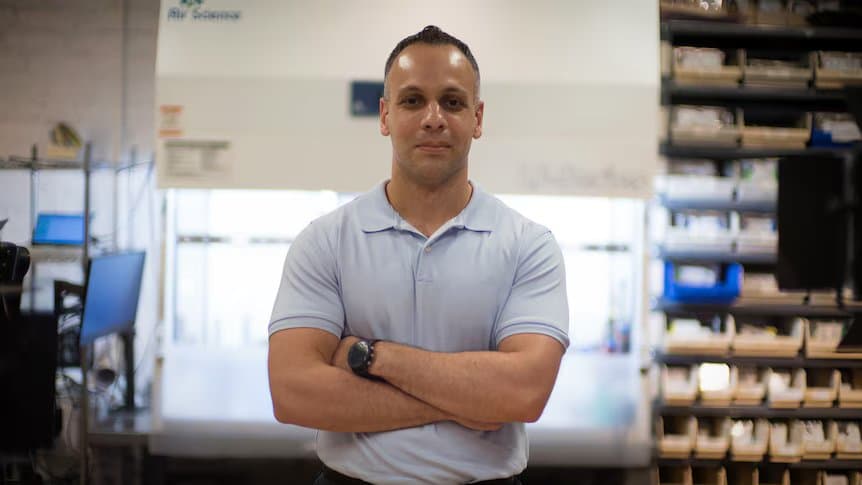
Louis Rossmann
Our engineers review all lab protocols to maintain technical accuracy and honest service. Since 2008, his focus has been on clear technical communication and accurate diagnostics rather than sales-driven explanations.
We believe in showing the bench rather than just describing it. Open-drive work runs on a 0.02 micron ULPA-filtered laminar clean bench, and we filmed it.
See the particle counter test at the benchWhat Should You Do First When a Hard Drive Starts Grinding?
Hard drive data recovery after a grinding noise starts with immediate power-off. Grinding means mechanical contact inside the drive, & if that contact is the head stack assembly on the platters, every extra rotation spreads debris & destroys more sectors. Shut the drive down, leave it off, & move straight to controlled clean-bench triage with PC-3000 imaging.
- Power off immediately. Cut power before the damaged head stack assembly grinds another pass into the platter surface.
- Do not power it on again. Not once to check it, not one more time.
- Do not run any software. CHKDSK, file copy attempts, and scan tools force more seeks across damaged tracks.
- Do not open the drive yourself. Grinding recoveries need a 0.02 micron ULPA clean bench, not room air.
- Contact a professional data recovery lab.
That triage is what preserves the best recovery path for hard drive data recovery and for severe head crash recovery. Once the drive reaches the lab, we confirm platter condition, map healthy surfaces, & decide whether the case needs a donor head transplant alone or combined firmware work through PC-3000.
Is It Really the Hard Drive?
Not every grinding noise comes from a hard drive. Before assuming catastrophic data loss, identify the actual source.
| Sound | Likely Source | How to Confirm | Action |
|---|---|---|---|
| Harsh metallic scraping | Mechanical contact inside the drive: a head crash, circulating debris, or a failing spindle bearing | Noise stops when drive is disconnected from power | Power off immediately; clean bench recovery required |
| Low buzz or beep on startup | On an external drive, most often it isn't getting enough power | Try a different cable, port and power supply | Rule out power before anything mechanical. Beeping drive guide |
For external drives: disconnect the USB & power cables & listen. If the grinding stops, the source is the drive. For internal drives: open the case & hold your hand near the drive while it's running to feel vibration from the specific component. Once confirmed, power off & do not turn it back on.
Which Drive Failures Get Called Grinding?
Once the noise has been confirmed to come from the drive itself, three different mechanical failures all get described as “grinding” in customer reports. Each one has a different urgency profile & a different recovery path. We separate them by observable state on the bench: whether the platters spin, whether the drive ever reaches a ready condition, & what the clean bench inspection finds.
| Sub-Type | Spindle State |
|---|---|
| FDB bearing wear | Spinning |
| Head-platter contact | Spinning |
| Stiction-on-spinup stall | Stationary; the platters never spin up |
FDB bearing wear
Modern drives use Fluid Dynamic Bearings instead of ball bearings.
Head-platter contact
When the air bearing collapses, the ceramic slider grinds through the lubricant first, then the carbon overcoat, then the magnetic recording layer that holds your data.
Stiction-on-spinup stall
Sometimes the heads come back down in the data zone after a power loss instead of parking on the ramp. Then the sliders stick to the platter surface, held there by molecular adhesion and lubricant capillary forces.
Grinding vs. Clicking vs. Beeping
Grinding
Continuous scraping/scratching sound. Something inside the drive is in mechanical contact.
Severity: Critical
Data status: Being destroyed if the heads are on the platters
Action: Power off IMMEDIATELY
Recovery: Depends on damage extent
Clicking
A rhythmic click-click. The heads can't lock onto a servo track.
Severity: Serious - High risk
Action: Turn it off
Beeping
Most beeping external drives aren't getting enough power.
Action: Try a different cable, port and power supply first
What Causes a Hard Drive to Grind?
Grinding is mechanical contact inside the drive. It's the read/write heads touching the platters, debris circulating inside the sealed enclosure, or a worn or failing spindle bearing.
Physical Impact / Drop
Dropping a running hard drive or laptop can slam the heads into the platters.
Voice Coil Actuator Damage in Grinding Drives
The voice coil motor (VCM) is a single-phase coil. It turns the rotary actuator that carries the head stack. We inspect the VCM before any donor stack goes in, using FLIR thermal imaging of the 12V rail under controlled spin-up and a physical inspection of the coil and ramp inside the 0.02 micron ULPA clean bench. The recovery flow then continues at our hard drive data recovery flagship, which documents the imaging, firmware, and donor-sourcing steps that follow.
- VCM coil resistance check before a donor swap
- How we check it: we measure coil resistance across the VCM pins and watch the 12V rail under FLIR for a hot spot on the motor driver.
- Motor driver IC on the PCB
- It powers both the spindle and the VCM.
Recovery Outlook for Grinding Drives
Where the heads have gouged the platters, the magnetic material that held those sectors is gone. What is left depends on several factors:
Factors That Help Recovery
- Drive was powered off immediately when grinding started
- Multiple platters where only one surface is damaged
- User data is on undamaged areas
Factors That Hurt Recovery
- Drive ran for extended time while grinding
- Multiple power-on attempts after grinding started
- Visible ring/scoring across entire platter surface
- Debris contamination spread throughout drive
Honest Assessment: We will inspect your platters on a clean bench and give you a realistic assessment of recoverability before quoting. If the damage is too severe, we will tell you; we will not take your money for an impossible job.
Grinding Drive Recovery Pricing
Grinding drives typically fall into the head swap ($1,200–$1,500) or surface damage tier ($2,000). All five HDD recovery tiers are listed below so you can see where your case fits. No diagnostic fees. If we can't recover your data, you pay nothing. +$100 rush fee to move to the front of the queue. Head swap and surface damage tiers also require a donor drive; Donor drives are matching drives used for parts. Typical donor cost: $50–$150 for common drives, $200–$400 for rare or high-capacity models. We source the cheapest compatible donor available.
- Low complexity
Simple Copy
Your drive works, you just need the data moved off it
Functional drive; data transfer to new media
Rush available: +$100
$100
3-5 business days
- Low complexity
File System Recovery
Your drive isn't recognized by your computer, but it's not making unusual sounds
File system corruption. Accessible with professional recovery software but not by the OS
Starting price; final depends on complexity
From $250
2-4 weeks
- Medium complexity
Firmware Repair
Your drive is completely inaccessible. It may be detected but shows the wrong size or won't respond
Firmware corruption: ROM, modules, or translator tables corrupted; requires PC-3000 terminal access
CMR drive: $600. SMR drive: $900.
$600–$900
3-6 weeks
- High complexity
Head Swap
Bench diagnosis found the read/write heads have to be replaced. Clicking can also come from firmware, the preamp, or the spindle
Head stack assembly failure. Transplanting heads from a matching donor drive on a clean bench
50% deposit required. CMR: $1,200-$1,500 + donor. SMR: $1,500 + donor.
50% deposit required
$1,200–$1,500
4-8 weeks
- High complexity
Surface / Platter Damage
Your drive was dropped, has visible damage, or a head crash scraped the platters
Platter scoring or contamination. Requires platter cleaning and head swap
50% deposit required. Donor parts are consumed in the repair. Most difficult recovery type.
50% deposit required
$2,000
4-8 weeks
Hardware Repair vs. Software Locks
Our "no data, no fee" policy applies to hardware recovery. We do not bill for unsuccessful physical repairs. If we replace a hard drive read/write head assembly or repair a liquid-damaged logic board to a bootable state, the hardware repair is complete and standard rates apply. If data remains inaccessible due to user-configured software locks, a forgotten passcode, or a remote wipe command, the physical repair is still billable. We cannot bypass user encryption or activation locks.
No data, no fee. Free evaluation and firm quote before any paid work. Full guarantee details. Head swap and surface damage require a 50% deposit because donor parts are consumed in the attempt.
- Rush fee
- +$100 rush fee to move to the front of the queue
- Donor drives
- Donor drives are matching drives used for parts. Typical donor cost: $50–$150 for common drives, $200–$400 for rare or high-capacity models. We source the cheapest compatible donor available.
- Target drive
- The destination drive we copy recovered data onto. You can supply your own, or we'll provide one. For larger capacities (8TB, 10TB, 16TB and above), target drives cost $400+ extra. All prices are plus applicable tax.
Sealed helium drives are on their own price list, $200–$5,000+. When a head swap or platter repair opens one, we refill it with helium. That adds $400–$800, and the donor has to be an exact match. Helium drive prices
How Does a Head Crash Destroy Data?
In a healthy drive, the read/write heads fly a few nanometers above the platter surface on an air bearing. When that gap collapses, the ceramic slider scrapes the magnetic coating, stripping the data layer in real time. For a deeper look at the physics & recovery procedures, see our head crash recovery page.
- Lubricant & DLC overcoat stripped. The slider goes through the lubricant first, then the carbon overcoat under it.
- Magnetic recording layer gouged. Once the slider reaches it, LBA ranges in the gouge path are permanently lost; no imaging technique can reconstruct them.
- Debris cascade across platter surfaces. Particles scraped off at the first crash site ride the airflow from the spinning platters and circulate inside the sealed enclosure. In a multi-platter drive, that loose debris raises the odds of more head crashes on the other surfaces.
How Are Grinding Drives Recovered in a Clean Bench?
Recovery starts with external diagnostics before the drive is ever opened. We measure current draw on the 12V rail, run a FLIR thermal scan, then move to our 0.02 micron ULPA-filtered clean bench for platter inspection, cleaning, donor head installation, & multi-pass imaging.
- Measure 12V rail current draw.This tells us whether the motor can spin freely before we open anything.
- FLIR thermal scan. We use FLIR thermal cameras to identify shorted TVS diodes or failing motor controller ICs on the PCB without opening the drive. Hot spots on the preamp connector or the motor driver IC indicate circuit-level issues that need to be addressed first.
- Open the drive in a 0.02 µm ULPA-filtered clean bench. ULPA filtration captures 99.9995% of particles as small as 0.12 microns. Without that filtration you are adding contamination to already damaged platters.
- Inspect platters under magnification with angled lighting. Angled LED light reveals scoring patterns that aren't visible head-on. We map which platter surfaces are damaged & which are clean, because the imaging strategy depends on knowing exactly where the scratch zones are.
- Clean debris from platter surfaces. Abraded material must be removed under ULPA filtration before installing donor heads. If scoring is deep enough to catch on fresh heads, that surface gets flagged as unrecoverable.
- Install matched donor head stack assembly. Head combs separate the individual sliders during transplant to prevent them from sticking together or contacting platter surfaces. The donor must match the patient drive on model, preamp type, & production batch. See donor matching criteria below.
- Image with PC-3000 Express or DeepSpar Disk Imager using a selective head map. The selective head map electronically disables damaged heads so the imager reads only from healthy platter surfaces first, then makes targeted passes on partially damaged areas.
Decontamination Workflow When the Drive Arrives Already Contaminated
If your drive shows up already contaminated, we have extra work to do. We clean embedded fragments off with solvent, verify the slider count, and edit the head map to skip destroyed surfaces.
- Open the drive only inside the ULPA clean bench. A HEPA filter under the US DOE standard is rated 99.97% at 0.3 microns. We use the finer ULPA grade for HDA work, because the sliders fly only nanometers above the platters.
- Inspect every platter surface under magnification with angled illumination.
- Verify the patient slider count. If the firmware head map reports 6 heads but only 5 sliders are present on the patient HSA, a slider has snapped off & is loose inside the HDA. We have to find that fragment & get it out under the clean bench before the donor stack goes in.
- Use head combs during HSA transplant. A head comb (a thin separator inserted between sliders before lift-off) keeps donor sliders apart during transfer.
- Edit the head map in PC-3000 to skip known-bad surfaces. The firmware then turns off the heads over destroyed surfaces.
Donor Head Matching for Grinding-Damage Drives
A matching model number doesn't guarantee the heads will be compatible.
On every grinding-damage case we check the drive family, the firmware revision, the preamplifier chip revision, the physical head map, and the platter count. The full matching procedure is documented in our reference on how donor drives are matched and the mechanical transplant itself is covered in what a head swap involves. Brand-specific constraints follow.
- Seagate F3 family
- Model number match, site code match, date code match, & preamplifier version match.
- Western Digital (Marvell controller)
- The model and the DCM code have to match. On the DCM, that means the J or 2 character and the one before it, which encode preamp and head compatibility. We check the adaptive parameters stored in the patient drive's ROM & compare them against donor candidates using PC-3000.
- Toshiba
- The model number and the country of manufacture have to match.
PC-3000 Imaging Strategy for Scored Platters
Scored platters can't be read with standard OS commands or consumer recovery software. Hardware imagers like the PC-3000 Express and the DeepSpar Disk Imager handle read timeouts themselves, at the hardware level.
- Fast first pass. We read every sector that comes off easily and skip any block that times out. That gets most of the healthy data off the undamaged platter areas in one sweep.
- Adjust read channel parameters. On hard-to-read sectors near the edge of the scratch, we retune the drive's read-channel adaptives with PC-3000.
- Targeted file extraction. After all imaging passes complete, we parse the file system (MFT for NTFS, FAT for FAT32, catalog file for HFS+), build a sector bitmap of user data, & skip unallocated space entirely. This focuses the final aggressive passes on sectors that actually contain the customer's files rather than wasting head life on empty space.
The translator module in the drive's service area (SA) maps logical block addresses to physical platter locations. If a head crash corrupted the translator, we can regenerate it with PC-3000. Without a working translator, the drive can't turn LBA requests into physical locations, and imaging fails.
How Is Read-Channel Tuning Used on Sectors Adjacent to Scored Zones?
Hard drives recover data from noisy analog waveforms through Partial Response Maximum Likelihood (PRML) detection. PC-3000 can change read-channel parameters at the firmware level, which sometimes pulls marginal sectors off the edge of the damage.
FIR equalizer tap coefficients. Before the Viterbi detector runs, a Finite Impulse Response equalizer shapes the analog read signal to match the expected PR target response. The drive normally adjusts the equalizer's tap coefficients on the fly.
This read-channel tuning does not recover sectors inside the gouge itself; the magnetic coating is physically gone & no detector can reconstruct bits from media that no longer exists. What it recovers is the band of weak-signal sectors at the edge of the damage.
Frequently Asked Questions
Why is my hard drive making a grinding noise?
A grinding noise indicates something inside the drive is in physical contact that should not be: head-platter contact, debris circulating inside the sealed enclosure, or a failing spindle bearing. Only bench inspection separates them. Head-platter contact scrapes the magnetic coating off & removes data in real time, so the drive needs immediate power-off either way.
Can data be recovered from a grinding hard drive?
Sometimes. It depends on how long the drive ran while grinding and how much of the platter surface was damaged. Brief grinding may allow partial or full recovery. Extended grinding often causes unrecoverable damage. We provide honest assessment after inspection.
What's the difference between clicking and grinding?
Clicking means the drive is seeking and can't lock onto a servo track. The actuator resets and tries again. Grinding means mechanical contact inside the drive, which may be the heads on the platters, circulating debris, or a failing spindle bearing. The bench decides which, & the drive gets powered off before that happens.
Can I keep using a grinding drive to back up important files first?
No. Every second a grinding drive runs, more data is being destroyed. Turn it off immediately. Do not power it on again. Any attempt to “quickly copy” files will destroy more than you save.
What is the debris cascade effect in a grinding hard drive?
When a head crashes into a platter, it scrapes off particles of the magnetic coating & the protective DLC overcoat. Those particles ride the airflow from the spinning platters and circulate inside the sealed drive enclosure. Loose debris like that raises the odds of more head crashes.
How are donor heads matched for a grinding drive recovery?
Model number alone isn't enough. Seagate F3 drives require matching the site code, the date code, & the preamplifier revision. On Western Digital Marvell drives, the DCM code has to match, specifically the J or 2 character & the one before it. On Toshiba drives, the model number and the country of manufacture have to match.
Can a grinding hard drive be fixed with software?
No. Grinding is a mechanical failure, & no software can repair physical damage. Running data recovery software, CHKDSK, or any disk utility on a grinding drive keeps the drive seeking through the fault, which grinds damaged heads across the platters & converts localized scoring into full-surface destruction. Mechanical failures have to be stabilized on a clean bench first. For a drive whose heads are contacting the platters, the fix is professional clean bench recovery with donor head replacement.
What is the difference between FDB spindle bearing grinding & head-platter grinding?
They're different problems with different outcomes. Head-platter contact is the slider grinding through the carbon overcoat into the magnetic recording layer. That removes data with every rotation, so turn the drive off right away. A drive whose platters never spin up at all is a stiction or motor problem, not a head-contact problem. We tell these apart on the bench from current draw and clean bench inspection, not from how the sound gets described.
What happens if the drive ran with grinding for hours before it was powered off?
Extended grinding contaminates the platter surfaces inside the sealed HDA with scraped-off magnetic coating. So it shows up here already contaminated, and it goes on our 0.02 micron ULPA clean bench. We inspect the platters under magnification with angled light and clean embedded debris off with solvent. Head combs keep the sliders apart during the HSA transfer. We count the sliders, because a missing one means a fragment is loose inside the HDA and has to be found first. Then we edit the head map in PC-3000 and image the drive head by head.
Since 2008
Established
As Featured In
Related services
Related Recovery Services
Full HDD recovery service overview
Clicking drive diagnosis and recovery
Beeping drive diagnosis and recovery
Physics of head crashes and recovery procedures
Impact damage and platter scoring
Spindle motor and bearing diagnostics
Nationwide mail-in to our Austin, TX clean bench
Grinding Drive? Get Emergency Assessment.
Time is critical. We'll inspect your platters and give you honest recovery odds. No data = no charge.