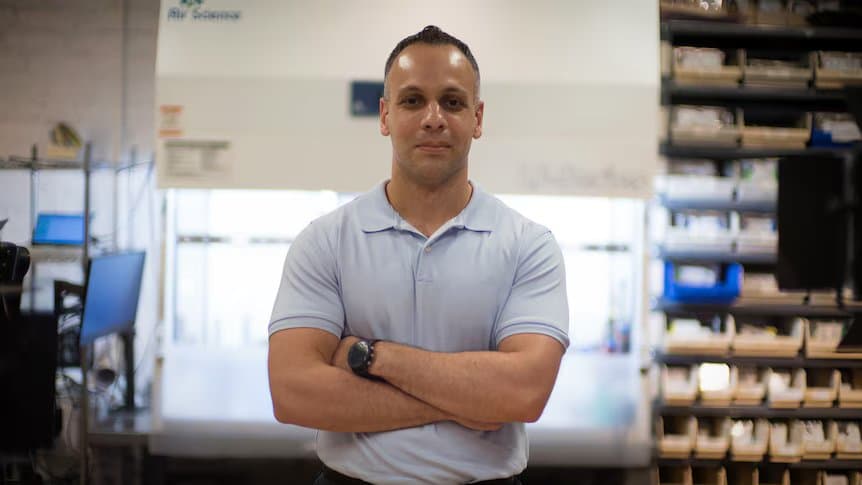
“Sent my hdd for data recovery, process was simple and I was able to pre-authorize an amount. They worked on my drive within 2 days of receiving it and the total cost was literally 1/10th of the amount of another service I got a quote from. Professional, quick, affordable. Nothing to complain about.”
Laptop Hard Drive Data Recovery Services
Dropped laptop? Dead drive? We recover data from 2.5-inch laptop hard drives and SSDs. Professional clean bench service with no data, no charge guarantee.

Laptop Hard Drive Recovery: Quick Facts
- Logical Recovery (deleted files, corruption): $100-$500
- Firmware Issues: $600-$900
- Mechanical/Physical Damage: $1,200-$2,000
- Turnaround: 3-5 business days standard, 24-48 hours rush available
Emergency Steps When Your Laptop Drive Fails
A clicking, beeping, or unresponsive laptop drive requires a specific sequence of actions. Each step below prevents a common mistake that converts a recoverable failure into permanent data loss.
- 1
Power down the laptop immediately.
If the drive is clicking, grinding, or beeping, hold the power button until the machine shuts off. Continued operation forces damaged read/write heads across the platter surface, stripping the magnetic coating that stores your data.
- 2
Disconnect the battery and AC adapter.
Remove all power sources. For liquid spills or suspected power surges, a connected battery can sustain electrical shorts across the drive PCB or laptop motherboard, compounding the damage.
- 3
Do not run CHKDSK, Disk Utility, or any OS repair tool.
Operating system repair utilities rewrite file system metadata. On a physically failing drive, these writes force the damaged heads to seek aggressively, converting a recoverable head failure into permanent platter scoring.
- 4
Do not install or run consumer data recovery software.
Software tools like Recuva, EaseUS, or Disk Drill cannot bypass failed firmware, degraded heads, or a seized spindle motor. Installing the software onto the failing drive also overwrites the sectors containing your lost files.
- 5
Do not open the drive or attempt the freezer trick.
Opening a hard drive outside a 0.02 micron ULPA-filtered clean bench introduces airborne particles that crash the heads on contact. Freezing causes internal condensation that shorts the PCB and corrodes the platter surface.
- 6
Record the exact symptoms.
Note the sound (clicking, buzzing, grinding, silent), the event that preceded the failure (drop, spill, power outage), and the laptop model. This information lets the receiving lab prepare the correct donor parts and PC-3000 configuration before your drive arrives.
- 7
Ship the drive to a professional recovery lab.
Package the laptop or extracted drive in anti-static wrap with foam padding. Follow our shipping guidelines or start a mail-in recovery for free evaluation, no diagnostic fees, and a no-data-no-fee guarantee.
Common Laptop Hard Drive Problems We Recover
Laptops are portable, which means more opportunities for damage. We handle all failure types.
Drop/Impact Damage
Laptop was dropped while running. Hard drive clicking, not recognized, or won't spin up.
Liquid Damage
Coffee, water, or other liquid spilled on laptop. Drive may have corrosion or shorts.
Overheating Damage
Laptop ran hot for extended periods. Drive may have suffered head-stack thermal expansion or electronic failure.
Mechanical Failure
Clicking, grinding, or beeping sounds. Read/write heads or motor may have failed.
PCB Failure
Drive not detected at all. Circuit board may have failed due to power surge or age.
Firmware Corruption
Drive detected but wrong capacity or freezes. Internal firmware may be corrupted.
Important: If your laptop hard drive is clicking, grinding, or making unusual sounds, power off immediately and do not attempt to restart. Each power cycle can cause additional damage as damaged read/write heads scratch the platters. Laptop 2.5" drives fail from the same mechanisms as desktop 3.5" drives; our recovery process covers both form factors.
Active Hard Drive Protection: How Laptop Drop Sensors Work
Most business-class laptops manufactured between 2003 and 2020 included an accelerometer-based drop sensor designed to park the hard drive heads before impact. These systems detect a zero-gravity free-fall state across three axes (X, Y, Z) using a MEMS (Micro-Electromechanical Systems) accelerometer soldered to the motherboard. When the sensor reads near-0g, it sends an emergency unload command to the SATA controller, retracting the heads onto the parking ramp. A standard desk-height drop of 75cm gives roughly 390 milliseconds of free-fall time; the park command must complete within that window.
Vendor Implementations
- Lenovo APS (Active Protection System)
- Originally developed by IBM for ThinkPads in 2003. Uses a motherboard accelerometer that parks the drive heads & halts I/O on shock detection. Software allows users to adjust sensitivity or disable the sensor during train or car travel to prevent constant performance stuttering from vibration-triggered parks.
- HP 3D DriveGuard
- Standard on HP ProBook & EliteBook series. Sends continuous park commands to the drive during detected motion, unlike systems that issue a single park-and-resume. This keeps the heads locked on the ramp throughout sustained movement but causes noticeable I/O lag during the protection window.
- Dell Free Fall Sensor
- Found in Dell Latitude & Precision business laptops. Dell specifies a 160G shock tolerance with a 2ms half-sine pulse duration when the drive is parked. The sensor isolates the HDD from the system bus during detected free-fall to prevent corrupted writes from firmware-level interruptions.
- Apple Sudden Motion Sensor
- Introduced in 2005 PowerBooks & early MacBooks. Apple phased out the SMS after 2013 when the Retina MacBook Pro line transitioned entirely to solid-state storage. SSDs have no moving parts, making drop sensors irrelevant for modern MacBook data recovery.
Why Drop Sensors Fail to Prevent Damage
We regularly receive laptops with functioning drop sensors and damaged drives. The protection system has five well-documented failure modes, each of which results in head-to-platter contact despite the sensor hardware being operational.
- 1
Active seek state at time of impact
If the drive is mid-read or mid-write when the laptop slips, the heads are positioned over the data zone. The ~390ms free-fall window may not be enough for the actuator to retract fully before the shock wave arrives.
- 2
Angular rotation during the fall
MEMS accelerometers are calibrated for linear vertical drops. If the laptop is knocked off a desk and tumbles or spins, the centripetal forces can read as non-zero-gravity across the sensor axes, delaying or preventing the park command entirely.
- 3
Short-distance drops
A laptop sliding off a lap or couch (15-30cm) produces insufficient free-fall time for the sensor to detect the event and mechanically retract the heads. The impact arrives before the system responds.
- 4
Disabled or missing drivers
After a clean Windows installation, many users skip reinstalling the vendor-specific driver (HP 3D DriveGuard, Lenovo APS utility). The MEMS hardware is present on the motherboard, but without the driver, it can't communicate the park command to the drive controller.
- 5
Power-off or deep-sleep drops
If the laptop is off or in a hibernation state where the sensor is unpowered, no park command is issued. While heads are naturally parked when powered off, a severe impact can bounce them off the parking ramp and onto the platter surface, causing stiction or scoring.
If your laptop was dropped and the drive is making noise, the sensor likely failed to prevent contact. See our guide on dropped hard drive recovery for immediate steps, or read about specific clicking drive symptoms.
Post-Drop Acoustic Diagnostics by Failure Type
The sound a 2.5-inch laptop drive makes after a drop identifies the internal failure state. Each acoustic signature corresponds to a specific mechanical condition that determines the recovery approach and cost.
- Clicking or Ticking
- A repetitive click indicates a failed Head Stack Assembly (HSA). The damaged heads attempt to read servo tracks etched into the platters for position calibration; when they cannot locate the pattern, the actuator arm snaps back to the home position and retries. Each cycle risks further platter damage. Recovery requires a head transplant from a matched donor drive in our 0.02 micron ULPA-filtered clean bench, followed by selective head imaging via PC-3000. Typical cost: $1,200 to $2,000 depending on platter condition.
- Beeping or Buzzing
- An electronic beep or buzz from a mechanical HDD means stiction: the read/write sliders are physically bonded to the platter surface, locking the spindle motor in place. The motor attempts to spin, stalls against the friction, and produces the beep. Lightweight 7mm 2.5-inch drives (common in post-2015 laptops) are particularly vulnerable because their low-torque motors cannot generate enough force to break the heads free. Recovery involves opening the drive, separating the heads from the platter using a non-magnetic head comb, then imaging the platters immediately before the heads re-stick. Typical cost: $1,200 to $1,500 for stiction release and imaging; up to $2,000 if the stiction caused secondary platter scoring that requires a donor head transplant.
- Grinding or Scraping
- Grinding indicates an active head crash: the ceramic slider has lost its air bearing and is gouging the magnetic data layer off the spinning platter at 5,400 RPM. This generates microscopic debris that contaminates adjacent platters and heads. Unplug the machine immediately. Every second of operation strips more data. Recovery requires a donor head transplant, but if the scoring is extensive (visible concentric rings on the platter surface), the affected data zones are permanently unrecoverable. The remaining zones can still be imaged using PC-3000 head-mapped selective reads. Typical cost: $1,500 to $2,000 for partial recovery.
Do not run recovery software on a drive making any of these sounds. Software forces the operating system to mount the file system, which sends read commands to damaged heads. On a clicking drive, this drags bent heads across the platters. On a beeping drive, it stalls the motor repeatedly. Both scenarios convert a recoverable failure into permanent data loss. Power off and send the drive to a professional recovery lab with no-fix-no-fee pricing.
SMR Firmware Corruption in Modern 2.5-Inch Laptop Drives
Most 2.5-inch laptop HDDs manufactured after 2018 use Shingled Magnetic Recording (SMR) to overlap data tracks & increase density. The Seagate Rosewood family (ST1000LM035, ST2000LM007) & WD Blue mobile drives (WD20SPZX) are the most common SMR laptop drives we receive.
SMR drives maintain a persistent write cache & a complex second-level translator that maps logical sectors to physical bands. A sudden power loss during a cache flush or a drop mid-write often corrupts this translator. The drive may spin up, pass initial self-tests, then freeze or report the wrong capacity because the firmware can't resolve the logical-to-physical mapping.
Recovering an SMR drive with translator corruption requires PC-3000 to clear the media cache, rebuild the corrupted translator tables, & reconstruct the band layout before imaging can begin. This firmware reconstruction adds engineering time compared to older CMR drives, which is reflected in the pricing: CMR firmware repair runs $600, while SMR firmware repair runs $900.
BitLocker and FileVault: Recovering Encrypted Laptop Drives
Windows 11 enables BitLocker by default on most new laptops. macOS has enabled FileVault since Yosemite. If your encrypted laptop drive has bad sectors, failing heads, or firmware corruption, we don't break the encryption; we work around the physical failure first.
- Physical imaging: We clone the failing drive sector-by-sector using PC-3000 Data Extractor or DeepSpar Disk Imager to a healthy target. This captures the raw encrypted data before the source drive degrades further.
- Logical decryption: Once the physical clone is secure, we mount the virtual volume using your BitLocker Recovery Key or macOS FileVault password. The file system decrypts on-the-fly, & we extract your files to a clean external drive.
You'll need your BitLocker Recovery Key (stored in your Microsoft account or Active Directory) or your FileVault password. Without valid credentials, the AES-256 encryption can't be reversed; no lab can bypass it. If the encryption is hardware-bound to an Apple T2 or M-series chip, recovery requires board-level repair to restore normal boot. HDD recovery pricing applies for the physical imaging phase; the decryption step adds no additional cost.
Laptop Drives vs Desktop Drives
Understanding the differences helps explain what to expect
| Feature | Laptop Drives (2.5") | Desktop Drives (3.5") |
|---|---|---|
| Form Factor | Smaller, more compact components | Larger platters, typically higher capacity |
| Primary Damage Risk | Impact damage from drops & portability | Power surge damage; stationary use means less physical impact |
| Environmental Exposure | Frequent exposure to spills, drops, & thermal stress | Controlled environment; less environmental hazard |
| Connectors | May have proprietary connectors (especially MacBooks) | Standardized SATA & power connectors |
| Storage Type Trend | Modern ultrabooks use soldered SSDs requiring board-level extraction | Removable 3.5" SATA drives; easy to access & swap |
| Recovery Cost | Same five-tier pricing: $100 to $2,000 for HDDs | Same five-tier pricing: $100 to $2,000 for HDDs |
Modern Laptop SSD Form Factors
The phrase "laptop hard drive" is increasingly a misnomer. Most laptops sold after 2018 ship with solid-state storage in one of three form factors, each requiring a different recovery approach.
- M.2 2280 NVMe
- The standard in mid-range & gaming laptops from Dell, HP, Lenovo, & ASUS. These 80mm-long modules use PCIe lanes and plug into a keyed M.2 slot. When the controller fails, we connect the module to a PC-3000 Portable III via its NVMe/AHCI adapter to communicate with the controller in diagnostic mode, reconstruct the flash translation layer, & extract the stored data.
- M.2 2230 NVMe
- A compact 30mm module found in ultrabooks like the Dell XPS 13, Microsoft Surface Pro, & the Steam Deck. The smaller PCB means fewer NAND packages & tighter component spacing. Recovery follows the same PC-3000 Portable III workflow, but sourcing compatible 2230 donor boards is harder because fewer manufacturers produce this size.
- Soldered BGA NAND
- Appears in all Apple MacBooks with T2 or Apple Silicon chips, & in some Microsoft Surface devices. The flash chips are soldered directly to the logic board with no removable module. Recovery requires repairing the board itself to restore normal boot & decrypt the storage through the security chip. For non-Apple soldered NAND, chip-off using a BGA rework station is sometimes an option, followed by NAND dump reconstruction in PC-3000 Flash. Details on SSD-specific recovery & NVMe recovery cover each approach in depth.
Common Laptop SSD Controller Failures: Silicon Motion & Phison
Budget & mid-range laptop SSDs share a small set of controller chips. When these controllers fail, the drive reports incorrect capacity, drops into BSY (busy) mode, or disappears from BIOS entirely. Two controller families account for the majority of laptop SSD failures we receive.
- Silicon Motion SM2258 / SM2259
- Found in ADATA SU800, HP S700, & many OEM laptop SSDs. Common failure states: BSY mode (controller locks up & won't respond to ATA commands), BAD_CTX (context table corruption in the FTL), & 0GB capacity (the drive identifies to BIOS but reports zero usable storage). Recovery involves shorting the safe-mode pins on the PCB to force the controller into a diagnostic state, then using PC-3000 SSD to inject a vendor-specific loader (LDR) into the controller's SRAM & rebuild the Flash Translation Layer from the raw NAND contents. SSD recovery for controller failures runs $600 to $1,200 depending on NAND configuration.
- Phison S11 / PS3111
- Used in Kingston A400, PNY CS900, & Patriot Burst laptop SSDs. The SATAFIRM S11 firmware bug causes these drives to report the model name as "SATAFIRM S11" with 0 bytes capacity. The controller's firmware has corrupted, but the NAND data is intact. We use PC-3000 SSD to access the controller's diagnostic mode, read the NAND directly through ATA vendor-specific commands, & reconstruct the file system from the raw flash dump. Cost: $450 to $900.
Laptop Hard Drive Repair vs. Data Recovery
Searching for "laptop hard drive repair" usually means one of two things: fixing the drive so the laptop boots again, or extracting data from a dead drive. These are different procedures with different outcomes.
- Temporary Repair for Data Extraction
- When a laptop HDD has a mechanical failure, we open it in a 0.02 micron ULPA-filtered clean bench, transplant matched donor read/write heads, and image the platters sector-by-sector using PC-3000. The drive runs long enough to copy your files; it is never returned as a working boot drive. This is what professional hard drive data recovery labs do. Pricing ranges from $600 to $2,000 depending on the severity of the mechanical damage.
- Permanent Drive Repair: Not Feasible
- Once a mechanical hard drive suffers a head crash, stiction, or motor seizure, the factory calibration stored in its firmware adaptive parameters is no longer valid. Transplanted donor heads read at different offsets than the originals. No lab can restore a physically failed HDD to reliable daily use. Replace the failed drive with a new SSD after the data has been recovered.
- Laptop SSD Repair
- SSDs fail from controller lockups, firmware corruption, or shorted power management ICs. These are electronic failures, not mechanical. We use PC-3000 SSD to inject diagnostic firmware into the controller's SRAM, rebuild the flash translation layer, and extract data from the NAND. Board-level micro-soldering addresses shorted components. Unlike HDDs, the SSD itself can sometimes be reflashed and returned to service after a firmware-only failure, though we recommend replacing it. SSD recovery pricing ranges from $200 to $1,500.
Laptop Brands We Service
We recover data from all laptop brands and models
Dell
XPS, Inspiron, Latitude, Precision
HP
Pavilion, Envy, EliteBook, ProBook
Lenovo
ThinkPad, IdeaPad, Legion, Yoga
Apple MacBook
MacBook Air, Pro (T2/M1/M2 chips)
ASUS
ZenBook, ROG, VivoBook, TUF
Acer
Aspire, Swift, Nitro, Predator
Microsoft Surface
Surface Laptop, Pro, Book
MSI
Gaming laptops, Creator series
Don't see your laptop brand? We still recover it. Contact us for details.
MacBook Data Recovery
Modern MacBooks present unique challenges for data recovery:
- T2/M1/M2/M3 Chips: Apple's security chips encrypt the SSD. Without the working logic board, data cannot be accessed. We may need to repair the board itself.
- Soldered Storage: Many MacBooks have SSDs soldered directly to the logic board. The drive cannot be simply removed and connected to recovery equipment.
- Our Approach: We specialize in board-level repair, including MacBooks. Recovery often requires repairing the logic board to access encrypted data through normal boot.
Laptop Data Recovery Process
Simple steps to get your data back
- 1
Stop Using the Laptop
If your drive is clicking or making unusual sounds, power off immediately. Continued use can cause permanent damage.
- 2
Ship or Drop Off
Send your laptop or just the hard drive to our Austin, TX lab. We provide prepaid shipping labels.
- 3
Free Diagnosis
We evaluate your drive at no cost and provide a detailed assessment and quote within 24-48 hours.
- 4
Recovery & Return
After approval, we recover your data and return it on a new drive or via secure download.
Laptop Hard Drive Recovery Pricing
Laptop 2.5-inch HDDs use the same five-tier pricing as desktop 3.5-inch drives. The recovery process is identical; the form factor does not change the cost.
Simple Copy
Low complexityYour drive works, you just need the data moved off it
$100
3-5 business days
Functional drive; data transfer to new media
Rush available: +$100
File System Recovery
Low complexityYour drive isn't recognized by your computer, but it's not making unusual sounds
From $250
2-4 weeks
File system corruption. Accessible with professional recovery software but not by the OS
Starting price; final depends on complexity
Firmware Repair
Medium complexityYour drive is completely inaccessible. It may be detected but shows the wrong size or won't respond
$600–$900
3-6 weeks
Firmware corruption: ROM, modules, or translator tables corrupted; requires PC-3000 terminal access
CMR drive: $600. SMR drive: $900.
Head Swap
High complexityMost CommonYour drive is clicking, beeping, or won't spin. The internal read/write heads have failed
$1,200–$1,500
4-8 weeks
Head stack assembly failure. Transplanting heads from a matching donor drive on a clean bench
50% deposit required. CMR: $1,200-$1,500 + donor. SMR: $1,500 + donor.
50% deposit required
Surface / Platter Damage
High complexityYour drive was dropped, has visible damage, or a head crash scraped the platters
$2,000
4-8 weeks
Platter scoring or contamination. Requires platter cleaning and head swap
50% deposit required. Donor parts are consumed in the repair. Most difficult recovery type.
50% deposit required
Hardware Repair vs. Software Locks
Our "no data, no fee" policy applies to hardware recovery. We do not bill for unsuccessful physical repairs. If we replace a hard drive read/write head assembly or repair a liquid-damaged logic board to a bootable state, the hardware repair is complete and standard rates apply. If data remains inaccessible due to user-configured software locks, a forgotten passcode, or a remote wipe command, the physical repair is still billable. We cannot bypass user encryption or activation locks.
No data, no fee. Free evaluation and firm quote before any paid work. Full guarantee details. Head swap and surface damage require a 50% deposit because donor parts are consumed in the attempt.
Rush fee: +$100 rush fee to move to the front of the queue.
Donor drives: Donor drives are matching drives used for parts. Typical donor cost: $50–$150 for common drives, $200–$400 for rare or high-capacity models. We source the cheapest compatible donor available.

Target drive: The destination drive we copy recovered data onto. You can supply your own or we provide one at cost plus a small markup. For larger capacities (8TB, 10TB, 16TB and above), target drives cost $400+ extra. All prices are plus applicable tax.
Watch Our Data Recovery Process
See how we recover data from failed drives
Frequently Asked Questions
Can data be recovered from a dead laptop hard drive?
How much does laptop hard drive data recovery cost?
Is my laptop SSD or HDD?
Should I remove the hard drive from my laptop myself?
My laptop was dropped and now the hard drive doesn't work. Is the data gone?
How much does laptop SSD data recovery cost?
Can data be recovered from a dead laptop SSD?
Why did my laptop's drop sensor fail to protect my hard drive?
My laptop hard drive is clicking after a drop. What does that mean?
My laptop hard drive is beeping after a drop. Is the data recoverable?
Why does data recovery cost more for an SMR laptop hard drive than a CMR drive?
Can you recover data by desoldering the NAND chips from a dead M1/M2/M3 MacBook?
Data Security During Laptop Drive Recovery
Laptop drives contain personal documents, photos, and credentials. Every drive that enters our Austin lab is serialized and tracked under chain-of-custody documentation. All imaging and recovery work happens on air-gapped systems with no network access. Recovered files are delivered on encrypted external media, and all working copies are purged using NIST SP 800-88 compliant methods (including cryptographic erase for SSDs) after you confirm receipt.
NDAs are available on request. See our full data security protocols for details on encryption, chain-of-custody, and secure destruction.
Data Recovery Standards & Verification
Our Austin lab operates on a transparency-first model. We use industry-standard recovery tools, including PC-3000 and DeepSpar, combined with strict environmental controls to make sure your hard drive is handled safely and properly. This approach allows us to serve clients nationwide with consistent technical standards.
Open-drive work is performed in a ULPA-filtered laminar-flow bench, validated to 0.02 µm particle count, verified using TSI P-Trak instrumentation.
Transparent History
Serving clients nationwide via mail-in service since 2008. Our lead engineer holds PC-3000 and HEX Akademia certifications for hard drive firmware repair and mechanical recovery.
Media Coverage
Our repair work has been covered by The Wall Street Journal and Business Insider, with CBC News reporting on our pricing transparency. Louis Rossmann has testified in Right to Repair hearings in multiple states and founded the Repair Preservation Group.
Aligned Incentives
Our "No Data, No Charge" policy means we assume the risk of the recovery attempt, not the client.
Technical Oversight
Louis Rossmann
Louis Rossmann's well trained staff review our lab protocols to ensure technical accuracy and honest service. Since 2008, his focus has been on clear technical communication and accurate diagnostics rather than sales-driven explanations.
We believe in proving standards rather than just stating them. We use TSI P-Trak instrumentation to verify that clean-air benchmarks are met before any drive is opened.
See our clean bench validation data and particle test videoRelated Recovery Services
Laptop drive dead? We recover the data.
Ship your laptop or just the drive. Free evaluation. No data, no charge. Mail-in from all 50 states.